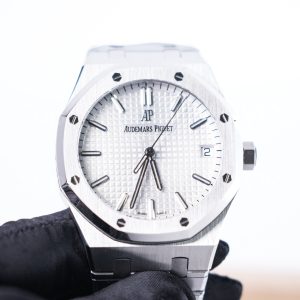
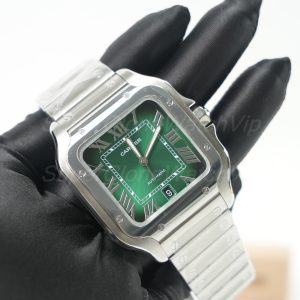
The Royal Oak is defined by its bracelet geometry, dial texture, bezel alignment, and case finishing. In 2026, selecting a strong AP Royal Oak super clone depends less on factory labels and more on visible QC structure, including bracelet flow, Tapisserie dial clarity, screw symmetry, and video proof before shipping. This guide focuses on practical inspection logic and real model comparison paths across APS and ZF-style production batches.
Quick Navigation
Why Royal Oak QC Requires a Structured Method
First, the Royal Oak design is built on geometric clarity. The octagonal bezel, flat brushed surfaces, and integrated bracelet create a strict visual language. Any deviation in brushing direction or screw alignment becomes visible immediately.
In practice, evaluation starts from shape integrity rather than movement detail. The case silhouette must stay thin and angular, while the bracelet must flow naturally without stiffness at the first link.
For general reference browsing, the AP category collection of Royal Oak models helps organize available dial colors, case sizes, and chronograph variations before deeper QC inspection begins.
Bracelet and Case Finishing Inspection
First, the bracelet defines the Royal Oak identity more than any other component. Link articulation, brushing consistency, and side bevel finishing determine how the watch sits on the wrist.
Meanwhile, case thickness must remain controlled. A slightly over-thick mid-case can break the Royal Oak profile even when dial quality is strong.
Key Bracelet QC Points
- First-link transition must sit flush with case edge
- Brushing direction must remain uniform across all links
- Polished bevels must be thin and controlled
- Bracelet must curve naturally without stiffness
- Clasp must close flat without lift or misalignment
Factory comparison should be tied to real pieces, not names. For production interpretation, the factory version guide helps explain batch differences and QC structure.
Dial Texture, Bezel Balance and Date Window
First, the Tapisserie dial is the visual center of the Royal Oak. Square texture depth must remain consistent across lighting conditions without blur or flattening.
Additionally, logo placement and hour marker alignment must remain centered. Even small offset becomes visible due to the dial’s structured grid pattern.
Bezel & Screw Logic
The octagonal bezel must remain symmetrical from all angles. Screw heads should sit evenly with consistent depth. Any uneven seating can affect overall visual balance.
Date Window Review
The date must stay centered inside the aperture. Font weight and vertical alignment should remain stable across multiple date changes, not just one sample number.
APS Factory vs ZF Factory Review Logic
First, factory names only define production origin, not final quality outcome. APS and ZF batches both require direct QC verification through current stock images and video proof.
APS-style batches are often associated with sharper case geometry and stronger bracelet presence. Meanwhile, ZF-style batches are often evaluated for balanced finishing and dial consistency.
For deeper comparison structure, the buying guide explains how factory labels, QC timing, and stock variation should be interpreted before selection.
Recommended Royal Oak Model Paths
The following models are structured for different QC priorities. Each product block can be inspected through dial texture, bracelet finishing, bezel screws, and case profile.
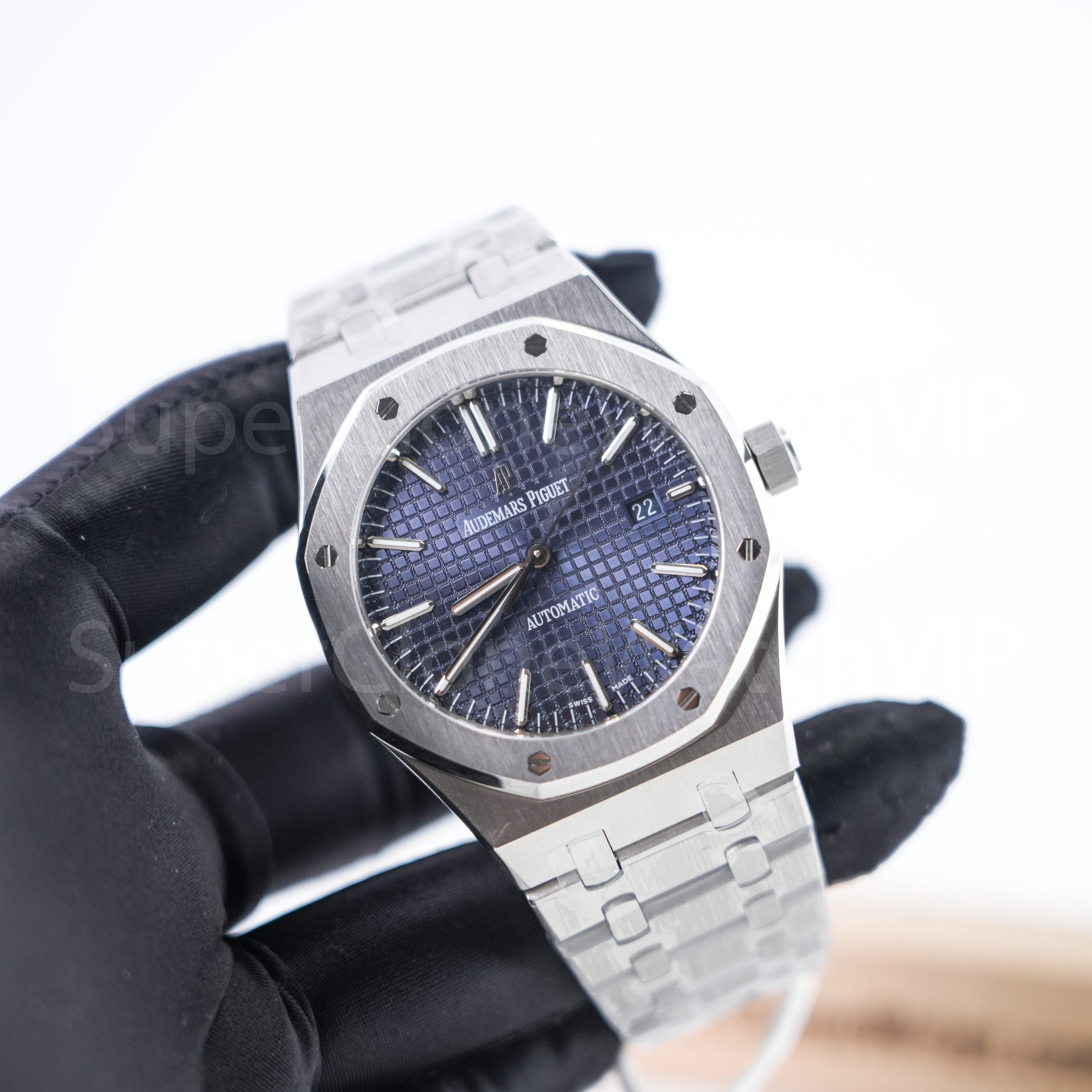
Strong baseline for dial alignment, bracelet flow, and bezel symmetry review.
View product QC

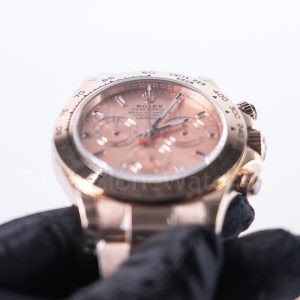
Useful for sub-dial spacing, pusher alignment, and movement function QC.
View product QC
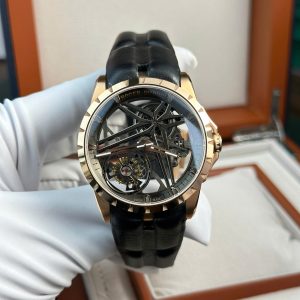
Additional AP references are available through the full Royal Oak collection page, which organizes steel, chronograph, and openworked variants for comparison.
QC Photo Checklist Before Confirmation
- Dial: texture depth, logo alignment, marker spacing, dust check
- Bezel: screw depth, symmetry, brushing consistency
- Case: thickness profile, crown alignment, side brushing
- Bracelet: first-link fit, articulation, taper flow
- Clasp: closure flatness, engraving clarity, hinge action
- Date window: centering, font balance, repeat consistency
- Function: time setting, date change, movement stability
- Video: bracelet motion, light reflection, full function test
Video confirmation is strongly recommended through video proof before final approval, especially for chronograph and openworked models.
FAQ
What is the most important QC element on Royal Oak?
Bracelet flow and bezel symmetry usually define the overall visual result more than any single dial detail.
Does factory name guarantee quality?
No. APS and ZF batches vary. Current QC photos and video proof are more important than factory labels.
Why is bracelet inspection critical?
The bracelet is part of the Royal Oak architecture, so weak brushing or poor link flow changes overall wrist presence.
Is video proof necessary?
Yes. Video shows movement, clasp behavior, reflection changes, and functional operation more clearly than photos.
What should be prepared before contact?
Reference model, dial color, factory preference, budget range, and receiving country help ensure accurate QC matching.
Stock confirmation and QC review can be requested with model reference, factory preference, and required proof set.