An Omega Speedmaster Clone should be judged through the details that define the Speedmaster look: chronograph sub-dials, tachymeter bezel, dial printing, pusher position, case profile, bracelet finish, clasp action, and video proof. Therefore, this guide focuses on practical QC signals instead of broad claims.
At the same time, a Speedmaster-style chronograph needs a more careful review than a simple three-hand replica watch. The dial has more printed scales, the bezel carries more visual weight, and the chronograph reset needs proof before shipment.
Quick Navigation
Featured Direction: Silver-Blue Snoopy Style
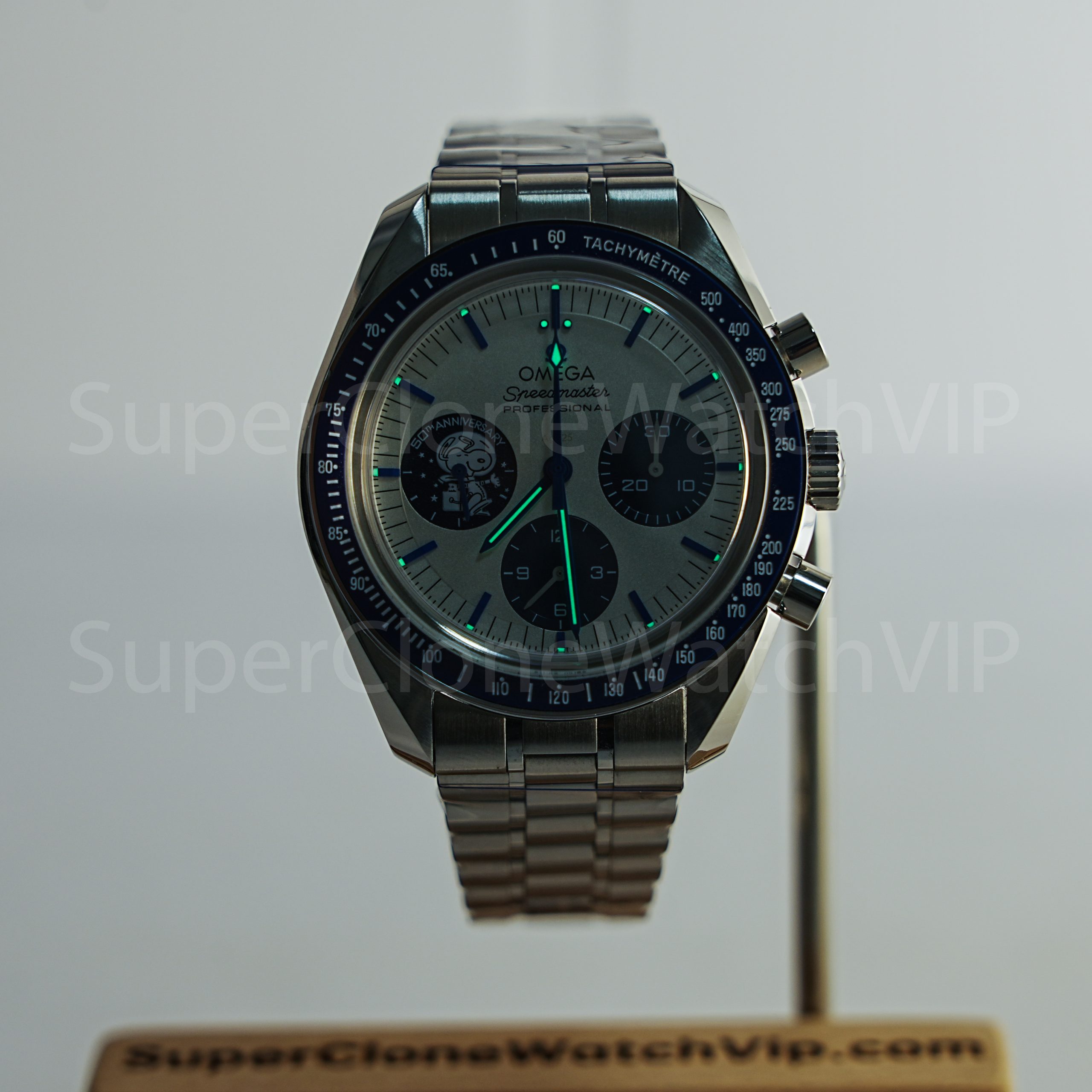
The Silver Snoopy-style Speedmaster is a useful reference for checking blue bezel tone, silver dial clarity, sub-dial spacing, small artwork detail, steel bracelet fit, and case-side proportions. The image opens the product detail page, so the next step is clear from the article.
Why the Speedmaster Needs a Different Review Method
First, the Speedmaster is not a loud design. It wins through balance. The dial looks simple from a distance, yet the small details become demanding under close photos.
For example, the tachymeter bezel forms a strong outer frame. The sub-dials create the visual center. In addition, the chronograph pushers and crown shape control the case-side impression.
Therefore, one attractive front image is not enough. A better review should include a straight dial photo, bezel close-up, side profile, bracelet or strap detail, clasp view, caseback image, and a short function video.
For wider Omega browsing, the Omega model collection is the best starting route. Meanwhile, a different integrated-bracelet sports look can be compared through the Audemars Piguet collection when a sharper angular case style is preferred.
Chronograph Checks: Sub-Dials, Pushers and Reset Proof
Next, the chronograph layout should be reviewed from the center outward. The central chronograph hand should rest cleanly at 12 o’clock. If it leans to one side, the dial can feel uneven every time the watch is seen.
Also, the three sub-dials should form a calm triangle. The left, right, and lower registers should not feel crowded. The printed numerals should look readable, and the hands should reach their tracks naturally.
In addition, the pushers should sit parallel to the case side. The upper and lower pushers should not look crooked. The crown should sit straight between them, with no obvious case-side imbalance.
For this reason, video proof before shipping is important. A short clip can show start, stop, reset, crown setting, and clasp closure. However, video should support still photos rather than replace them.
Bezel and Tachymeter Scale: The Outer Detail That Changes Everything
Then, the bezel deserves a slow review. On a Speedmaster, the tachymeter scale is not only decoration. It frames the whole dial and decides whether the face looks sharp.
The numerals should look clean, evenly printed, and centered. The 60 marker should sit naturally above the dial center. At the same time, the bezel insert should not show uneven gaps around the crystal.
For reference, official Speedmaster Moonwatch design notes describe a ceramic bezel ring with a tachymeter scale and a bracelet with brushed and polished finishing. That makes bezel print, color contrast, and bracelet finishing useful reference points during visual review.
However, the reference should only guide the eye. The final decision should still come from the actual QC photos of the selected piece. Lighting, camera angle, and version differences can all change how the bezel appears.
Dial, Snoopy Artwork and Moonwatch Character
After that, the dial should be checked as a full composition. The logo, Speedmaster script, minute track, hour markers, sub-dial numerals, and hand stack should work together. If one part looks too heavy, the whole face feels less refined.
Snoopy-style models need extra attention. The small artwork should look clean rather than muddy. The blue sub-dials should match the blue bezel tone. Also, the silver dial surface should not look flat or washed out in every photo.
Meanwhile, classic Moonwatch-style dials need restraint. The black dial should not appear overly glossy. The white print should stay crisp. The hands should look slim and balanced, not too thick for the sub-dial layout.
For a broader Omega-style comparison, this Omega QC comparison guide adds useful context. Still, this Speedmaster article should remain model-specific because chronograph spacing and tachymeter alignment matter more here.
Case, Bracelet and Clasp: The Wrist View Matters
Next, the case should be checked from the side. A Speedmaster-style case should not look overly thick or blocky. The lugs should curve naturally, and the pusher side should look controlled.
Also, brushed and polished transitions should look clean. Rough edges can weaken an otherwise attractive dial. Therefore, side-angle photos are just as useful as front dial photos.
The bracelet should be reviewed link by link. End links should meet the case without obvious uneven gaps. The brushing direction should remain consistent. In addition, the bracelet should not look stiff or poorly seated near the lugs.
Finally, the clasp should close flat and sit straight. Engraving should look centered and clean. Because the clasp is handled often, rough finishing becomes noticeable faster than many dial details.
Natural Product Path: Which Omega Chronograph Direction Fits Best?
At this stage, the model direction should follow wearing style. A silver-blue Snoopy-style Speedmaster suits a more distinctive visual mood. A classic black Moonwatch-style direction suits cleaner daily wear. A larger Planet Ocean Chronograph alternative suits a bolder sport profile.

Grey-orange sport chronograph alternative
This direction works when a larger, more technical Omega chronograph look is preferred. Review the orange ceramic bezel, grey dial, twin-register layout, pusher position, date centering, and steel bracelet finishing.

Deep Black sport chronograph alternative
This option suits a darker sport-watch presence. Check the black-orange bezel, dial legibility, case thickness, pusher alignment, clasp closure, bracelet coating, and video proof before approval.
For a full brand-level view, return to the Omega collection and compare dial color, case size, bracelet type, chronograph layout, and available factory version before sending a request.
QC Photo Checklist Before Approval
Now, the review should become structured. A complete QC set should answer visual and functional questions before shipment. The checklist below keeps the process organized and avoids judging the watch from one attractive photo.
| QC Area | What to Check | Why It Matters |
|---|---|---|
| Dial | Logo position, Speedmaster script, sub-dial spacing, hand length, minute track, lume tone. | The dial controls the full face balance and reveals most assembly issues. |
| Bezel | Tachymeter font, 60 marker position, insert fit, color tone, crystal edge gap. | The bezel frames the dial and quickly exposes weak alignment. |
| Case | Side thickness, lug curve, crown position, pusher alignment, brushing and polishing. | The case profile decides whether the watch looks balanced on the wrist. |
| Bracelet or Strap | End link fit, brushing direction, strap edge, screw fit, link flow, wrist drape. | Daily comfort and visible quality depend heavily on this area. |
| Clasp | Engraving, closure, inside finish, folding parts, logo placement, clasp flatness. | The clasp is handled often, so rough finishing is easy to notice. |
| Date Window | Date centering, font weight, window shape, dial position, and date change when shown. | Some Omega chronograph styles include a date, and poor centering stands out. |
| Movement / Function | Crown setting, hand movement, chronograph start, stop, reset, and basic timing proof when available. | Chronograph behavior should be checked before shipment approval. |
| Video Proof | Front view, side angle, crown operation, pusher operation, reset action, clasp closure. | Video catches handling details that still photos may hide. |
For a full photo review flow, use the QC photo process. It helps organize dial, bezel, case, bracelet, clasp, caseback, and video checks before shipment.
In addition, the factory version guide explains why one factory name should not be treated as the best answer for every model. The exact watch, current version, and QC result should come first.
Practical Selection Advice
First, choose the visual direction. A black Moonwatch-style dial is usually the cleanest daily option. A silver-blue Snoopy-style version feels more special and more distinctive in appearance.
Second, compare bracelet and strap needs. Bracelet versions need closer checks on end links, clasp engraving, and brushing direction. Strap versions need attention around lug gaps, stitching, and edge finishing.
Third, ask about current factory version before payment. A strong version should still be checked with actual QC photos. A known version can still have a small individual assembly issue.
Finally, the clearest request includes target model, dial color, bracelet or strap preference, budget range, preferred factory direction, receiving country, QC photos, and video proof. For a wider order workflow, the guide hub connects model checks, factory notes, QC process, video proof, support, and shipping topics.
Related Reading
Omega QC Comparison Notes
Useful for comparing Omega-style dial printing, case shape, bracelet finish, and QC photo logic across sport-watch directions.
Factory Comparison Notes
A practical article for comparing factory fit by model, current version, movement option, QC photos, and stock availability.
Video Proof Before Shipping
A useful support page for checking function proof, hand reset, clasp closure, real-light angles, and pre-shipping confirmation.
FAQ
What should be checked first on a Speedmaster-style chronograph?
First, check the dial straight on. The central chronograph hand should rest at 12 o’clock. Then review sub-dial spacing, tachymeter alignment, logo position, minute track, and hand length.
Why does the tachymeter bezel matter so much?
The tachymeter bezel frames the full dial. If the numerals look too thick, the 60 marker sits off-center, or the insert has uneven gaps, the front view loses balance.
Does a Snoopy-style Speedmaster need extra QC photos?
Yes. Snoopy-style designs add character artwork, blue sub-dials, themed color, and special dial detail. Therefore, close-up dial photos and caseback images are useful before approval.
Should video proof replace QC photos?
No. Video proof should support the photo review. It is useful for chronograph start, stop, reset action, crown setting, clasp closure, and side profile. Still photos remain better for print and alignment checks.
What information should be sent for stock and QC confirmation?
A clear request should include the target model, dial color, bracelet or strap preference, budget range, factory version preference, and receiving country. Then stock, version notes, QC photos, and video proof can be confirmed more efficiently.
Final Advice Before Sending a Request
In summary, a Speedmaster-style chronograph should be approved through visible evidence. Dial symmetry, bezel printing, sub-dial spacing, pusher alignment, case thickness, bracelet finishing, clasp action, and function video all matter.
Finally, send the target Omega Speedmaster Clone model, budget range, factory version preference, receiving country, and preferred bracelet or strap direction. Then request stock status, current version notes, QC photos, and video proof before shipping.
- First, request straight dial, bezel close-up, side case, bracelet, clasp, and caseback photos.
- Second, ask for chronograph start, stop, and reset proof in a short handling video.
- Finally, compare stock, version notes, and QC photos before payment confirmation.