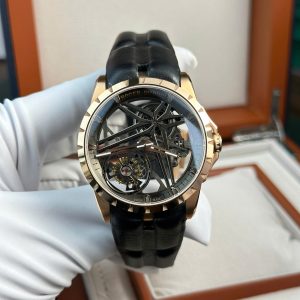
The best richard mille clone is not chosen by one dramatic product photo. Instead, it is judged through case shape, rubber strap fit, skeleton dial clarity, bezel screw alignment, and QC proof. Therefore, this guide focuses on visible details that affect wrist presence and final confirmation.
Richard Mille-style watches are detail-sensitive because the tonneau case is bold, the dial is open, and the strap connects directly into the case. In addition, a higher-grade super clone watch should be reviewed through clear model photos, factory version notes, QC photos before shipping, and short video proof.
This article follows a practical selection path. First, it explains case shape and rubber strap checks. Next, it reviews skeleton dial details and factory version comparison. Finally, it gives a QC checklist, natural model recommendations, and a direct contact path for stock, version, QC photos, and video proof.
Article Navigation

Tap the image to view the matching RM 27-05 product detail page for case shape, skeleton dial, strap fit, and QC reference.
Case Shape: The First Detail That Decides the Look
First, the case shape creates the strongest first impression. Richard Mille-style designs use a curved tonneau profile, so the case should not look flat, square, or swollen. Instead, the bezel, middle case, and caseback should form a clean layered structure.
Moreover, the side view matters as much as the front view. A bold case can still look refined when the side wall curves smoothly. However, a thick block profile makes the watch appear heavy even when the dial photo looks attractive.
In practical review, the crown side deserves extra attention. The crown should sit straight within the case wall, and the pusher area should not look uneven. Therefore, the case should be checked from the front, both sides, the back, and a wrist-style angle.
Bezel Curve, Case Layers, and Screw Position
Next, the bezel should follow the case curve without rough edges. The screw heads should sit evenly and should not appear too deep, too high, or randomly angled. Since the bezel is large, small screw errors are easy to notice.
At the same time, case layers should look separated. The top bezel, middle case, and caseback should not merge into one soft shape. In addition, dark carbon-style cases need careful lighting because texture, screw depth, and edge finishing can hide in shadow.
For broader case-shape comparison, the AP openworked case category is a useful internal reference. Although AP and Richard Mille have different design languages, both require careful checks on bezel shape, visible screws, open dial depth, and wrist balance.
Rubber Strap Fit: Comfort, Curve, and Daily Wear Logic
Second, the rubber strap has a major effect on daily comfort. The strap should flow out of the case without a large gap. Also, the first strap section should curve downward naturally instead of pushing straight outward.
Furthermore, strap texture should look clean and even. A controlled matte finish usually works better than an overly glossy surface. In addition, the strap edges should look neatly cut, with no rough trimming around the holes or buckle area.
The clasp or buckle area matters as well. The strap should sit centered when closed, and the clasp should not twist the watch to one side. Therefore, strap photos should include the front view, both side views, closed clasp view, and flat-table view.
For an official design reference, Richard Mille describes the RM 67-02 strap as seamless, non-slip, elastic, and shaped for wrist comfort on its own website. This does not judge any alternative product, but it explains why strap integration and wrist fit are important in RM-style design language. View official strap reference.
What a Useful Strap Photo Should Show
A useful strap photo should not only show the top of the dial. It should show how the strap enters the case. Moreover, it should show whether the rubber sits close to the lug area without a visible lift.
In addition, a short clasp video adds value. Photos show shape, yet video shows opening and closing action. For this reason, video proof before shipping should be included when strap feel, clasp action, or crown operation needs confirmation.
Skeleton Dial: Depth Matters More Than Decoration
Third, the skeleton dial is the center of most RM-style designs. Because the dial is open, small issues become easier to notice. Therefore, the review should focus on depth, bridge layout, hand clarity, marker placement, and dust control.
A strong skeleton dial should not look like a flat printed plate. Instead, it should show layered construction through the bridge, wheel area, hand stack, and inner frame. Meanwhile, the hour track should remain readable under normal light.
However, an open dial can become too busy. More visible parts do not always create a better result. A cleaner layout gives the hands enough contrast and keeps the markers easy to read from a normal wrist distance.
Hand Alignment, Marker Spacing, and Date Window
For a proper Richard Mille clone review, the hands should sit centered and should not appear bent. The minute hand should point cleanly toward the marker track. Also, the hour markers should look evenly placed around the dial edge.
If the model has a date window, the date should sit centered inside the opening. A date that leans high, low, left, or right can distract from the entire dial. In addition, the printed date font should look consistent across several numbers.
Finally, close-up photos should show dust control under the crystal. Small particles are more visible on openworked designs. As a result, front photos and angled light photos should be reviewed together.
Mid-Article Product Direction
Dark carbon-style RM models need careful inspection because case texture, bezel screws, skeleton dial depth, black strap fit, and inner finishing can look different under each lighting angle. Therefore, the RM 27-05 direction is useful for checking the exact points discussed in this guide.
Factory Version Comparison: Useful, but Not Enough Alone
Next, factory version comparison should stay practical. A version may show cleaner screw setting, better case layering, stronger strap fit, or a more convincing skeleton dial. However, a factory name alone should not replace current QC photos.
Instead, the important question is simple. Does the exact watch match the selected model in case shape, dial layout, strap color, function display, and visible finishing? Also, do the photos and video proof support the version claim?
For background, the factory version guide explains why version notes, model focus, and batch differences should be checked before confirmation. In the same way, the watch selection guide helps organize model, function, proof, and delivery details.
| Inspection Area | What to Check | Why It Matters |
| Case shape | Curved tonneau profile, side layers, crown position, caseback fit | It creates the first wrist impression. |
| Bezel and screws | Even depth, steady angle, clean seating, balanced bezel line | Large bezels make screw errors visible. |
| Skeleton dial | Layering, bridge finish, hand clarity, marker spacing, dust control | Open dials expose small finishing issues. |
| Rubber strap | Case gap, curve, texture, clasp centerline, hole cutting | Comfort depends on strap integration. |
| Date and function | Date centering, crown setting, hand motion, chronograph action if present | Photos cannot confirm every operation. |
In short, factory comparison is only useful when it connects to the exact model. Case material style, case color, strap color, skeleton dial layout, and movement function should be confirmed together. Otherwise, the version name may create confidence without enough visual proof.
Model Guide: What Style Fits Different Wearing Needs
After the inspection logic is clear, model choice becomes easier. A black carbon-style case gives a sport-focused tone. A slim skeleton case feels cleaner and more technical. Meanwhile, a red-accented case creates stronger wrist presence.
For a daily sporty look, a rubber strap model with balanced thickness is usually more practical. It should not sit too high, and the strap should curve smoothly around the wrist. In addition, a matte strap finish helps the watch look more controlled in daylight.
For a technical statement look, an openworked case and skeleton dial create a stronger impression. However, that direction needs closer QC. Dust, screw alignment, inner bridge finishing, and crystal edge clarity become much easier to see.
For wider browsing, the Richard Mille model collection is the natural category path. It allows comparison across skeleton dial layouts, case colors, rubber strap options, transparent styles, and sport-focused designs.


How to Choose by Wearing Scenario
- For daily wear: choose a balanced rubber strap model with controlled thickness and clear wrist comfort.
- For sport styling: focus on strap curve, case grip, crown protection, and easy dial reading.
- For statement styling: consider openworked case designs, then check dust and edge finishing closely.
- For technical dial interest: prioritize skeleton dial depth, bridge cleanliness, hand contrast, and video proof.
This path makes the product recommendation feel natural. The watch appears in the article because it matches the problem being solved: case shape, rubber strap comfort, skeleton dial visibility, and QC confidence before shipment.
QC Photo Checklist Before Final Confirmation
Now, the QC stage should confirm the exact watch prepared for shipment. Sample images are not enough for this style because case shape, strap fit, and dial cleanliness can vary by piece. Therefore, the review should include enough angles to judge the full watch.
For a structured process, the QC photo process should cover the following details.
- Dial: check hand centering, marker spacing, text clarity, logo position, dust control, and skeleton bridge depth.
- Bezel: check screw depth, screw angle, edge finishing, surface marks, and overall symmetry.
- Case: check side profile, crown position, caseback fit, lug curve, case color, and layered construction.
- Bracelet or strap: check rubber texture, strap-to-case gap, strap curve, hole cutting, and closed shape.
- Clasp: check closing action, centerline, engraving clarity, and whether the strap sits flat when closed.
- Date window: check date centering, window edge, font consistency, and date change behavior if the model has a date display.
- Movement and function: check winding feel, crown setting, hand movement, and chronograph operation when present.
- Video proof: request short clips for dial movement, crown operation, date change, clasp handling, and side profile.
Additionally, each image should be bright and sharp enough for zoom review. Blurry photos can hide dust, weak finishing, or misalignment. As a result, clear lighting and multiple angles are more useful than one dramatic product shot.
A practical QC set should include front, back, left side, right side, crown side, strap, clasp, close-up dial, and short function video. For transparent and openworked models, extra close-ups of the case edge and inner bridge area are useful.
Common Selection Mistakes to Avoid
However, one polished front image can mislead the review. A watch may look attractive from the dial angle while the side profile appears too thick. Therefore, front, side, crown-side, and strap photos should be reviewed together.
Another mistake is focusing only on the skeleton dial. A dramatic open dial cannot fix a poor rubber strap connection. Likewise, a clean case still needs a clasp that closes evenly and sits centered.
Also, case color should be checked under normal light. White, black, red-accented, and carbon-style cases react differently in photos. In addition, strap color should match the case tone without looking randomly mixed.
Finally, a factory label should not replace actual proof. Current stock photos, factory version notes, and short function video provide a clearer basis for final confirmation.
FAQ: Rubber Strap, Case Shape, Skeleton Dial, and QC
What should be checked first in an RM-style watch review?
First, check case shape and rubber strap fit. These two areas decide wrist presence before smaller dial details are noticed. After that, review bezel screws, skeleton dial depth, date centering, clasp alignment, and video proof.
Why does rubber strap fit matter so much?
Because the strap connects directly to the case, it affects both comfort and visual balance. A stiff strap can push the case upward, while a cleaner strap curve helps the watch sit more naturally.
How should a skeleton dial be inspected?
A skeleton dial should be inspected for layered depth, readable hands, even markers, clean bridge finishing, and dust control. In addition, angled light photos help reveal crystal marks and dial cleanliness.
Is video proof necessary before shipping?
Yes. Video proof helps confirm crown operation, hand movement, date change, clasp action, and side profile. Photos remain important, but video adds motion and real-light context.
Which RM-style direction is easier for daily wear?
Generally, a balanced rubber strap model with controlled case thickness is easier for daily wear. Transparent and highly openworked designs create stronger visual impact, but they require closer QC inspection.
What details should be included when asking for stock and QC?
The message should include target model, preferred case color, strap color, budget range, factory version preference, and delivery country. Then request current stock, exact version notes, QC photos, and short video proof.
Final Advice Before Confirmation
In summary, the best richard mille clone should be evaluated through case geometry, rubber strap integration, skeleton dial clarity, and proof quality. A strong option does not need exaggerated claims. Instead, it should show cleaner proportions, consistent finishing, clear pre-shipping photos, and useful video proof.
For the next step, send the target model, budget range, preferred factory version, case color, strap preference, and delivery country. Then request current stock, version notes, QC photos, and short video proof before final approval.
- First: compare front, side, crown-side, caseback, and strap angles.
- Second: inspect rubber strap curve, clasp alignment, skeleton dial depth, and date centering.
- Finally: request stock status, factory version, QC photos, and video proof before shipment.