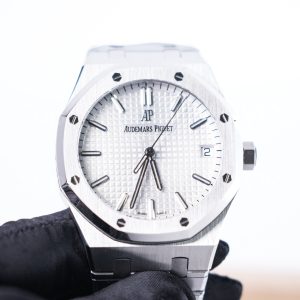
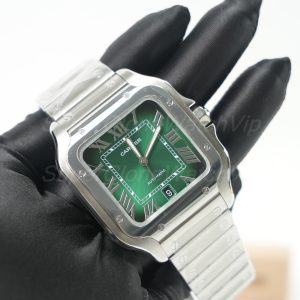
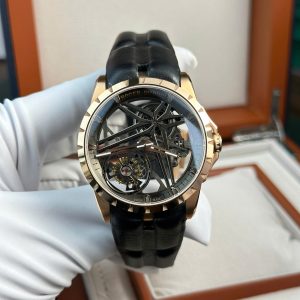
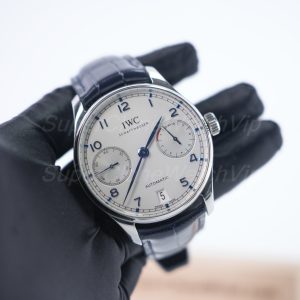
This ap clone watch review focuses on Royal Oak selection from a practical angle: dial depth, bezel screws, case profile, bracelet finishing, clasp alignment, QC photos, and video proof before shipping.
Among super clone watches, the Royal Oak is especially detail-sensitive because its octagonal bezel, exposed screws, integrated bracelet, and Tapisserie-style dial make small visual issues easier to notice.
Why Royal Oak Selection Needs a Real Checklist
First, the Royal Oak is built around straight lines and repeated geometry. The bezel has eight sides, the screws form a visual rhythm, and the bracelet flows directly from the case. As a result, one weak detail can affect the whole impression.
Also, the design uses contrast. Brushed surfaces, polished bevels, dial texture, and sharp case edges all need to work together. Therefore, a flat dial, soft case edge, uneven screw, or rough bracelet can look more obvious than it would on a simpler round watch.
For original design context, the official Royal Oak collection shows why the octagonal bezel and integrated bracelet identity remain central to the series. That design background also explains why QC photos matter so much for an AP-style selection.
For site model browsing, the Audemars Piguet product category keeps the selection focused on Royal Oak, Offshore, Concept, skeleton, and chronograph-style options.
Model Choice: Daily Royal Oak, Chronograph, Concept, or Offshore
Before checking tiny details, the model direction should be clear. A three-hand Royal Oak-style model gives a cleaner daily look. Meanwhile, a chronograph creates stronger sports presence and adds sub-dial, pusher, and date-window checks.
In addition, case size changes wrist presence. A 39mm or 41mm integrated-bracelet design can wear wider than expected because the first bracelet links extend from the case. So, side photos and first-link photos are more useful than case diameter alone.
A Concept or openworked direction needs even more careful review. The dial has more visible layers, so bridge shape, visual depth, hand contrast, and symmetry should be checked through close photos and short video proof.
For a broader ordering path, the buying guide explains how model fit, QC support, factory version, and contact confirmation work together before final selection.
Fast Selection Logic
For a clean daily look, a three-hand Royal Oak path is easier to review and easier to match. For a sportier profile, a chronograph path adds visual strength but needs more QC angles.
For a stronger statement, Concept, Offshore, or openworked-style models can work well. However, dial visibility, case edge finishing, strap fit, bracelet transition, and video proof become more important.
Dial Review: Texture, Logo, Markers, and Date Window
The dial is the first area to review because it controls the face of the watch. The Tapisserie-style pattern should look even, not flat. Also, the texture should remain consistent near the markers and date window.
Next, the logo and dial text should look clean. Printing should not bleed into the dial pattern. The logo should not look overly thick, tilted, or blurred under close inspection.
Markers need straight placement. Each applied marker should point toward the correct minute position. Even a slight marker tilt can stand out because the Royal Oak dial uses a grid-like structure.
Finally, the date window should sit cleanly in the opening. The date should appear centered, and the font should not look cramped. For a piguet replica with a simple three-hand layout, this date check is one of the fastest ways to spot weak assembly.
Case and Bezel: The Royal Oak Geometry Test
The bezel is the signature checkpoint. It should show clear octagonal shape, balanced screw positions, and a clean contrast between brushed top surfaces and polished bevels. If the bezel looks soft, the whole design loses structure.
Screw seating also matters. Each screw should sit evenly in the bezel, with no obvious height difference. In addition, screw slots should look clean and should not appear damaged in close photos.
The case side should look controlled. A thick side profile can change the Royal Oak feeling quickly. Therefore, side photos should be reviewed together with front photos, not after the final decision.
Factory choice can affect case profile, bracelet finishing, dial tone, and movement layout. The factory version guide gives useful background for comparing version strengths without relying only on factory names.
| Area | What to Check | Why It Matters |
| Bezel | Octagonal shape, screw seating, brushed top, polished bevels. | The bezel defines the Royal Oak identity. |
| Case Side | Thickness, crown position, case edge, crystal height. | Side profile affects proportion and wearing presence. |
| First Link | Transition from case to bracelet, link drop, gap control. | Integrated bracelet flow is part of the case design. |
Bracelet and Clasp: Where Many Royal Oak Details Show
The bracelet is not just a strap. It continues the case architecture and creates much of the Royal Oak character. Therefore, link brushing, polished bevels, edge finishing, and flexibility should all be reviewed.
Good brushing should look directional and even. The polished bevels should not look wavy or overly rounded. Meanwhile, bracelet gaps should appear controlled, especially near the first links.
The clasp should close straight and sit flat. It should not look offset when shut. Also, the inner clasp area should look clean enough for the selected version and not show rough finishing.
Still photos help, but clasp action and bracelet movement are easier to understand in motion. For this reason, video proof before shipping is useful when the model has a complicated bracelet, chronograph layout, or openworked dial.
Royal Oak QC Photo Checklist Before Shipping
QC photos should show the exact watch prepared for shipment. A useful set should not rely only on a front photo. Instead, it should cover dial, bezel, case, bracelet, clasp, date window, movement function, and video proof.
In addition, clear image quality matters. If a photo cannot be zoomed, it cannot support real review. The QC photos before shipping page explains how pre-shipping photos help confirm visible details before dispatch.
| QC Point | Required Review | Best Proof |
| Dial | Texture depth, logo printing, marker alignment, dust, hand placement. | Straight photo and angled close-up. |
| Bezel | Eight-sided shape, screw seating, brushed top, polished bevels. | Front photo and light-angle photo. |
| Case | Side profile, crown position, crystal height, case edge finishing. | Left and right side photos. |
| Bracelet | First-link flow, brushing, edge polish, link spacing, screw slots. | Flat bracelet photo and wrist-style angle. |
| Clasp | Closure alignment, interior finish, logo detail, locking feel. | Open clasp photo and closing video. |
| Date Window | Date centering, font clarity, window edge, dial balance. | Close-up date photo. |
| Movement / Function | Time setting, date change, crown action, chronograph function if applicable. | Short function video. |
Natural Model Paths for Royal Oak and AP Comparison
The right AP direction depends on dial complexity, wrist presence, bracelet style, and QC tolerance. A simple Royal Oak-style dial is easier to review. A chronograph adds sub-dial and pusher checks. An openworked or Offshore-style model needs stronger video proof because more details are visible.
The product images below are fully clickable, and each button leads to the same product detail page. This gives a clear path from review education to model comparison without forcing a purchase decision.
 | Chronograph Dial Path Royal Oak Chronograph 26331 Grey & Blue Dial 41mmThis model path fits a stronger sports-luxury look with visible chronograph sub-dials. Therefore, the QC review should focus on sub-dial spacing, date position, pusher alignment, bracelet brushing, and bezel screw seating. It is a useful option when a Royal Oak-style watch needs more wrist presence than a simple three-hand layout, while still keeping the integrated bracelet identity. |
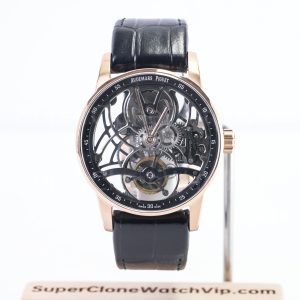 | Openworked Proof Path Royal Oak Concept Flying Tourbillon 26600OR Black Openworked 41mmThis path fits a more technical AP look with an openworked dial. Because the dial exposes more visual layers, close-up QC photos and short video proof are especially important before confirmation. It is suitable when the main focus is skeleton depth, hand contrast, case finishing, strap fit, and visible movement-style presentation. |
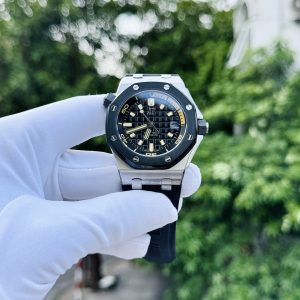 | Sport Strap Path Royal Oak Offshore Diver 15720ST Black Dial 42mmThis Offshore-style path fits a stronger sport profile with a black dial and rubber strap. Therefore, the QC review should focus on dial visibility, inner bezel alignment, case thickness, strap fit, and date-window placement. It is useful when the preference is a bolder AP sports-watch look instead of a slimmer bracelet-based Royal Oak direction. |
For more Royal Oak, Offshore, Concept, chronograph, and openworked options, the related AP model page can be used to compare case style, dial layout, bracelet type, strap direction, and available factory version.
Common Royal Oak Review Mistakes
One common mistake is judging from the front view only. A Royal Oak-style watch may look balanced from the front while the side case appears too thick. Therefore, side photos should be part of the review.
Another mistake is focusing only on dial color. Dial tone matters, but bezel geometry, screw seating, bracelet transition, and clasp finish are just as important. The best review looks at the whole watch, not one attractive feature.
Also, factory names should not replace QC. A strong version can still have a weaker individual piece. For that reason, the exact watch photos are more important than general factory reputation.
Finally, complicated layouts should not be rushed. Chronograph, Concept, Offshore, and openworked AP models need more proof because there are more visible details to inspect.
FAQ
What should be checked first in Royal Oak QC photos?
The first check should be dial balance, bezel geometry, screw seating, and date centering. These details create the first visual impression and quickly show whether the watch looks aligned.
Why is the Royal Oak bracelet so important?
The bracelet is part of the Royal Oak case architecture. Therefore, brushing direction, polished bevels, first-link flow, clasp closure, and link spacing all affect the final look.
Is factory version enough to decide on a Royal Oak-style model?
Factory version helps narrow the comparison, but it should not replace exact QC photos. The final review should focus on the specific watch, not only the version name.
When is video proof most useful?
Video proof is most useful for bracelet movement, clasp action, crown operation, chronograph function, openworked dials, and dial reflections under movement.
What information should be sent before requesting stock and QC photos?
The message should include the target model link, preferred size, dial color, budget range, factory version preference, and receiving country. Then stock, version, QC photos, and video proof can be confirmed clearly.
Final Selection Path and Contact CTA
A strong Royal Oak selection should follow a clear sequence. Start with model style, case size, dial color, and factory version. Then review QC photos covering dial, bezel, case, bracelet, clasp, date window, movement function, and video proof.
For final confirmation, send the target model, budget range, preferred factory version, and receiving country through the contact page. Stock status, factory version, QC photos, and video proof can then be checked before shipping.
- For daily use, compare cleaner three-hand Royal Oak-style models first.
- For stronger wrist presence, compare chronograph, Offshore, Concept, or openworked-style directions.
- For final approval, rely on exact QC photos and video proof rather than sample images.
Contact for Stock, QC Photos and Video Proof
In summary, this ap clone watch review gives a practical Royal Oak checklist: choose the right model path, compare the right factory version, and confirm the exact watch through clear pre-shipping proof.