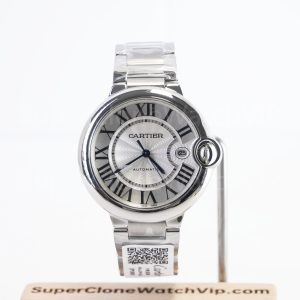
Five stars. “Perfect quality.” That review sounds reassuring—but what does it actually prove? Without a model reference, order context, current QC media or post-delivery detail, very little. This super clone watches review treats feedback as evidence to audit, not praise to repeat. The aim is to separate personal impressions from facts that another buyer can check.
A useful review can identify what happened in one order. It cannot guarantee every future piece, batch, shipment or support case. Read each statement as a claim that needs matching proof, then record what remains uncertain.
What a Super Clone Watches Review Can Prove—and What It Cannot
A review is a report about a claimed experience. At its best, it can show that a particular buyer discussed a specific model, received pre-shipping media, followed a delivery timeline and described the condition after arrival. It may also reveal how questions or problems were handled.
It does not prove that every order will be identical. It cannot establish current stock, a later batch, another destination’s delivery time or a function that never appears in the evidence. A screenshot of praise is also not independent verification merely because it looks informal.
Use reviews as leads for further checking. In the wider replica watches market, an older comment may refer to a different model, configuration or shipment. Current, claim-specific evidence should carry more weight than a broad compliment posted months earlier.
Useful question: “What exact fact in this review can I verify?” If the answer is only that someone awarded five stars, the review has emotional value but limited audit value.
Separate Opinion From Verifiable Evidence
Not every sentence in a review should receive equal weight. Sort the language before deciding whether it is credible.
A credible review often combines all three. The buyer may like the watch, identify what arrived and document how the order progressed. The problem begins when opinion is written as certainty: “perfect,” “identical,” “best” or “no flaws” without defining what was examined.
Compare the language with the media on the site’s Customer Reviews page. Do not assume every screenshot proves every claim. Check whether the image, wording and order stage belong together.
The same discipline applies to comments about clone watches: praise about appearance does not prove a function, delivery result or after-sales response unless those subjects have their own evidence.
QC Photos, Function Videos and Order Records
Evidence becomes useful when it answers the claim directly. A front image can support a statement about dial color or marker placement. It cannot prove clasp action, crown operation or a chronograph reset. For those claims, still images should be paired with an uninterrupted function video.
QC media should also be tied to the order being discussed. Look for a consistent model, dial, bracelet or strap, and a logical timeline from order confirmation to QC approval. Private names, addresses, payment information and tracking numbers should be hidden; privacy protection does not prevent the remaining evidence from showing sequence and context.
A claim-to-proof audit table
Use the table below to decide whether a review statement is supported, partly supported or still only promotional language.
For the site’s stated pre-shipping workflow, compare a review against the Super Clone Watch QC Process. When a review makes a moving-part or function claim, the Video Proof Before Shipping page gives the more relevant evidence path.
How Repeated Wording Reveals Manipulated Reviews
Repeated positive themes are not automatically suspicious. Different buyers can independently mention clear communication or useful QC photos. The warning sign is repeated composition: the same unusual phrase, the same order of compliments, the same punctuation and the same missing details across several entries.
Run a wording-pattern check
- Search exact phrases. Copy a distinctive six-to-ten-word sentence and check whether it appears in multiple reviews.
- Compare sentence order. A repeated sequence such as “quality—communication—shipping—will buy again” can indicate a shared template when the wording is nearly identical.
- Inspect the media. Reused crops, identical backgrounds or the same watch image attached to different stories weaken independence.
- Check timing clusters. Many short reviews appearing together are not proof of manipulation, but they deserve more scrutiny when language and ratings also match.
- Look for natural variation. Genuine feedback usually differs in vocabulary, priorities, length and the specific detail each person noticed.
The Federal Trade Commission’s general guidance says people should be able to trust that reviews reflect honest opinions from customers or experts who used the product or service, and it warns against fake reviews and manipulated rankings. That principle supports checking disclosure, independence and evidence rather than relying on rating volume alone. Read the FTC review guidance.
Shipping and After-Sales Evidence
A review that ends at “tracking received” covers only part of the experience. Stronger evidence follows the sequence through delivery, unboxing, condition on arrival and any later support request. It should distinguish seller-controlled steps from carrier or customs events.
For shipping claims, look for dates rather than adjectives. “Dispatched on Monday and delivered on Friday” is more useful than “very fast,” although it still applies only to that route and time. A delay review should identify where the parcel paused and whether updates were provided.
For after-sales claims, require a complete issue path: what the buyer noticed, when it was reported, what evidence was supplied, how support answered and what outcome followed. A screenshot saying “we will check” proves contact, not resolution.
Use the site’s Shipping & Customs information to understand the stated process, then compare the review with what actually happened. For post-delivery claims, check the documented scope on Warranty & Support instead of assuming that one buyer’s outcome applies to every situation.
Read Negative Reviews Without Overreacting
One negative review can reveal an important risk, but it should not be converted into a universal conclusion without context. Start by classifying the complaint. Was it about the watch shown in QC, a mismatch after delivery, slow communication, carrier delay, customs handling or an expectation that was never documented?
Do not dismiss negative feedback merely because the buyer sounds frustrated. Emotion and evidence can coexist. At the same time, do not treat a complaint with no model, date, media or response history as conclusive. The resolution often tells more than the star rating: Was the concern acknowledged, investigated and closed with a documented result?
A Review Credibility Scorecard
Score one review at a time. Give each dimension 0, 1 or 2 points. This is not a certification of the reviewer or seller; it is a method for deciding how much weight the review deserves and what evidence to request next.
FAQ About Review Credibility
Are five-star reviews enough to trust a seller?
No. A rating summarizes sentiment but does not show what was ordered, which evidence was reviewed or how delivery and support unfolded. Give more weight to specific, dated feedback with matching QC, delivery and post-arrival context.
What makes a QC photo useful in a review?
It should show the actual configuration being discussed, use clear angles and answer a defined claim. A front photo supports dial observations; side, clasp, caseback and close-up views are needed for other details. Moving functions require video rather than a still image.
How can repeated review wording be identified?
Search distinctive phrases, compare the order of compliments and inspect punctuation, grammar and attached images. Similar topics are normal; nearly identical composition across multiple reviews is the stronger warning sign.
Should one negative shipping review change the decision?
It should change the questions you ask, not automatically decide the outcome. Check the destination, tracking stages, source of the delay, update history and whether similar detailed complaints appear elsewhere.
What evidence should appear after delivery?
Useful post-delivery evidence includes privacy-safe unboxing media, confirmation that the received configuration matches the QC set, condition on arrival and a complete support trail if a concern was reported.
Build Your Own Evidence-Based Conclusion
Do not average every star rating and call the result certainty. Select three to five recent reviews that discuss the model or process you care about, score each one separately and write down the missing proof. A high-scoring review can guide your questions; it still cannot guarantee another order.
Your conclusion should contain three lines: what the evidence supports, what remains subjective and what must be confirmed with current media or records. That is more useful than “reviews look good” because it converts feedback into a repeatable audit.
Finish with the scorecard, not the star count
Record the total out of 12, then list the two weakest dimensions. Request only the evidence that would improve those dimensions—for example, an order-specific clasp view, a continuous function video, a delivery timeline or a documented support outcome.
Proceed only when the remaining uncertainty is understood and acceptable. The purpose of this page is not to declare every positive or negative review true; it is to make unsupported confidence harder to mistake for proof.