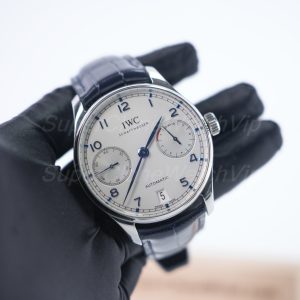
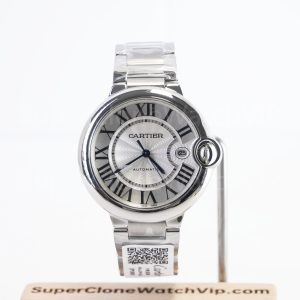
For a slim wrist, the best replica watch size for small wrist proportions usually starts around 34–38mm, yet diameter is only the opening filter. Lug span, case shape, dial opening, thickness, first-link flare, bracelet articulation, and clasp length can make two similar numbers wear very differently. A compact square watch may look stronger than a larger round dress watch, while a curved sports case may sit more securely than expected.
This guide suits a narrow or rounded wrist, an office-led rotation, a first compact watch, or a choice between understated and stronger wrist presence. The goal is not to force one model. Instead, the sections below turn wrist measurements, clothing, bracelet behavior, real product images, and pre-shipping QC into a clear shortlist.
Quick fit answer
A 35–36mm case is the lowest-risk daily starting point. A 37–39mm option can work when the lugs remain compact and the bracelet falls quickly. A square 39.8mm design should be treated as a deliberate statement choice, not as a minor step above 35mm.
Small-Wrist Size Shortlist: Start With Proportion, Not a Trend
A useful shortlist begins with the role of the watch. For quiet office wear, 34–36mm often leaves enough visible wrist around the case and works more easily under a sleeve. For a modern daily look, 36–38mm adds presence without automatically becoming dominant. A 39–40mm case can still work, although the shape and bracelet must earn the extra space.
Meanwhile, one millimeter rarely decides the result by itself. A broad dial and thin bezel can make a 37mm watch appear larger than a 39mm sports design with a strong bezel. Long straight lugs may extend farther than expected, while curved lugs can pull a larger case down toward the wrist. Accordingly, a size label should guide the first comparison rather than settle the order.
The safest everyday band is usually 35–38mm because it covers classic, modern, round, square, and rectangular directions. Even so, square cases need extra care. Their corners fill more wrist area, and an integrated-style bracelet can continue the visual width beyond the case. For that reason, a square 35mm design may carry as much presence as a larger round watch.
This approach is particularly suitable when a compact watch still needs character. Cartier-style shapes can create strong identity through geometry rather than diameter. By contrast, a sportier route from the OMEGA collection may use bezel width, dial detail, and strap choice to control visual size. The categories serve different style goals, so the final shortlist should compare like with like.
Who this method suits
- A wrist that often finds 40–42mm sport watches visually dominant.
- A rotation built around shirts, knitwear, tailoring, or restrained casual clothing.
- A comparison between compact Cartier shapes and stronger sport designs.
- An order that needs size evidence before payment and QC approval.
- A first purchase where repeat wear matters more than maximum wrist presence.
How to Find the Best Replica Watch Size for Small Wrist Proportions
Wrist circumference is useful, but it does not describe the whole surface carrying the watch. Two wrists can share the same circumference while having different shapes. A flatter wrist usually offers more horizontal room, whereas a rounder wrist gives the case less stable top space. As a result, flat wrist width often predicts overhang more clearly than circumference alone.
A soft measuring tape can record circumference without compressing the skin. Then, a ruler can estimate the flat upper width while the arm rests naturally. The measurement should not be taken with the wrist bent sharply, because that changes the visible surface. A quick top-down photo beside a ruler can also help preserve the proportions for later comparison.
Diameter measures the case from side to side, usually without the crown. However, it does not show how far the lugs reach along the wrist. Lug-to-lug length describes that vertical span, yet even that number may not capture a rigid first bracelet link. Consequently, the useful footprint includes the case, the lugs, and any part of the bracelet that cannot drop immediately.
Thickness affects stability and sleeve clearance. A tall case places more mass above the wrist and can rotate more easily when the bracelet is loose. By contrast, a thinner case usually slips under a cuff and keeps the visual profile controlled. Still, thickness alone is not decisive because a curved caseback and downward lugs can help a deeper watch sit securely.
Dial opening changes perceived size. A thin bezel exposes more dial, which creates a wider visual field. A broad bezel contains the dial and may make a larger case look more compact from above. Accordingly, a simple dress watch can appear bigger than a sportier case with a similar diameter, even though the sport watch may be physically thicker.
The existing watch size guide gives the general framework for diameter, thickness, lug span, bracelet style, and daily comfort. This article goes further by turning those factors into a small-wrist decision path and applying them to two real Santos size directions.
A five-step home comparison
- Record two measurements. Note comfortable circumference and flat upper wrist width. Together, they show both total size and usable surface.
- Create paper footprints. Cut simple outlines around 35mm, 38mm, and 40mm. Square templates should remain square because corners change the result.
- Check the wrist edges. The outline should remain inside the visible top surface without appearing squeezed between both sides.
- Repeat the check with clothing. Test a shirt cuff, knit sleeve, jacket sleeve, and normal desk posture.
- Keep only two directions. One should be the comfortable baseline. The other can add more presence if the footprint still remains controlled.
Why a paper template helps, and where it stops helping
A paper outline quickly exposes obvious width problems. It also shows whether a square case fills the wrist corners more than expected. However, paper has no thickness, no curved lugs, and no bracelet. It cannot predict top-heaviness, clasp pressure, or how the watch moves during a long day.
For that reason, the template should remove unsuitable options rather than approve a final one. A case that already looks too wide in paper will not become smaller after adding lugs and bracelet links. Conversely, a promising paper footprint still needs side views and bracelet evidence. The method saves time because it prevents color and dial detail from distracting from basic proportion.
The final shortlist should be written in plain language. “Compact and quiet” gives a different direction from “modern but still contained.” Likewise, “bold square case” signals a deliberate choice rather than a mistake. These simple descriptions make later product and QC discussions clearer than a vague request for something that is merely “not too big.”
Why Case Shape Changes the Size More Than One Extra Millimeter
Round, square, rectangular, and cushion-shaped cases distribute space differently. A round watch leaves open wrist area around its curved edges. A square case fills the corners and creates a stronger block of metal and dial. Meanwhile, a rectangular watch can appear long without becoming equally wide, which often suits a narrow wrist and formal clothing.
Case shape also changes where attention lands. A round sports watch may direct the eye toward the bezel. A square Santos-style design emphasizes the entire outline, bezel screws, and bracelet connection. A rectangular Tank-style direction focuses on dial proportion and vertical length. Accordingly, the same diameter cannot be transferred across these shapes as though they were equivalent.
Round cases: easiest to compare, but not identical
Round cases make diameter comparisons simpler because the shape is consistent in every direction. Even so, bezel width and lug length remain important. A wide open dial feels larger, while a strong bezel creates a contained center. Long lugs can make a conservative diameter stretch beyond the wrist, especially when they leave the case in a straight line.
Sports designs may look compact from above because the bezel reduces the visible dial. However, a deeper case and larger clasp can add physical presence. That trade-off matters during typing, driving, and travel. A narrow wrist may accept the front footprint while rejecting the side profile or clasp length.
Square cases: compact numbers with stronger presence
A square case reaches toward the wrist corners, so the visual footprint feels wider. The straight edges also make the boundary easier to notice. As a result, a 35mm square design can look purposeful and modern without relying on a 40mm diameter. This is one reason the Santos 35mm direction deserves attention on a smaller wrist.
The same geometry makes a larger square case less forgiving. A 39.8mm square design is not simply a 4.8mm increase across an empty circle. The extra width appears through corners, bezel area, dial, and the bracelet line. Accordingly, the larger model should be chosen for visible presence, not because the number still sits below 40mm.
Rectangular cases: narrow width can balance longer length
A rectangular case can be especially useful when wrist width is limited. The narrow horizontal dimension leaves visible skin on both sides, while the longer vertical line adds elegance. This shape often pairs naturally with tailoring and formal clothing. However, long straight strap attachments can still extend too far, so the top and bottom edges need review.
Rectangular proportions also reduce the pressure to choose a large dial. Roman numerals, minute tracks, and shaped cases can create enough identity in a compact footprint. Thus, a smaller size does not automatically look weak. It can appear more intentional because the shape carries the design.
Integrated-style bracelets: the hidden extension of the case
An integrated-style bracelet continues the case into the first links. Visually, that creates a clean and coherent line. Physically, it can add effective width when the first links remain partly rigid. The important question is not whether the bracelet looks integrated, but how soon it turns downward around the wrist.
A flexible first link helps a strong square case fit a narrow wrist. By contrast, outward flare creates gaps near the wrist edges and can make the watch appear larger than the case measurement. The clasp may then pull the head away from center. Accordingly, bracelet architecture belongs in the size decision rather than in a later adjustment stage.
The broader Cartier replica watches category is useful because it places square, rectangular, rounded, and jewelry-led directions in one family. A shape comparison can happen before dial color or version details enter the decision.
Cartier Santos 35mm vs 39.8mm: Two Different Small-Wrist Strategies
The most useful comparison is not “small versus large” in isolation. It is “compact structure versus deliberate presence” within the same design language. Both examples below use a square Santos direction and a bracelet-led silhouette. That shared architecture makes the size difference easier to understand than a comparison across unrelated brands.
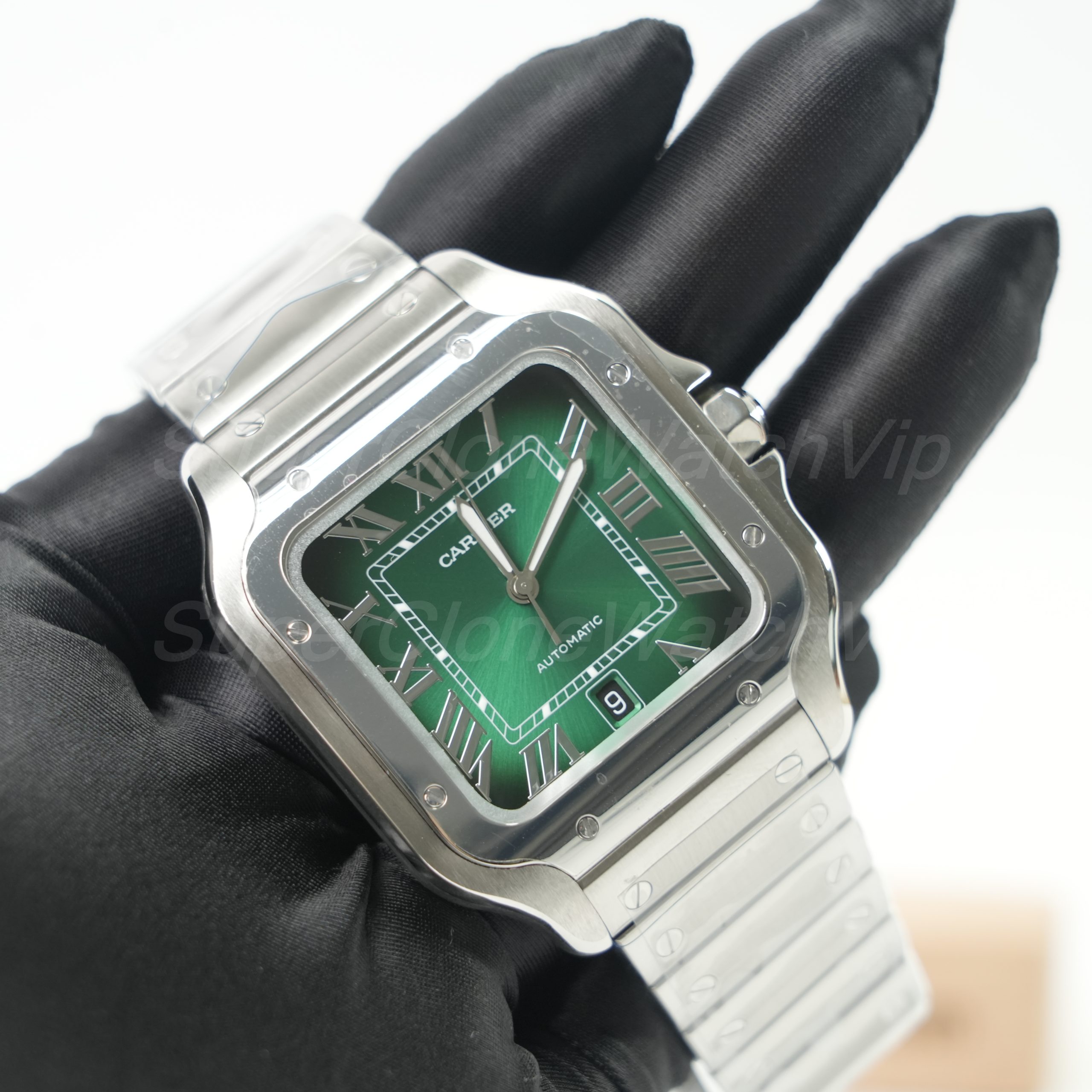
The 35mm option is the safer baseline. The 39.8mm green-dial option is the stronger alternative. Neither is automatically correct. The decision depends on flat wrist width, clothing, expected wrist presence, and whether the watch must remain quiet during daily use.

When the 35mm option makes more sense
The 35mm direction makes sense when comfort and repeat wear lead the decision. It offers enough square-case identity to avoid looking anonymous, yet it keeps more open wrist around the case. That margin matters when the wrist is rounded, when sleeves stay narrow, or when desk work occupies much of the day.
A compact case can also make bracelet finishing look more coherent. The bracelet does not need to spread as far before curving downward. As a result, the watch head is less likely to feel like a separate block sitting on top of the wrist. This balance often matters more than the desire for a larger dial in a product photo.
The 35mm model is not limited to formal clothing. Its geometric outline can work with denim, polos, knitwear, and simple jackets. However, the overall effect remains controlled. That makes it useful for a one-watch rotation where the same piece needs to move between work and relaxed settings.
When the 39.8mm option is worth the extra presence
The 39.8mm direction becomes reasonable when a strong square outline is part of the purpose. The green dial adds another visual signal, so the watch does not disappear into the outfit. A flat wrist and open sleeve make the larger case easier to carry, while a simple wardrobe prevents the color and geometry from competing with other details.
This choice should not be justified only by the fear that 35mm may look small. A paper template and top-down reference can settle that concern more reliably. If the 35mm footprint already looks balanced, the larger version should be selected because stronger presence is genuinely preferred. Otherwise, the order may trade long-term comfort for a short-lived impression.
The wider Cartier model selection remains useful when neither option fits the intended role. A rectangular direction can reduce width, while a rounded design can soften the wrist. Staying within the same brand family allows the shape to change without restarting the whole style search.
Match the Size to Real Wearing Scenes
A watch is not experienced in a static product image. It sits beside sleeves, rests on a desk, moves during travel, and changes with temperature. For that reason, the correct size should be tested against the normal week rather than a single photograph. A slightly smaller watch often becomes the better long-term choice because it creates fewer conflicts across different settings.
Office work and long typing sessions
Desk use exposes problems that a mirror check can miss. A long clasp may press against a laptop edge. A loose case can rotate toward the outside of the wrist, while a crown positioned too low may touch the hand. For this scene, stability matters more than maximum dial area.
A 35–36mm option usually leaves more room for natural wrist movement. It also reduces the chance that the case catches a narrow cuff. Nevertheless, bracelet sizing remains critical. A compact watch with a badly centered clasp can feel more irritating than a larger watch with balanced link distribution.
The Santos 35mm direction fits this role well because the square case still looks intentional beside office clothing. The watch can remain visible without becoming the main object in every interaction. Meanwhile, the larger green model suits an office only when dress rules are relaxed and stronger color feels appropriate.
One-watch daily rotation
A one-watch rotation needs flexibility across shirts, T-shirts, jackets, and weekend clothing. In this setting, 35–38mm often provides the broadest range. The watch remains clear enough for casual use but controlled enough for work. A bracelet can add visual structure, while a simple dial keeps the watch from competing with every outfit.
The case should also feel natural after several hours. A watch that requires constant adjustment is not truly versatile. Accordingly, the decision should include crown comfort, clasp position, and whether the head stays centered during walking. A product that looks perfect for ten seconds but slides all day does not serve a daily role.
When a round sport design is preferred, the OMEGA category can provide an alternative shape path. Even then, the same rules apply: evaluate bezel width, lug shape, thickness, strap or bracelet drop, and clasp length. Brand direction changes the style, not the underlying fit method.
Smart-casual outfits and visible wrist presence
Open cuffs and simple casual clothing allow more wrist presence. Here, a 37–39mm watch can feel balanced even when a smaller size suits formal clothing. The extra area can support a stronger dial color or geometric case. However, the case should still remain inside the wrist edges rather than relying on the sleeve to hide overhang.
The green 39.8mm Santos direction fits this scene when the outfit stays restrained. Grey, navy, black, white, and denim can support the dial without adding noise. By contrast, multiple bright accessories may make the watch look busier and larger. The strongest result usually comes from allowing one element to carry the emphasis.
A larger watch should still sit flat. Visible gaps at the first links make the case look detached from the wrist. Meanwhile, a centered clasp reduces rotation and helps the square outline stay aligned. These small fit details decide whether “bold” looks intentional or merely oversized.
Travel and long days
Travel adds heat, movement, bags, sleeves, and long periods of sitting. Wrist size may change slightly during the day, so an extremely tight fit becomes uncomfortable. At the same time, a loose heavy case can move constantly. A balanced bracelet should allow minor natural movement without letting the watch slide over the wrist bone.
Compact cases usually create less leverage and remain easier to manage through changing conditions. They also fit beneath jacket and shirt cuffs during transit. A larger case can still work, yet the bracelet needs enough articulation to distribute its presence. Strap stiffness and buckle position deserve similar attention on non-bracelet options.
A travel rotation also benefits from visual versatility. Neutral dials and controlled sizes move easily between casual and formal settings. A strong green dial may become the better choice when the watch is intended as the main style element. The decision should reflect the trip wardrobe rather than an isolated product image.
Formal clothing and narrow cuffs
Formal use makes thickness and width more visible. A watch that catches repeatedly on a cuff interrupts the clean line of the sleeve. Accordingly, a thinner or smaller case often looks more considered. The goal is not to hide the watch completely, but to let it appear naturally when the wrist moves.
Square and rectangular designs can create enough identity without large diameter. This is especially useful on a slim wrist, where a broad sports case may feel disconnected from formal clothing. A compact Santos direction keeps architectural detail while preserving cuff clearance. A rectangular alternative can reduce horizontal width even further.
The final decision should include the actual cuff opening, not a general assumption about dress wear. Some shirts leave more room than others. Testing a paper footprint beneath the most frequently worn sleeve can expose a mismatch before product selection moves too far.
Scene-to-size shortcut
- Quiet office role: begin with 34–36mm and controlled thickness.
- One-watch rotation: compare 35–38mm with bracelet and cuff checks.
- Modern smart casual: consider 37–39mm when the wrist has enough flat width.
- Bold square design: treat 39.8mm as a statement direction requiring top and side evidence.
- Formal or jewelry-led use: allow 31–35mm when shape and dial detail provide enough presence.
Bracelet Fit, Clasp Position, and Small-Wrist QC
A correct case size can still fail when the bracelet does not wrap properly. On a smaller wrist, each link and clasp section occupies a larger share of the circumference. Rigid first links can create outward flare, while a long clasp can cover most of the underside. Accordingly, bracelet evidence deserves the same attention as the front dial view.
The first-link test is simple. The bracelet should turn downward soon after leaving the case. If it continues outward, the effective footprint becomes wider than the stated case size. This is particularly important on square integrated-style designs because the visual line already extends strongly from the case into the bracelet.
Clasp centering affects stability. Equal link counts on both sides do not always place the clasp in the center, because link lengths and clasp shape may differ. The useful result is a centered underside and a watch head that stays on top. One side may need a different number of removable links to achieve that balance.
A bracelet should not be tightened merely to hide poor balance. Excess pressure can become uncomfortable during warm weather or long days. Instead, the head, bracelet, and clasp should work together. The watch may move slightly, but it should not slide over the wrist bone or rotate around the arm during ordinary activity.
What QC can confirm
The site’s QC process includes front, side, caseback, bracelet, clasp, and close-up views for the prepared watch. Those angles can confirm the selected model, visible condition, dial area, case profile, first links, and clasp. They can also reveal whether the bracelet appears flexible or unusually rigid near the case.
QC cannot duplicate a physical fitting. It cannot show exactly how the watch feels on a particular wrist without a matching wrist reference. However, a focused request can reduce avoidable uncertainty. The key is to ask for evidence tied to the size question rather than treating every photograph as equally useful.
A straight front image should avoid a strong angle because perspective can shorten one side. A side image should show caseback contact, crystal height, crown area, and lug curve. Bracelet images should include the first links, while a clasp image should show its full length. Together, these views create a more complete fit record.
Small-wrist QC checklist
- Exact reference: Confirm the product link, stated size, dial color, and bracelet or strap.
- Straight front view: Review the complete outline without perspective distortion.
- Side profile: Check case height, lug direction, crown area, and caseback shape.
- First links: See whether they turn downward or continue outward from the case.
- Clasp length: Review how much underside space the clasp occupies.
- Bracelet articulation: Ask for a natural hanging view or short movement clip when available.
- Written confirmation: Keep the size and configuration consistent through approval.
What to include in the fit note
A useful fit note should include the product link, wrist circumference, flat wrist width when available, preferred looseness, and usual clothing. It should also state whether the desired result is compact, balanced, or bold. These details give the size discussion a clear target without relying on subjective terms such as “normal” or “not huge.”
For a Santos comparison, the note can list both the 35mm and 39.8mm links. Then, the request can explain that the 35mm model is the comfort baseline while the larger green model is the statement alternative. This framing avoids opening unrelated references and keeps the decision inside one design family.
The final approval should match the same written record. Size, model, dial, bracelet or strap, and QC media should all point to one configuration. If a different product page appears later, the fit process should restart for that exact reference rather than carrying assumptions across models.
Purchase Advice: Move From Size Question to One Confirmed Configuration
A high-value article should end with a smaller decision, not a larger catalog. At this stage, the shortlist should contain one preferred model and one credible alternative. The preferred model should serve the normal week. The alternative should change one meaningful factor, such as stronger wrist presence, rather than changing brand, color, shape, size, and function at once.
For a narrow wrist, the practical path is clear. Start with the Santos 35mm when comfort, cuffs, and daily balance lead the choice. Keep the 39.8mm green model only when a bold square case and stronger color are intentional. If neither direction fits, return to the Cartier category and change the shape before increasing the size further.
The How to Order page explains the site’s path from model selection and stock confirmation through payment, QC, approval, and dispatch. For this article’s purpose, the most important stage comes before payment: the exact size and configuration should be written clearly and supported by the correct product link.
Only the official channels on the Contact Us page should be used for the inquiry. The message can stay concise. It should contain the model link, wrist measurements, preferred wrist presence, bracelet or strap, destination country, and the requested QC angles.
Path A
Choose compact balance
Select the 35mm Santos direction when long desk use, cuffs, travel, and restrained styling form the main routine. Ask for first-link and clasp evidence before approval.
Path B
Choose stronger presence
Select the 39.8mm green model when a broad flat wrist, open sleeves, simple clothing, and deliberate visual impact support the larger square footprint.
Path C
Change shape, not just size
Return to Cartier shapes when square corners feel too wide. A rectangular or rounded direction may solve the fit more naturally than another small change in diameter.
Recommended inquiry format
Model: include the exact product link. Wrist: include circumference and flat upper width when available. Preferred result: compact, balanced, or bold. Daily use: office, travel, smart casual, formal, or mixed. Fit request: confirm stated size and provide straight front, side profile, first-link, bracelet, and clasp views before approval.
FAQ: Small-Wrist Watch Size, Shape, and Fit
Is 36mm too small for a modern daily watch?
No. A 36mm watch can look balanced and current, especially on a narrow wrist. Dial opening, bezel width, case shape, and bracelet design decide whether it appears quiet or substantial. A square 35–36mm case may carry more presence than a larger round dress watch.
Can a 39.8mm Santos work on a small wrist?
It can work when the wrist has enough flat top width and the stronger square outline is intentional. The case corners and first links should remain inside the wrist edges. A side view should also show stable contact rather than rocking or a large gap.
Why does a square watch look larger than the same round diameter?
Square corners occupy more of the visible wrist surface. Straight case edges also make the boundary easier to notice. In addition, an integrated-style bracelet can continue the width beyond the case, so the full footprint feels stronger than the printed diameter suggests.
Is wrist circumference enough to choose a watch size?
Circumference is helpful, but flat wrist width gives important extra context. A flat wrist and a round wrist can share the same circumference while carrying the same case differently. Using both measurements makes overhang and bracelet behavior easier to predict.
What matters more on a small wrist: case diameter or lug-to-lug?
Both matter, although lug span often exposes overhang more clearly. The effective footprint also includes rigid first links. Diameter should open the shortlist, while lug direction, bracelet drop, thickness, and clasp length should decide whether the watch remains stable.
Which QC views help most with a small-wrist order?
A straight front view, side profile, first-link close-up, full bracelet view, and clasp image provide the most useful fit evidence. These views can confirm the exact model and show construction details, although they cannot replace a physical fitting.
Final Recommendation
For most slim wrists, a practical daily size sits in the 35–38mm range, provided the lugs, bracelet, and clasp remain controlled. The Santos 35mm is the lower-risk structured option. The green 39.8mm model is the stronger statement option and needs more evidence around wrist width, first links, and side profile.
The next step is not a broader search. Keep one preferred model, record wrist circumference and flat width, and request the exact size and bracelet views before approval. The wider collection of clone watches can provide design context, but the final order should remain tied to one confirmed product page.
- Choose 35–36mm when comfort, cuffs, and restrained daily wear lead the decision.
- Choose 37–39.8mm only when stronger presence is intentional and the full footprint remains inside the wrist.
- Confirm front, side, first-link, bracelet, and clasp evidence before approving the exact configuration.