To compare replica watch listings, place every page inside the same evidence framework. Record the exact reference, visible configuration, included scope, image purpose, QC coverage, complete payment amount, approval boundary, and dispatch path. However, an attractive gallery cannot complete an empty field. Any missing fact should become a written question before funds move or shipment receives approval. This method suits closely related references, pages with inconsistent wording, and shortlists built from photographs taken under different conditions. Accordingly, compare like with like, separate product-page imagery from order-specific evidence, and pause whenever an important statement lacks matching proof.
A Listing Becomes Useful Only After the Exact Offer Is Defined
A category page and a product page answer different questions. A category page maps model families, while a product page narrows the search toward one reference. Consequently, a fair comparison should not begin with two broad category pages, two nicknames, or two screenshots lacking stable URLs.
A broad range of clone watches can reveal the available design directions. Meanwhile, the Rolex collection can separate sports, travel, formal, and chronograph-style options before one exact reference enters the shortlist.
Once the model family is settled, the active record should become smaller and more precise. It should contain one product URL, one reference, one visible configuration, and one current summary. Earlier alternatives can remain archived, but they should not stay mixed with the final comparison.
In practice, the page title often provides only part of that record. A title may identify a reference, dial color, bezel color, or stated size. However, it may leave the image purpose, included items, current version wording, QC timing, complete amount, or approval sequence unstated.
The model and order planning guide supports the broader selection stage. This article begins later, when several pages look plausible and the stronger option depends on missing information rather than another general ranking.
Create One Stable Comparison Line
A compact comparison line prevents details from moving between pages. It should use the same field order every time: reference, dial, bezel, date layout, bracelet or strap, clasp, stated size, version wording, image identity, included scope, QC plan, complete amount, and destination.
Reference — dial — bezel — date layout — bracelet or strap — clasp — stated size — version wording — image identity — included scope — QC evidence — complete amount — destination.
Whenever one field changes, create a revised line. For example, another bracelet, a different dial, an alternate version, or a changed packaging scope should replace the earlier description. This approach keeps the final order from being judged against an outdated screenshot.
Likewise, an exact reference should not be inferred from a familiar appearance. Several watches can share a black dial, steel bracelet, ceramic bezel, and similar case shape. The reference and product URL should carry the identity, while photographs should confirm the visible setup.
A useful record also distinguishes what is visible from what is merely stated. Observable details can be reviewed in photographs. Functional actions may need video. Materials, movement wording, testing claims, and long-term performance should remain written claims unless the available evidence directly supports them.
Use Four Evidence Labels Instead of One General Impression
The label “confirmed” is often too broad. Instead, each important detail can receive one of four labels: visible, demonstrated, written but unverified, or unstated. This small change removes ambiguity without turning the process into a technical dispute.
“Visible” applies to details that appear clearly in suitable photographs. Dial layout, bezel color, case profile, bracelet condition, clasp surfaces, and packaging can fall into this group when the image angle and resolution are adequate.
“Demonstrated” applies to an action shown in a continuous clip. Crown positions, date adjustment, clasp closure, bezel motion, bracelet articulation, or chronograph controls may fit this label when the control and result remain visible in one sequence.
“Written but unverified” applies when the page gives a specific statement that the available media cannot prove. Movement wording, coating language, power-reserve claims, water-related statements, and long-term accuracy often belong here unless separate evidence exists.
“Unstated” should remain an open field. Silence does not become confirmation through repetition, polished photography, or a confident page tone. Instead, the missing field should become a narrow question before the process advances.
The Stronger Listing Is the One with Fewer Important Gaps
Page length, image count, and dramatic wording can create a false hierarchy. However, a longer description may still leave the reference, image identity, final amount, or approval stage unclear. A shorter page may provide a cleaner path when its important fields are direct and internally consistent.
The decision framework below avoids a generic score. Each item asks whether the field is complete, incomplete, or not comparable. A “not comparable” result is valuable because it prevents different references, configurations, or scopes from being ranked as though they describe the same offer.
Complete: one reference, one URL, and one written visible setup agree.
Gap: only a family name, nickname, screenshot, or similar photograph appears.
Action: pause until the exact reference replaces broad model language.
Complete: dial, bezel, date layout, bracelet or strap, and clasp match across text and imagery.
Gap: several configurations appear together, or the wording conflicts with the gallery.
Action: write one final configuration line and remove inactive alternatives.
Complete: gallery images remain separate from current-stock or order-specific evidence.
Gap: polished images repeat across pages without a clear purpose or date.
Action: ask which images support model selection and which support shipment approval.
Complete: currency, total, packaging, additions, delivery scope, and stated fees appear together.
Gap: only a discount, deposit, crossed-out price, or “full set” phrase appears.
Action: request one current total and an itemized inclusion list.
Complete: the process identifies the views, function clips, question stage, and approval timing.
Gap: QC receives a vague mention while the actual evidence and timing remain unclear.
Action: define the model-specific evidence request before payment.
Complete: approval names the reviewed configuration, while dispatch uses the same recipient and destination record.
Gap: payment, approval, and shipment release collapse into one unclear message.
Action: separate the transaction into written gates.
Do Not Let One Strong Field Hide a Critical Gap
A clear gallery cannot compensate for an unclear reference. Likewise, a detailed product description cannot compensate for an unexplained payment destination. Important fields should not be averaged together because several strong decorative details cannot repair one critical transaction gap.
At the same time, not every missing detail deserves the same response. Another lifestyle photograph may help with style but may not affect the order. By contrast, an unclear reference, final amount, contact route, QC stage, or substitution rule should stop progress.
A practical priority system uses three levels. Minor gaps affect preference. Important gaps affect fit, included scope, visible condition, or evidence quality. Critical gaps affect identity, payment, approval, or dispatch.
Consequently, the comparison should close critical gaps before spending time on decorative differences. This order keeps the process efficient and prevents a large gallery from creating false confidence.
Know When the Pages Are Not Ready for a Winner
Some comparisons should end with “not ready” rather than a forced choice. That result applies when one page describes a date model and another describes a no-date model, when the included scopes differ, or when one option has only gallery images while the other has order-specific evidence. Ranking those pages too early mixes product preference with transaction quality.
Instead, separate the decision into two stages. The opening stage chooses the model direction, visible configuration, and normal use. The later stage compares pages or offers describing that same target. This sequence prevents a lower amount, stronger photograph, or longer description from pulling the decision toward a different watch.
A temporary pause can also save time. When the exact reference remains unclear, there is little value in debating marker spacing, clasp finishing, or function footage. Identity should close before detail inspection. Likewise, the complete amount should become clear before a value judgment begins.
This staged method keeps the comparison readable. It also creates a better record because each question belongs to the correct moment. Model questions stay in the shortlist stage, evidence questions stay in QC, and dispatch questions remain outside the product-selection discussion.
As a result, “not comparable yet” is not a failure. It is a precise finding that identifies which field must close before the next decision becomes meaningful.
Two Submariner References Create Different Inspection Priorities
Related references can share the same broad design language while creating different purchase decisions. A colored bezel and date display change the visible balance, while a no-date layout shifts attention toward symmetry and clean dial structure. Accordingly, model direction should be settled before page length, version language, or displayed price becomes the central comparison.
The two examples below use deliberately different product-gallery views. The left image reveals hidden surfaces on the 126610LB page. The right image shows the low-light dial presentation on the 124060LN page. This contrast supports the article’s central point: useful listings need varied evidence rather than several similar beauty photographs.
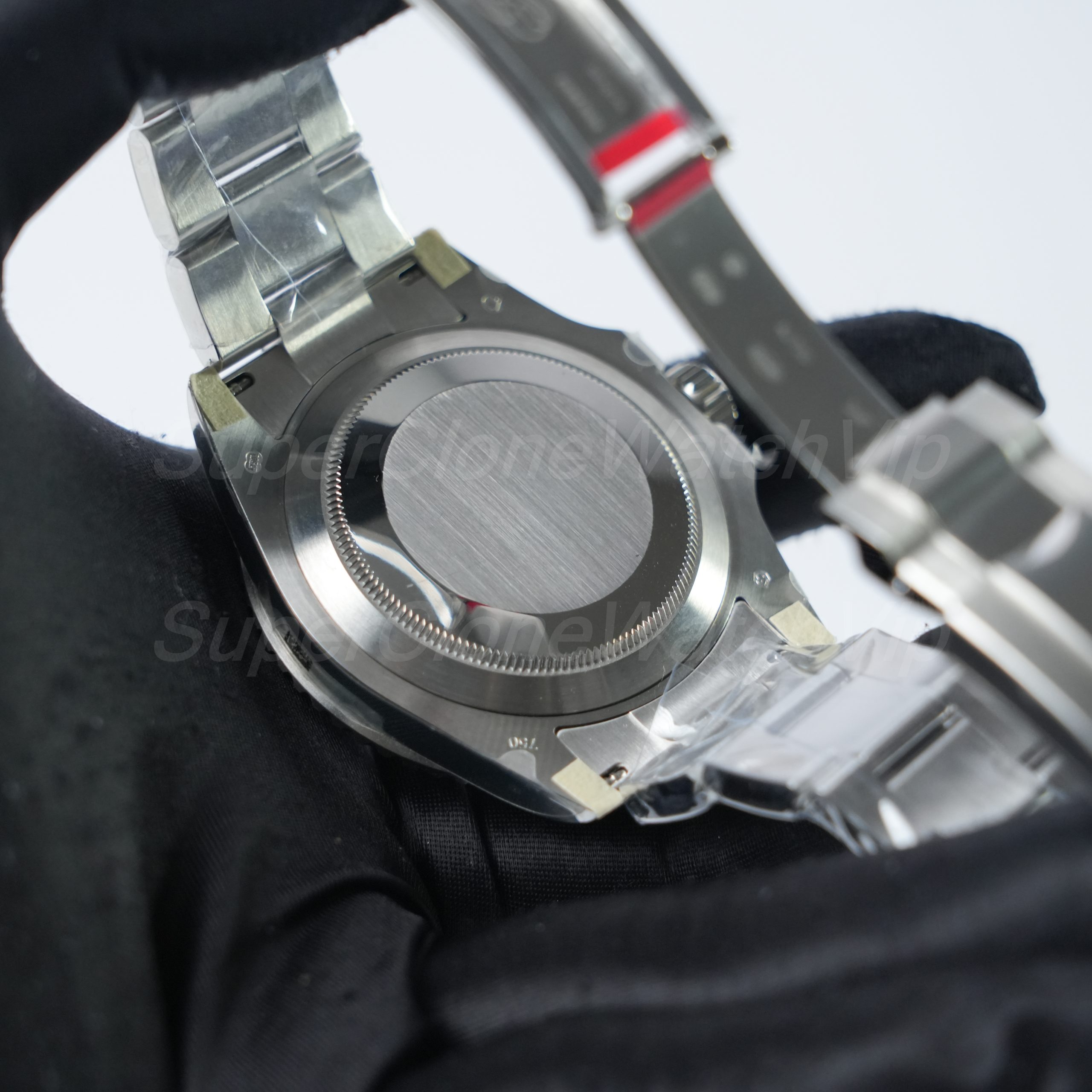 Hidden-Surface Evidence 126610LB Caseback ViewThis gallery image exposes the caseback, bracelet interior, protective wrapping, end links, and areas hidden in a standard front view. It supports questions about underside condition, bracelet connection, surface transitions, clasp-side details, and whether another page relies too heavily on dial photographs. |  Dial and Low-Light Evidence 124060LN Lume ViewThe illuminated front view focuses on the hands, hour markers, bezel scale, dial balance, and visibility under reduced light. It supports questions about marker visibility, lume consistency, hand alignment, bezel orientation, and whether a clean no-date layout remains easy to inspect. |
Why these images belong together: the left image reveals hidden surfaces, while the right image reveals front-facing information under different light. Together, they show why a complete listing needs complementary evidence rather than matching promotional angles.
Choose the Design Direction Before Comparing the Transaction
The 126610LB page is positioned around a black dial, blue bezel, date display, steel presentation, and 41mm naming. That combination creates a more visible color break and adds date-specific review points. Neutral-light bezel photographs, date-window position, magnification view, marker alignment, bracelet connection, and clasp coverage become especially relevant.
By contrast, the 124060LN page is positioned around a black-dial, no-date, 41mm direction. Removing the date window creates a cleaner layout, yet the simpler dial can make uneven marker spacing, bezel position, hand alignment, and rehaut visibility easier to notice.
Neither reference wins through a universal ranking. Instead, the decision depends on whether a colored date model or a quieter no-date model better fits the intended use. Once that direction is fixed, pages describing the same reference can be compared by scope, evidence, payment, and approval.
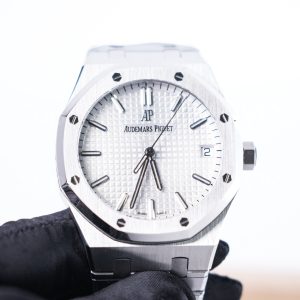
Another architecture creates another evidence plan. For example, the Audemars Piguet collection contains integrated-bracelet designs where bezel screws, case transitions, link articulation, taper, clasp surfaces, and rear finishing may carry more weight than a conventional sports-watch comparison.
Equivalent Conditions Matter More Than Matching Image Counts
A straight-on image should be compared with another straight-on image when dial alignment matters. Likewise, neutral light should be compared with neutral light when color or polishing matters. A dramatic angle can make one page appear more refined without providing a fair visual basis.
Image distance changes the result as well. A distant photograph may hide alignment, while an extreme macro image can exaggerate dust, fingerprints, protective film, or compression artifacts. The stronger request matches the framing to the question.
Background color also affects apparent tone. Warm surroundings can shift steel or blue surfaces, while dark surroundings can increase contrast around polished edges. Consequently, a page should not win a color comparison merely because its photography uses more flattering conditions.
When a file lacks resolution, the correct response is a clearer image request. Enlarging a compressed photograph cannot recreate missing detail. Similarly, sharpening cannot turn a blurred clasp or date window into reliable evidence.
The strongest comparison therefore uses fewer but more purposeful views. A front image, side profile, hidden-surface view, clasp image, and relevant function clip can answer more than a large gallery built from repeated angles.
Broad Claims Should Become Narrow, Answerable Questions
Marketing language often fills space without closing a transaction field. “Best quality,” “latest version,” “in stock,” “full set,” “waterproof,” and “free shipping” can all sound useful. However, each phrase remains too broad until it identifies the exact reference, scope, evidence, conditions, and next stage.
The goal is not to argue about wording. Instead, translate the phrase into one question that changes the decision. A direct answer can then enter the comparison line, while an incomplete answer remains visible.
Useful question: which exact reference, current version, and visible differences does the phrase describe?
Decision effect: ignore the ranking until equivalent images and one stable configuration exist.
Useful question: what exact version wording applies, and does it describe current availability or general page copy?
Decision effect: keep the version field open until written confirmation matches current evidence.
Useful question: is the exact setup prepared, available through sourcing, or represented by a similar configuration?
Decision effect: do not treat general availability as a reserved piece.
Useful question: which boxes, cards, booklets, tags, protective items, or accessories are included?
Decision effect: compare the complete amount only after the inclusion lists match.
Useful question: which piece was tested, when, under which conditions, and with which stated limit?
Decision effect: do not extend one result into a broad future guarantee.
Useful question: does the figure include every selected item, delivery-related charge, and stated fee?
Decision effect: request one updated total that replaces earlier figures.
Separate Five Types of Visual Material
Product-gallery images support model selection. They show the intended design direction under controlled conditions. However, they may represent a sample, an earlier batch, or a standard image set rather than the piece prepared for an order.
Current-stock photographs narrow uncertainty. They can show presently available configurations, yet they may still lack a direct connection to the piece later entering QC. A stable identifier should connect the image set with the reference.
Order-specific QC photographs support slow inspection. A straight front view, case sides, crown area, caseback, bracelet connections, clasp, and selected close-ups each answer different questions. Repetition adds less value than coverage.
Function video supports motion and continuity. A useful clip keeps the relevant area visible, shows the control being used, and captures the result. A long rotating presentation may add atmosphere without closing a functional gap.
Packaging photographs support the included-scope record. Still, boxes and accessories should remain separate from watch-level QC. A complete presentation cannot replace views of the dial, case, bracelet, clasp, date area, or relevant controls.
Use the Negative-Space Test
The negative-space test asks what cannot be decided from the page. Can the exact reference be identified? Can the visible configuration be written in one line? Can the image purpose be explained? Can the complete amount and included scope be recorded?
Next, examine the approval path. Does the page explain when QC appears, what evidence may be available, how a question is handled, and when shipment receives release? If those stages remain unclear, the process is incomplete even when the product gallery looks polished.
At the same time, the test should avoid inventing problems. A missing decorative image is not equal to an unclear payment route. The priority depends on whether the gap changes identity, scope, evidence, payment, approval, or dispatch.
As a result, the comparison becomes shorter and more useful. Instead of collecting every possible detail, it closes the fields that determine whether the same piece is being described from selection through shipment release.
QC Should Close a Defined Gap, Not Create a Larger Folder
A vague request such as “send more photos” often produces repeated front views. The new files may look useful while leaving the clasp, side profile, caseback, date window, bracelet connection, or relevant function unresolved.
A stronger request names the field, preferred angle, lighting condition, and required action. Each reply can then enter the active comparison line, while unresolved points remain visible.
Begin with a Base Evidence Set
The prepared piece should connect with the exact reference and saved configuration. Afterwards, the opening set can include a straight front view, a controlled angled view, both case sides, crown area, caseback, bracelet or strap connections, clasp, and any close-up tied to an open question.
Each photograph should answer a different question. A clear front image supports dial, hands, markers, bezel, and overall symmetry. A side image supports thickness, crown position, guards, lugs, and profile. A caseback image supports hidden surfaces and rear condition.
Bracelet and clasp views deserve separate attention because product galleries often prioritize the dial. Open-clasp photographs can reveal internal surfaces, hinge areas, adjustment components, protective film, link condition, and closure structure.
The site’s QC process provides the general pre-shipment framework. The active request should narrow that framework to the selected reference and the remaining evidence gaps.
Add Model-Specific Views Only When They Matter
A date model needs a readable date-window view. Several displayed dates may add context when positioning matters. A setting clip may also help when the crown action and date change are relevant to the selected reference.
A no-date model shifts the emphasis. Dial balance, marker spacing, bezel alignment, hand position, rehaut visibility, bracelet connection, and clasp condition may carry more weight because the clean layout leaves fewer distractions.
A chronograph-style model adds subdials, pushers, central hand position, start, stop, and reset questions. A moving seconds hand does not demonstrate the complete chronograph sequence, so the requested video should match the stated function.
An integrated-bracelet design adds screw position, case transitions, link articulation, taper, clasp action, brushing, and polishing boundaries. An openworked dial adds depth, reflections, rear visibility, and slower camera movement.
Consequently, a universal QC checklist should remain a starting point rather than a rigid script. The best set covers the general watch, then adds only the views needed for the selected architecture.
Use Video When Motion Adds Information
Video carries value when motion changes the answer. Crown operation, date adjustment, bezel rotation, clasp closure, bracelet articulation, and chronograph controls can be easier to understand in a continuous clip.
However, a fast wrist roll may show shine without showing identity or function. A useful clip begins with the complete watch, keeps the relevant area visible, shows the control being used, and captures the result without an unexplained cut.
The separate video proof page explains how front views, side profiles, bracelet movement, clasp action, bezel details, and caseback coverage can complement still photographs.
When one action remains unclear, request a targeted repeat rather than another complete recording. A short date-window hold, slower clasp sequence, or uninterrupted crown-setting clip often closes the exact gap with less noise.
Send One Compact Information Request
“Please confirm the exact product link and reference, dial and bezel colors, date layout, bracelet or strap, clasp, stated size, version wording, current availability, complete amount and currency, included items, destination-related delivery scope, QC photo coverage, available video evidence, approval timing, and whether any substitution requires written confirmation.”
The request creates a shared checklist without relying on broad reassurance. Each answer can be inserted beside the correct field, while unanswered items remain open. If a technical statement matters, add one narrow follow-up identifying the evidence needed and its expected limits.
At the same time, QC has a clear boundary. It can support identity, visible condition, alignment, surface review, selected functions, and included-item checks under the supplied conditions. It cannot establish every hidden component or every future outcome.
One smooth crown action cannot establish years of durability. One timing screen cannot establish future accuracy in every position. One water-related result cannot automatically define later performance under different conditions.
Approval language should therefore stay inside the evidence boundary. It can confirm the reviewed reference, visible configuration, supplied condition, and demonstrated actions without adding unsupported guarantees.
Payment, QC Approval, and Shipment Release Are Different Decisions
One payment message should not silently authorize every later step. Payment may authorize sourcing or preparation. QC approval confirms the reviewed piece. Shipment release confirms that the approved configuration can move to the recorded destination.
Separating those decisions keeps the record clear when a configuration changes, another version appears, an included item is added, or a question arises during QC. Each material change should reopen the relevant gate rather than inherit an earlier approval.
Keep the product link, reference, configuration, complete amount, included scope, destination, QC plan, and approval stage in one current message.
State whether payment covers preparation, sourcing, the complete order, or another agreed stage. Substitution and dispatch should remain outside that authorization unless stated directly.
The prepared piece should match the saved reference, visible setup, included scope, and any evidence request still marked as important.
Recipient details, destination, packaging scope, approved configuration, and later tracking should remain attached to the same transaction record.
Replace Scattered Messages with One Final Summary
Discussions often change while the shortlist narrows. A dial may change, an included item may be added, the complete amount may be revised, or another version may replace the opening request. Consequently, one final summary should replace earlier fragments before payment.
The summary should state the product link, reference, visible configuration, version wording, current availability, currency, complete amount, included items, destination, QC coverage, available video, approval timing, and substitution rule.
When one field changes later, issue a revised summary rather than editing the meaning through several short messages. This practice makes the active agreement easy to identify and keeps old screenshots from controlling the final decision.
Approval Should Name the Reviewed Evidence
A one-word approval creates an unclear boundary. Instead, the approval message should identify the reference, visible configuration, supplied photographs, and relevant video. Any visible substitution or configuration change should require renewed review.
“QC approved for the referenced model and recorded visible configuration shown in the supplied photographs and video. No substitution or visible configuration change is approved.”
This wording confirms what was reviewed without extending beyond the evidence. It does not create a promise about long-term accuracy, hidden construction, durability, or water use.
When one important point remains open, shipment approval should pause. A focused repeat image, short clip, or written clarification should close the field. Afterwards, the new evidence and final approval should remain together.
The general order path can be reviewed through the site’s process pages, but the active transaction still needs a reference-specific record. A sudden payment change, unexplained fee, different reference, removed QC stage, or changed contact route should trigger a pause and a revised summary.
Before any unusual payment or communication change, the current route should be verified through the official site. The comparison should resume only after the product, amount, evidence sequence, and contact path agree again.
Related Reading
These three resources cover the order record, detailed QC review, and terminology differences without repeating the same listing-gap question.
Further model, QC, ordering, and inspection topics are available in the watch guide archive.
FAQ: Listing Gaps, Evidence, Payment, and Approval
Which missing details should stop payment?
An unclear reference, visible configuration, complete amount, official communication route, QC sequence, approval stage, or substitution rule should stop payment. These fields control the identity and release of the order rather than a minor preference.
A focused written request should close the gap. Progress should resume only after the active record becomes internally consistent.
Can product-page photographs replace order-specific QC?
No. Product-page photographs support reference and design selection. Order-specific QC should connect the prepared piece with the saved reference and visible configuration before shipment approval.
Keeping the image sets separate prevents a polished gallery from being mistaken for the final evidence record.
Does a lower displayed amount mean better value?
Not until the scope matches. A lower figure may exclude packaging, delivery coverage, optional items, another configuration, or part of the evidence process.
Compare complete amounts only after the reference, visible setup, included items, evidence sequence, currency, and destination align.
What happens when one page gives more technical specifications?
More specifications create more statements to classify and verify. They do not automatically make the page more complete.
Record which details are visible, demonstrated, written but unverified, or unstated. Then compare the transaction fields separately.
How should two similar references be compared?
Build a separate comparison line for each reference. Record the dial, bezel, date layout, bracelet, clasp, stated size, version wording, image identity, included scope, and evidence plan.
After those fields align, equivalent photographs and transaction terms can be compared fairly.
When is another QC photograph necessary?
Another image is useful when glare, blur, framing, distance, or an obstructed angle prevents one specific field from being reviewed. The request should name the unresolved area and required angle.
Repeating the complete image set often creates more files without improving the decision.
When should shipment approval pause?
Approval should pause when the prepared piece does not match the saved reference or visible configuration. It should also pause when an important condition, function, included item, recipient detail, or delivery field remains unclear.
A focused follow-up can close a small gap. A major identity conflict requires a revised summary and renewed review.
Move Forward Only When the Page, Evidence, and Written Record Agree
A strong listing review does not reward the longest description, largest gallery, or strongest promise. Instead, it rewards the option with the fewest important gaps. Exact identity, matching configuration, complete scope, focused QC, final payment, bounded approval, and consistent dispatch details should describe one continuous order.
To compare replica watch listings with discipline, keep the process narrow and evidence-led. Record one exact reference, request proof for unresolved fields, and release shipment only after the prepared piece matches the approved summary.
- Select one exact reference and freeze the complete visible setup.
- Match each important statement with a photograph, video, written confirmation, or clearly stated limit.
- Approve dispatch only after QC, recipient details, and the final order record describe the same piece.