A first replica watch buying guide should make an opening order smaller, clearer, and easier to verify. The most practical route is one defined watch, one normal wearing role, a comfortable size direction, and an evidence plan agreed before payment. Extra functions, alternate straps, presentation packaging, and broad version claims should stay outside the order unless each item has a real purpose.
This approach suits an initial order, a limited rotation, or a search that has expanded into too many unrelated options. Instead of chasing the largest package or the most complicated dial, the process below controls scope, compares two realistic Panerai directions, reviews QC evidence, and separates payment from final dispatch approval.
Quick Navigation
The Practical Answer
Buy the Smallest Complete Order That Solves One Real Wearing Need
A complete opening order does not need every accessory or function. It needs the correct reference, visible configuration, agreed evidence, complete amount, official payment route, and a clear release step before dispatch.
Suitable When
One regular setting explains the watch, the listed size can be compared with a familiar piece, and every extra has a defined use.
Pause When
The shortlist serves unrelated occasions, the preferred size depends on optimism, or the prepared watch differs from the saved configuration.
Approve When
Identity, visible condition, relevant operation, included scope, recipient details, and dispatch instructions all describe the same order.
Start With Use, Not Status
Choose One Job for the Watch Before Choosing a Model
An initial shortlist becomes expensive when it tries to solve every future situation. One watch rarely needs to cover office clothing, weekend travel, formal dinners, outdoor activity, collecting interest, and complicated functions at the same time. Instead, the decision should begin with the setting that appears most often during a normal week.
A useful job fits into one sentence. Examples include “a casual strap watch for three ordinary workdays,” “a quiet dress option for dinners,” or “a bold weekend piece with a readable dial.” Once written, that sentence becomes a filter for size, color, function, attachment, packaging, and evidence.
When the role stays vague, product pages encourage feature accumulation. A GMT hand sounds useful, a larger case looks more substantial, an unusual dial feels distinctive, and a full set appears more complete. However, each addition creates another field to confirm and another reason for the final order to drift.
A broad scan of replica watches can establish design direction. After that scan, the active shortlist should contract rather than expand. One main reference and one backup are usually enough.
Write a One-Sentence Order Brief
The brief should state the normal setting, desired visual strength, preferred strap or bracelet, and acceptable function level. For example: “casual weekday wear, strong but not oversized presence, fabric strap, readable dial, and no function that requires a long approval video.”
A second line should define a rejection rule. A useful version reads: “remove any option that needs an unclear size assumption, a color that only works under studio lighting, or a function that cannot be demonstrated before approval.”
This brief keeps production vocabulary, movement claims, packaging, and delivery promises out of the opening stage. Those points matter later, but they should not replace the visible and practical result.
Use Frequency Beats Feature Count
A feature earns its place when it will be noticed or used often. A date display can make sense when the date is checked throughout the week. Likewise, a second-time-zone display can make sense when travel or remote coordination appears regularly.
By contrast, a function that receives attention only during unboxing may add inspection work without adding lasting value. The same test applies to open dials, chronographs, calendars, extra bezels, decorative casebacks, or unusual materials named in a listing.
Color should pass the same weekly test. A green gradient dial has value when strong color is part of the wearing goal. Meanwhile, a dark neutral dial can work across more clothing and lighting. Neither route is universally stronger.
Strap choice also changes the result. Fabric creates a casual, technical appearance and can visually soften a broad cushion case. Leather can move the same silhouette toward dress-casual use. A bracelet adds structure, although it also introduces link, clasp, sizing, and finishing questions.
The practical rule is simple: if a feature cannot be connected to a repeated task, a stable visual preference, or a clear inspection requirement, it should remain outside the opening order.
Control Scope Before Comparison
Set Four Order Limits Before the Shortlist Expands
Overbuying is not limited to spending more. It also includes ordering more complexity, more size uncertainty, more accessories, or more proof than the intended use requires. A smaller order can provide greater confidence because fewer fields remain open.
Four limits keep the decision stable: function complexity, size uncertainty, optional scope, and evidence workload. Each limit needs a stopping rule before product comparison begins.
1. Function Limit
A simple time display needs fewer operating checks than a GMT, chronograph, calendar, or openworked layout. Every added indication can create setting, alignment, continuity, or demonstration questions.
Complication should be deliberate. When a function supports a real routine, its proof belongs in the order plan. When it is peripheral, a cleaner model often provides more daily value.
2. Size Limit
Listed diameter does not describe the whole wearing result. Case height, lug direction, crown-guard width, dial opening, strap drop, and buckle position all influence wrist presence.
If one option sits near a familiar proportion while another depends on optimistic assumptions, the familiar direction deserves priority. Better finishing cannot repair an uncomfortable footprint.
3. Extras Limit
Packaging can support gifting, organized storage, or display. However, it cannot improve dial alignment, case condition, strap fit, crown operation, or configuration accuracy.
A useful ceiling is watch only unless packaging has a six-month purpose, one strap unless a second setting is already defined, and no accessory without an itemized description.
4. Evidence Limit
More files do not always create more certainty. Ten similar front views may provide less value than one straight dial image, two side views, one caseback image, and one strap or clasp view.
Evidence is complete when identity, configuration, visible condition, relevant function, included scope, and approval terms are clear. Endless proof requests can weaken the record.
Compare Against a Familiar Watch, Not a Universal Size Rule
A familiar watch provides the strongest size reference. Its front footprint, side height, strap angle, and wearing time can be compared with equivalent product and QC views. This method is more useful than relying on one wrist circumference chart.
Cushion cases need extra care because the crown guard extends visual width. A listed 42mm case can still appear broad. Likewise, a listed 44mm case can feel manageable when the strap drops quickly and the wrist already tolerates similar proportions.
When a quieter case direction is needed, the Vacheron Constantin collection provides a useful contrast. Its dress and sport-luxury shapes can clarify whether the strong crown-guard profile remains desirable.
A contrast category should test the preference, not restart the search. Once the desired level of wrist presence is clear, the active shortlist should return to the selected family.
Two Products, Two Different Reasons
PAM01096 or PAM01356: Choose the Wearing Direction Before the Specification List
The Panerai collection makes the overbuying question easy to see. Case silhouette, crown guard, dial calm, strap character, color, and wrist presence carry more practical weight than a long list of factory or movement claims.
The two examples below share a Luminor-style identity, yet they solve different needs. The product pages establish the listed direction. Current stock, prepared-watch condition, function, and final fit still require order-specific confirmation.
The Lower-Risk Choice Is the One That Fits Into One Sentence
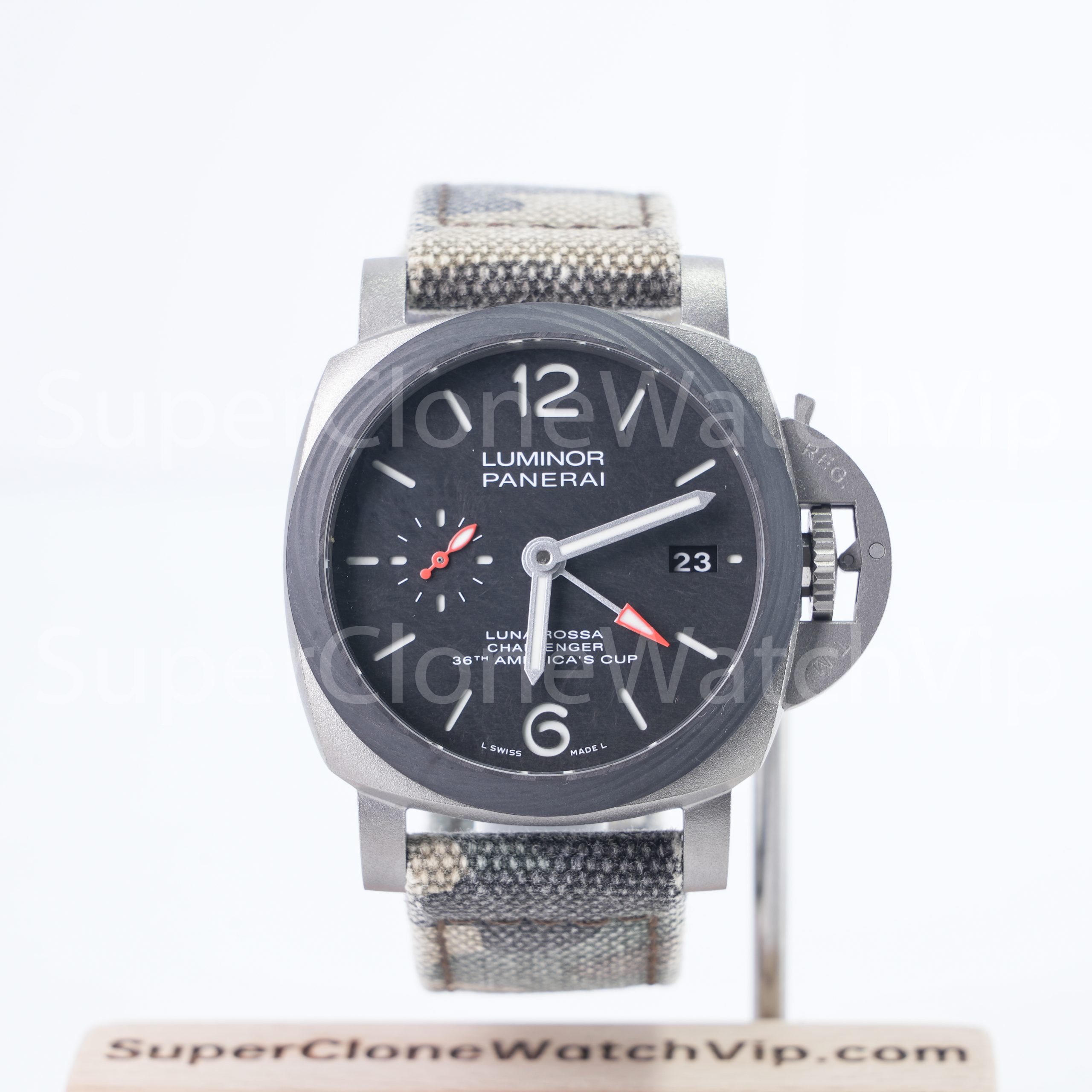
PAM01096 is easier to justify when the order brief mentions travel, a second time zone, a dark technical palette, and a preference for the listed 42mm direction. Without those needs, the GMT hand and layered description can become added complexity rather than added utility.
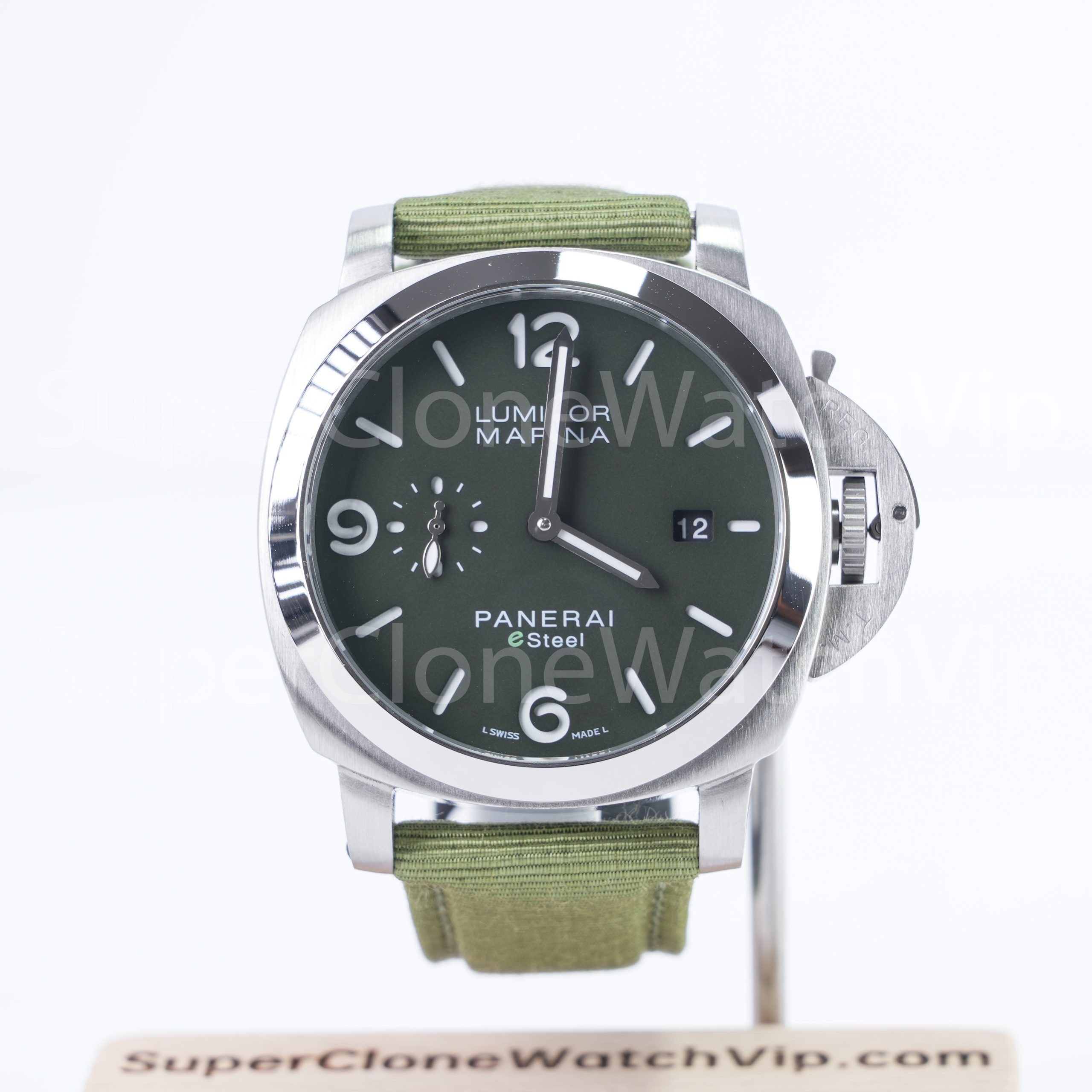
PAM01356 is easier to justify when the brief mentions green color, visible Panerai presence, casual fabric-strap wear, and comfort with the listed 44mm direction. If wardrobe compatibility remains uncertain, the bold dial may receive less use than expected.
Neither option should be described as automatically more advanced or more premium. Those labels do not answer the wearing question. The useful distinction is function-led dark technical styling versus color-led visual presence.
A Four-Part Fit Check Before Contact
Check the complete footprint. Case width begins the comparison, but it does not finish it. The cushion outline, crown bridge, bezel edge, and strap attachment determine how much wrist surface the watch occupies. A paper outline can reveal an obviously unsuitable footprint, while a familiar watch gives better front and side reference points.
Judge the dial at normal distance. PAM01096 carries more directional information through its GMT layout and contrasting accents. PAM01356 concentrates attention on the gradient color and broad numeral structure. A model that only looks convincing under close enlargement may not provide the desired daily impression from ordinary viewing distance.
Match the strap to climate and clothing. Fabric keeps both references casual and visually lighter than a broad bracelet. Even so, product photography cannot establish long-session comfort, exact flexibility, edge feel, or the condition of the prepared strap. Current images should show attachment points, stitching, buckle, free loop, and the natural curve beside the case.
Treat the crown guard as part of size. The bridge is central to the Panerai-style identity, yet it also adds width on one side. A crown-side image, an opposite-side image, and one hand-held view provide more context than another straight dial photograph. The goal is not a universal fit verdict; it is a reasonable comparison with known proportions.
Test color outside the product gallery. Dark dials can reveal texture differently under direct and indirect light. Green gradients can shift in apparent tone when exposure or white balance changes. Neutral-light evidence should show the prepared watch without heavy reflection, while an angled view can reveal how the color changes during normal wrist movement.
Together, these four checks separate a product-page attraction from a wearable decision. None requires a universal wrist-size promise or an invented comfort claim. Instead, each check turns one uncertainty into a specific photograph, comparison, or rejection rule before payment.
Still Unsure About the Cushion-Case Direction?
Return to the Panerai model page only to test whether another reference solves the same job with fewer compromises. The active shortlist should remain one main option and one backup.
Define Proof Before Payment
Build a Small Evidence Plan Around the Selected Watch
Product-page images identify the advertised direction. They help compare dial color, case silhouette, strap style, crown guard, and general layout. However, they do not identify the exact piece prepared for an order.
The published QC process covers model confirmation, several views, visible-detail inspection, and approval before shipment. The request below adapts that process to a restrained opening order.
Identity
Confirm reference direction, dial, listed size, strap, visible function layout, and any recorded version wording.
Front Balance
Use one straight view for dial printing, markers, hands, date position, bezel relationship, and visible cleanliness.
Case Profile
Request both sides, crown-guard reach, case height, strap connection, visible edges, and caseback condition.
Wearing System
Check strap edges, stitching, attachment, buckle, natural curve, and the setup recorded before payment.
Relevant Motion
Use short video only for a setting step, GMT behavior, crown action, clasp operation, or another question involving movement.
Scope Match
Confirm named extras, packaging route, recipient details, destination, and the exact piece covered by approval.
Start With Order Match, Not Microscopic Detail
A beautiful watch is still the wrong watch when the dial, strap, listed size, or function layout differs from the saved order. Identity should be confirmed before close inspection begins. This order prevents small cosmetic questions from distracting from a major mismatch.
After identity, one centered front view should establish overall balance. Camera tilt can make markers, hands, bezels, and date windows appear uneven. A repeat straight view often resolves uncertainty faster than extreme enlargement.
Normal viewing scale matters. Damaged print, a visibly displaced marker, a chipped crystal, clear surface damage, or an incorrect strap deserves attention. Tiny differences visible only after aggressive enlargement may not affect ordinary wear.
When a hand covers text or a marker, a new hand position is more useful than speculation. Likewise, a neutral-light image is better than debating whether warm exposure changed the dial color.
Add Only Model-Specific Proof
PAM01096 needs evidence tied to its displayed function. A short uninterrupted clip can show the relevant setting behavior and hand positions. Side and angled views should also cover the textured dial direction, case profile, crown guard, and grey strap attachment.
PAM01356 needs color and proportion evidence rather than unnecessary function footage. Neutral-light front and angled views should show the gradient direction, while a side profile and hand-held view can support the listed-size discussion.
Media should not support claims beyond its limits. A caseback image can show visible architecture, yet it cannot prove every internal component. A short operation clip can show current behavior, yet it cannot guarantee future accuracy, durability, or water resistance.
A focused follow-up should close one named gap. “Hold the dial straight under neutral light” is clearer than “send better photos.” Likewise, “show the GMT setting without a cut” is clearer than “send a full video.”
Three Possible QC Outcomes
Approve: the prepared watch matches the saved configuration, and the important visible or functional questions are answered.
Request one focused repeat: identity is correct, but one angle, color, surface, or operation remains unclear.
Pause: the reference differs, a defining feature changed, damage appears, or the evidence cannot identify the prepared watch.
Keep Every Release Separate
Payment Does Not Automatically Approve the Watch or Release Dispatch
A clean order separates configuration confirmation, payment, QC review, approval, and dispatch. When these stages blur together, a general payment can be misread as acceptance of a changed strap, another version, a substituted piece, or immediate shipment.
The published order process places model selection, contact, stock confirmation, payment, QC, approval, and shipping in sequence. The order record should restate that sequence without adding unverified timing or payment promises.
Freeze the Visible Configuration Before Payment
One current summary should replace scattered messages. It should list the product URL, reference, dial direction, listed size, strap, visible function requirement, included scope, destination, complete amount, QC plan, and approval stage.
A summary remains current only when every later change appears inside it. If the strap, version wording, packaging route, amount, or evidence plan changes, the summary should be revised. Older screenshots should move out of the active record.
Payment instructions should come through the official route. The contact page lists the current support channels and the information needed for model, QC, payment, and shipping questions.
The complete amount should describe the same scope as the configuration summary. A lower figure may refer to watch only, another strap, another version, or incomplete delivery scope. Price comparison has little value until the contents match.
A Compact Order Record
- Exact product URL and reference.
- Dial direction, listed size, strap, and visible functions.
- Recorded version wording and current stock status.
- Complete amount and every included item.
- Required photographs and any model-specific video.
- Recipient details, destination, and packaging route.
- Separate approval and dispatch-release stages.
Define What Payment Authorizes
Payment may authorize reservation, preparation, sourcing, or another agreed stage. The exact meaning should appear in writing before funds move. It should not be assumed from general website wording or a previous order example.
A practical note can state that payment covers the recorded reference and visible configuration, subject to the agreed QC and approval sequence. This wording keeps the prepared piece tied to the saved order.
Any substitution should require renewed written confirmation. The same rule applies to a different listed size, dial, strap, function, or version wording. Similarity does not make a replacement equivalent.
Extras should follow the same discipline. If packaging or another strap is added later, the included list and complete amount should be updated before the next payment stage.
Approve the Reviewed Piece, Not the General Model
Approval should identify the exact reference and evidence set. A one-word response leaves uncertainty about which images, function clip, strap, or open question received approval.
A bounded note can confirm that the recorded model and visible configuration match the supplied QC media, the agreed function evidence has been reviewed, and no substitution or visible configuration change is approved.
This note confirms only what the evidence supports. It does not create promises about hidden parts, future performance, water use, delivery timing, or any claim not demonstrated and recorded.
When one critical detail remains unclear, approval should pause. A targeted repeat can close a small gap. A major identity conflict requires a revised order summary and a new review.
Before Releasing Dispatch
Reference, visible setup, included items, recipient details, destination, and approved evidence should still match the active record. Any material change should reopen the relevant stage.
Make the Final Choice Visible
Use One Decision Table to Stop the Order From Growing
Each row asks whether the option still supports the original job or has started collecting unnecessary scope. The two-column format stays readable on smaller screens and keeps the decision focused.
Procurement Advice
Common Decisions That Look Sensible but Increase Risk
Choosing the Most Complicated Dial as Better Value
More displays can feel like more value because additional information appears on the dial. However, unused indicators add setting, alignment, and approval work. A simpler layout can provide greater daily value when readability and easy daily reading matter.
The correct question is not how many functions appear. It is whether each function changes regular use enough to justify its evidence requirements.
Choosing the Larger Option Because It Looks More Substantial
A larger watch can look impressive in close photographs. Yet size that dominates the wrist may reduce rotation time. A listed 44mm direction should be selected because its presence is wanted, not because larger automatically suggests higher value.
Crown guards, broad cushion cases, fixed first links, and stiff straps can all enlarge the wearing footprint. Front and side comparisons should carry more weight than diameter alone.
Choosing by Version Vocabulary Without Equivalent Evidence
A version label can guide a question, but it cannot confirm the prepared piece. Current images, exact configuration, and a clear approval path carry more decision value than broad production language.
An upgrade should identify the model-specific difference, the reason that difference matters, and the equivalent evidence used for comparison. Without those points, the label has not earned added scope.
Adding a Full Set Because the Order Feels Incomplete
Presentation packaging can support gifting, display, or organized storage. It does not confirm the watch, improve visible condition, or reduce QC uncertainty. The watch and the box answer different questions.
A practical test looks six months ahead. When the box will still protect, organize, display, or present the watch, added scope has a reason. When it will remain closed inside another storage space, watch-only scope is often cleaner.
Accepting a Near Match After a Long Search
Time invested in research can create pressure to accept whatever becomes available. A different dial, strap, listed size, function, or version can then replace the feature that made the original reference suitable.
Three non-negotiable points prevent this drift. When one changes, the alternative should be judged against the original wearing job rather than the hours already spent.
Requesting Many Files Without Naming the Question
A large gallery can repeat the same angle without adding certainty. Useful evidence gives each file a job: identity, front balance, left side, crown side, caseback, strap or bracelet, clasp or buckle, and one focused function.
The same rule applies to video. A long rotating clip may look impressive while avoiding the relevant setting step. Short, controlled proof supports a cleaner decision.
Approving the Overall Impression While One Critical Field Remains Open
A positive overall impression should not override identity, configuration, or a central function. A polished image cannot correct the wrong reference, strap, listed size, destination, or included scope.
Approval becomes easier when every critical field has a visible answer. Once those fields align, the order can move forward without chasing impossible certainty from photographs.
Questions Specific to an Initial Order
FAQ: Choosing Enough Without Ordering Too Much
Final Decision
Use This First Replica Watch Buying Guide to Keep the Order Small and Complete
The strongest opening order is not the model with the most functions, the largest listed size, the longest material description, or the fullest package. It is the watch whose role can be explained clearly, whose proportions can be assessed reasonably, whose visible configuration stays stable, and whose evidence can be reviewed without guesswork.
PAM01096 fits a justified GMT-led technical direction. PAM01356 fits a justified color-led presence direction. Neither should move forward until size, scope, QC media, complete amount, recipient information, and dispatch approval describe the same order.
- Write one wearing job and one rejection rule before comparing references.
- Keep one main option, one backup, and only the functions or extras with a defined purpose.
- Release dispatch only after the prepared watch matches the saved configuration and evidence record.