For Datejust comparison, factory labels only tell part of the story. The stronger decision starts with the exact model, dial color, bezel style, bracelet type, current version, and QC photo set. Therefore, this guide keeps the comparison practical, clear, and useful for repeat ordering.
Quick Answer for “clean vs vsf datejust”
In short, Clean is often considered when case presence, dial sharpness, polished edges, and bracelet finishing are the main focus. Meanwhile, VSF is often considered when crystal impression, movement-side interest, and overall wearing balance matter more. However, no factory label should decide the final order alone.
Instead, the exact Datejust setup should come first. A black dial, blue sunray dial, slate dial, Wimbledon-style dial, fluted bezel, smooth bezel, Jubilee bracelet, and Oyster bracelet can all change the inspection result. Therefore, real QC photos matter more than a general factory ranking.
For a Datejust 41 with fluted bezel and Jubilee bracelet, compare dial print, date window, Cyclops position, bezel teeth, bracelet articulation, clasp finish, and factory version proof before shipment. If those points look controlled, the final choice becomes easier and more practical.
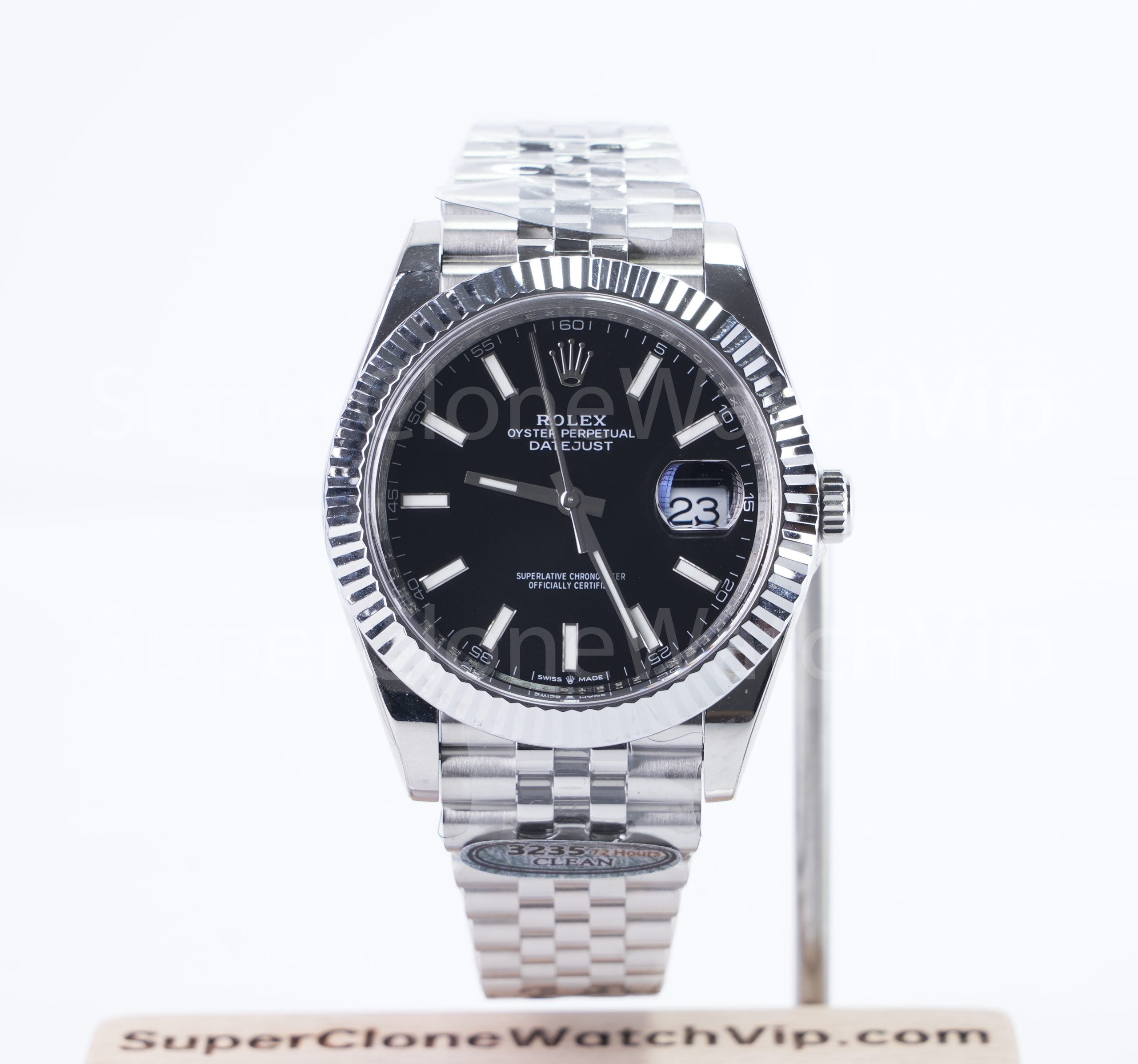 Datejust 126334 Deep Black Dial Use this model page as a reference for black dial, fluted bezel, Jubilee bracelet, and 41mm Datejust-style QC review. View Product Details
| 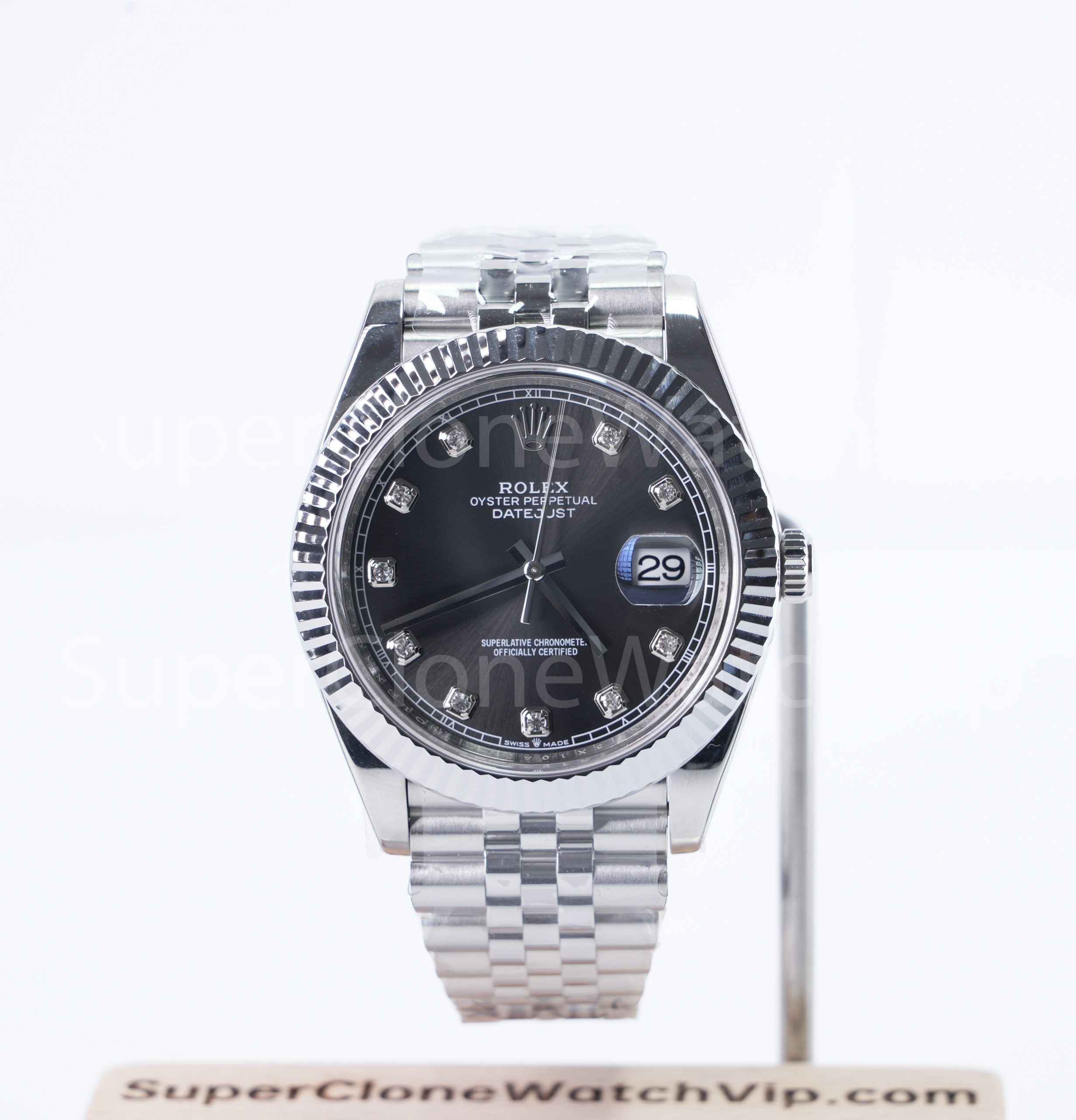 Rolex Datejust Replica Watches Browse Datejust dial colors, bracelet choices, bezel styles, and available product directions before factory comparison. Browse Datejust Collection
|
What This Search Usually Means
Usually, this search comes from an advanced comparison stage. Basic replica watch terms are already understood. The real need is a cleaner decision between available Datejust versions, factory stock, QC confidence, and after-sales communication.
At the same time, Datejust comparison is more delicate than many sports-watch comparisons. A Submariner can hide small finishing gaps behind a tool-watch profile. A Datejust has polished surfaces, thin markers, a date magnifier, and a reflective bracelet. As a result, small issues become visible faster.
Moreover, Datejust models are not one single product type. A 36mm smooth bezel on Oyster bracelet feels quiet and conservative. A 41mm fluted bezel on Jubilee bracelet feels formal and reflective. A slate Roman dial carries a different QC risk than a simple black baton dial.
For broader model research, start from the main replica watches page. Then narrow the search through Datejust product pages, factory comparison guides, and QC process content.
Key Models, Factory Versions and QC Points to Compare
First, confirm the exact Datejust profile. The size, dial, bezel, and bracelet should be fixed before factory selection begins. Otherwise, the discussion becomes too broad, and the result becomes harder to verify.
Next, confirm the active factory version. Factory names can be useful, but version timing matters. A current batch may differ from an older batch in dial shade, clasp finish, bracelet tolerance, and date display. Therefore, stock confirmation should happen before payment.
Model details to settle first
| Version details to confirm
|
Additionally, Datejust sourcing should avoid one-line factory conclusions. The same factory may perform strongly on one dial but less consistently on another. Therefore, the exact reference-style direction must remain the starting point.
For repeat sourcing, keep a simple record of factory name, version note, dial color, bracelet type, QC date, and shipment result. This makes future comparison cleaner and reduces repeated questions.
Dial, Bezel and Bracelet Inspection
Above all, Datejust inspection starts with the dial. The watch must look centered and calm from a straight front view. If the 12 o’clock marker, coronet, date window, or minute track looks obviously uneven, the whole piece feels less refined.
Furthermore, dial color changes the QC difficulty. Black dials are versatile, but they expose dust and printing flaws under macro photos. Blue sunray dials need light variation. Silver dials need enough contrast between hands, markers, and background. Slate or Roman layouts require closer marker checks.
Dial QC points
First, inspect the logo area, minute track, applied markers, hands, and lower dial print. Then review the date window and Cyclops position from a straight angle. Finally, request another angle if glare or camera tilt makes the date look unclear.
- Coronet position at 12 o’clock.
- Hour marker alignment around the dial.
- Sharpness of printed text under zoom.
- Date wheel centering inside the window.
- Cyclops position over the date aperture.
- Visible dust, lint, or marks under crystal.
- Hand alignment at a clean time setting.
Bezel QC points
Meanwhile, the bezel sets the Datejust mood. A fluted bezel should reflect light evenly and show consistent teeth. A smooth bezel should have even polishing and a clean case transition. Therefore, both straight and angled photos are useful.
- Consistent fluting around the full bezel.
- Clean transition from crystal to bezel.
- No obvious flat spots on smooth bezel versions.
- Balanced reflection at left and right angles.
- Case tone that matches the bracelet visually.
Bracelet QC points
Finally, bracelet review affects daily comfort. A Jubilee bracelet should articulate smoothly and sit cleanly against the case. An Oyster bracelet should show even brushing, straight side profile, and firm clasp action.
- End-link fit against the case.
- Jubilee link movement and visual symmetry.
- Oyster bracelet brushing and polished edges.
- Clasp alignment, engraving, and closing action.
- No sharp edges in obvious contact areas.
Decision Tables
Comparison tables help remove guesswork. However, they should support QC review, not replace it. The right factory direction still depends on the real piece, the exact version, and the available photo set.
| Comparison Area | Clean Direction Often Checked | VSF Direction Often Checked | Pre-Shipment Confirmation |
|---|---|---|---|
| Dial presence | Sharp visual impression and crisp layout. | Balanced viewing feel and crystal impression. | Dial color, text, marker alignment, and dust check. |
| Bezel profile | Fluted reflection and case presence need careful review. | Overall bezel-to-crystal transition needs comparison. | Side angle, tooth consistency, and polish quality. |
| Bracelet feel | Visual finishing and clasp appearance are key points. | Wearing balance and articulation are key points. | End links, clasp action, side profile, and link movement. |
| Date display | Font and window centering need direct QC photos. | Cyclops and crystal clarity are often discussed. | Straight front photo, date close-up, and alternate angle. |
| Stock stability | Depends on current batch and dial variant. | Depends on current batch and movement-side availability. | Factory version, stock status, and QC timing. |
Pros and cons table
| Direction | Pros | Possible Trade-Offs | Best Fit |
|---|---|---|---|
| Clean-style Datejust option | Often considered for strong case presence, dial sharpness, and polished visual detail. | Still needs date, crystal, and bracelet QC. Factory label alone is not enough. | Strong visual priority and a sharper wrist impression. |
| VSF-style Datejust option | Often considered for movement-side interest, crystal impression, and balanced wearing feel. | Still needs dial, bezel, and bracelet review by current version. | Balanced technical interest and refined daily wear. |
| Alternative factory option | May solve stock, budget, or dial availability issues. | Needs a stricter QC photo set and clear version explanation. | Flexible sourcing when preferred stock is limited. |
Model selection table
| Priority | Recommended Datejust Direction | Why It Works | QC Focus |
|---|---|---|---|
| Formal daily wear | Fluted bezel with Jubilee bracelet. | Classic, reflective, and dressier. | Bezel teeth, bracelet finish, clasp feel. |
| Quiet office style | Smooth bezel with Oyster bracelet. | Cleaner and less flashy. | Case polish, bracelet brushing, dial balance. |
| Simple first Datejust | Black or silver stick-marker dial. | Less complex than Roman or diamond-style layouts. | Date, markers, hands, and dust check. |
| Recognizable wrist presence | Blue, slate, or Wimbledon-style dial. | More visual identity and stronger personality. | Dial tone, Roman markers, print quality. |
| Repeat sourcing | Stable version with consistent QC history. | Easier to reorder and compare later. | Batch notes, photo archive, stock consistency. |
Factory Version and QC Checklist Before Ordering
Before any order moves forward, the process should be documented. This is especially important for repeat sourcing, small batch requests, or model comparison across several Datejust variants. Therefore, the checklist should stay simple and specific.
Also, a photo set should not rely on one polished front image. Real confidence comes from straight dial photos, angled bezel photos, bracelet photos, clasp photos, side profile photos, and date close-ups.
Model confirmation
| QC photo request
| Order path
|
The QC route should include front view, side view, bracelet, clasp, close-up dial details, and date-window confirmation before shipment. This step reduces uncertainty and helps keep the order process controlled.
A Datejust decision should feel controlled before shipment. The most useful proof is not a factory name in isolation. Instead, it is a clear set of model details, stock notes, version confirmation, and real QC photos.
Common Mistakes to Avoid
First, avoid choosing by factory name alone. A name can guide research, but it cannot prove the exact piece in stock. Therefore, version notes and QC photos should decide the final step.
Second, avoid ignoring dial complexity. A plain black baton dial is easier to inspect than a Roman or diamond-style dial. Meanwhile, blue and slate dials need lighting checks because color depth can change between photos.
Third, avoid treating every fluted bezel as equal. The Datejust bezel shapes the whole wrist impression. If the teeth look dull, uneven, or overly soft, the watch loses much of its character.
Fourth, avoid focusing only on the front image. Bracelet feel, clasp alignment, side case polish, and end-link fit are part of the daily wearing experience. As a result, a complete photo set matters.
Finally, avoid vague ordering messages. A short but complete message should include target model, dial, bracelet, preferred factory, budget range, and receiving region. That creates a faster and cleaner response.
Datejust Product Examples for Comparison
Additionally, product examples make the factory discussion easier. Instead of comparing vague factory names, start with the exact dial, bezel and bracelet profile. Then check whether the available version matches the intended look before requesting QC photos.
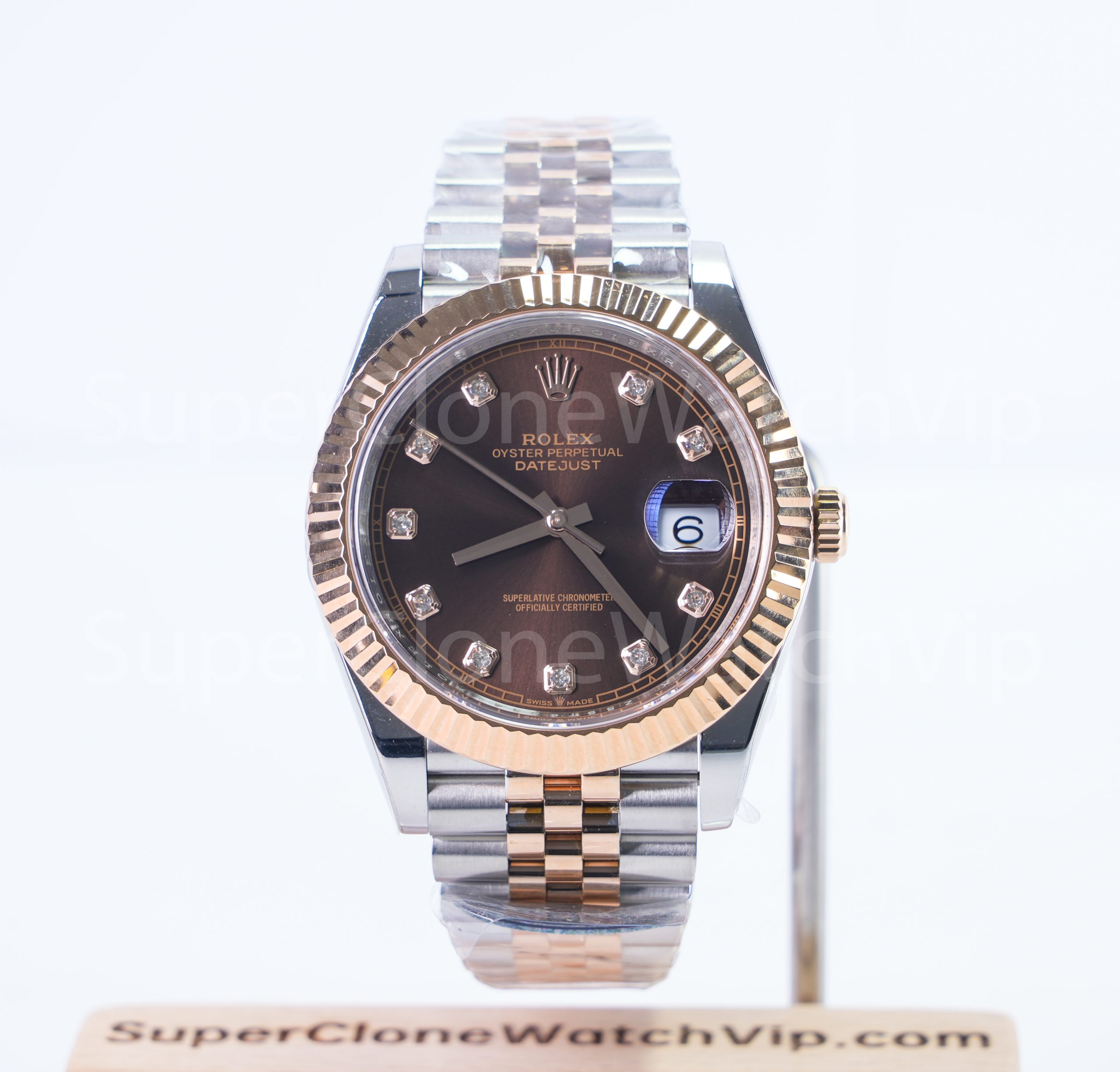 Two-Tone Rose Gold Chocolate Dial A warmer Datejust direction for checking two-tone case finishing, chocolate dial depth, diamond marker setting, fluted bezel reflection and Jubilee bracelet balance. View Chocolate Dial Datejust
| 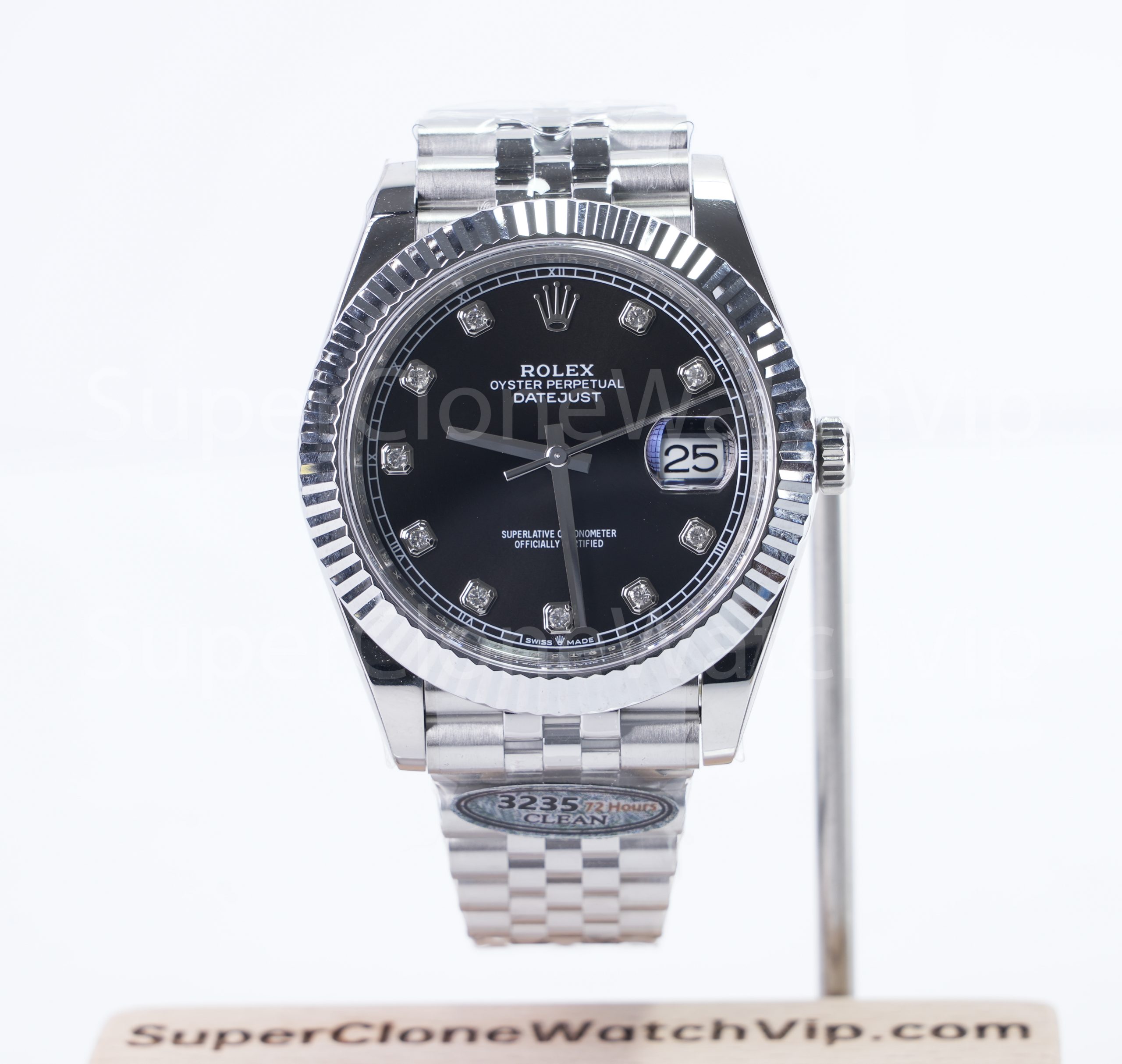 Black Diamond Dial Datejust 41 A sharper 904L steel Datejust example for reviewing black dial clarity, diamond marker alignment, Cyclops position, bezel teeth and Jubilee bracelet finishing. View Black Diamond Datejust
|
Recommended Next Step Before Ordering
Next, prepare one clear inquiry message. It should include the target Datejust size, dial color, bezel style, bracelet style, preferred factory, budget level, and receiving region. Then ask for stock status, current version details, and QC photo availability before payment.
For product-led research, the Datejust category and 126334 product pages are useful starting points. For trust review, the review page can support the research process. For final version advice, the contact page is the right route.
The safest final step for clean vs vsf datejust comparison is simple: confirm stock, confirm version, review QC photos, then decide whether the model fits the budget and support path.
FAQ
Related guide: For a focused decision on when VSF makes sense, what evidence to request, and where to compare alternatives, see our VSF model, evidence, and QC guide.