The rolex glidelock system explained topic matters because the Submariner clasp is not only a bracelet detail. It affects wrist fit, micro adjustment, clasp thickness, brushed finishing, link fit, and the final QC review before shipping.
For a Submariner-style watch, the clasp deserves the same attention as the dial, bezel, crown, crystal, and case profile. Moreover, the clasp is handled every time the watch is worn, so weak finishing can become more noticeable than a small dial detail.
Therefore, this guide focuses on practical order review. It explains how the Glidelock-style clasp works, why micro adjustment matters, and how QC photos or short video proof can support a clearer decision before payment.
This article is especially useful for Submariner-style daily wear choices, bracelet comfort checks, factory version comparison, and pre-shipping confirmation. It is not a pure encyclopedia entry, and it does not rely on exaggerated promises.
What Is the Rolex Glidelock System?
The Rolex Glidelock system is a clasp adjustment design associated with professional Rolex sports watches, especially Submariner-style models. In simple terms, it allows small bracelet length changes without removing links. As a result, the bracelet can be fine-tuned when wrist size changes during the day.
Rolex describes Glidelock as a system that allows bracelet length adjustment without tools. For neutral reference, the official Rolex Glidelock feature page can be viewed here: Rolex Glidelock bracelet feature. However, this article focuses on how the detail should be reviewed in Submariner-style super clone watches before shipping.
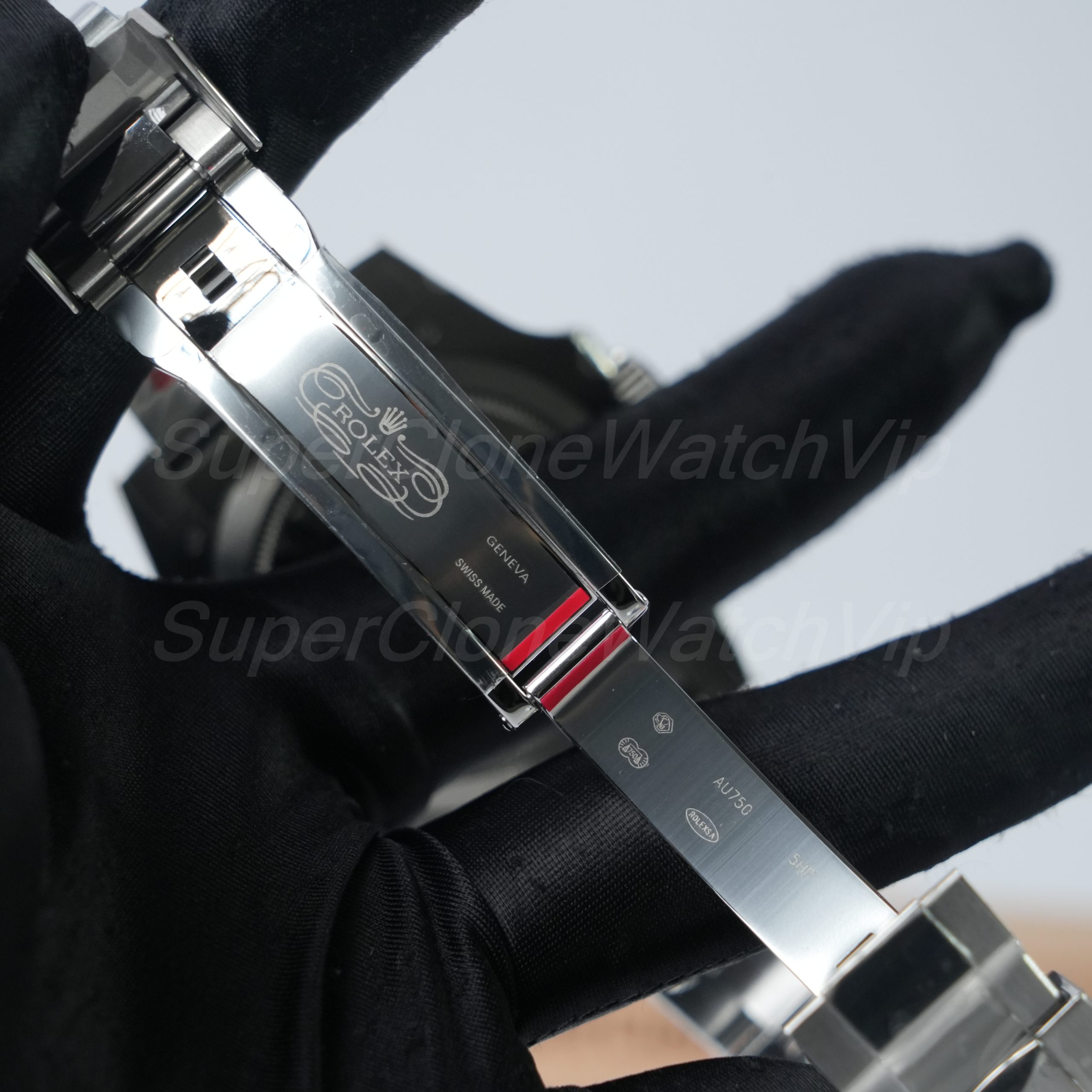
Inside the clasp, an adjustment track holds the bracelet end in different positions. Meanwhile, the outer clasp cover keeps the bracelet secure and visually balanced. This structure makes the clasp both a functional part and a finishing detail.
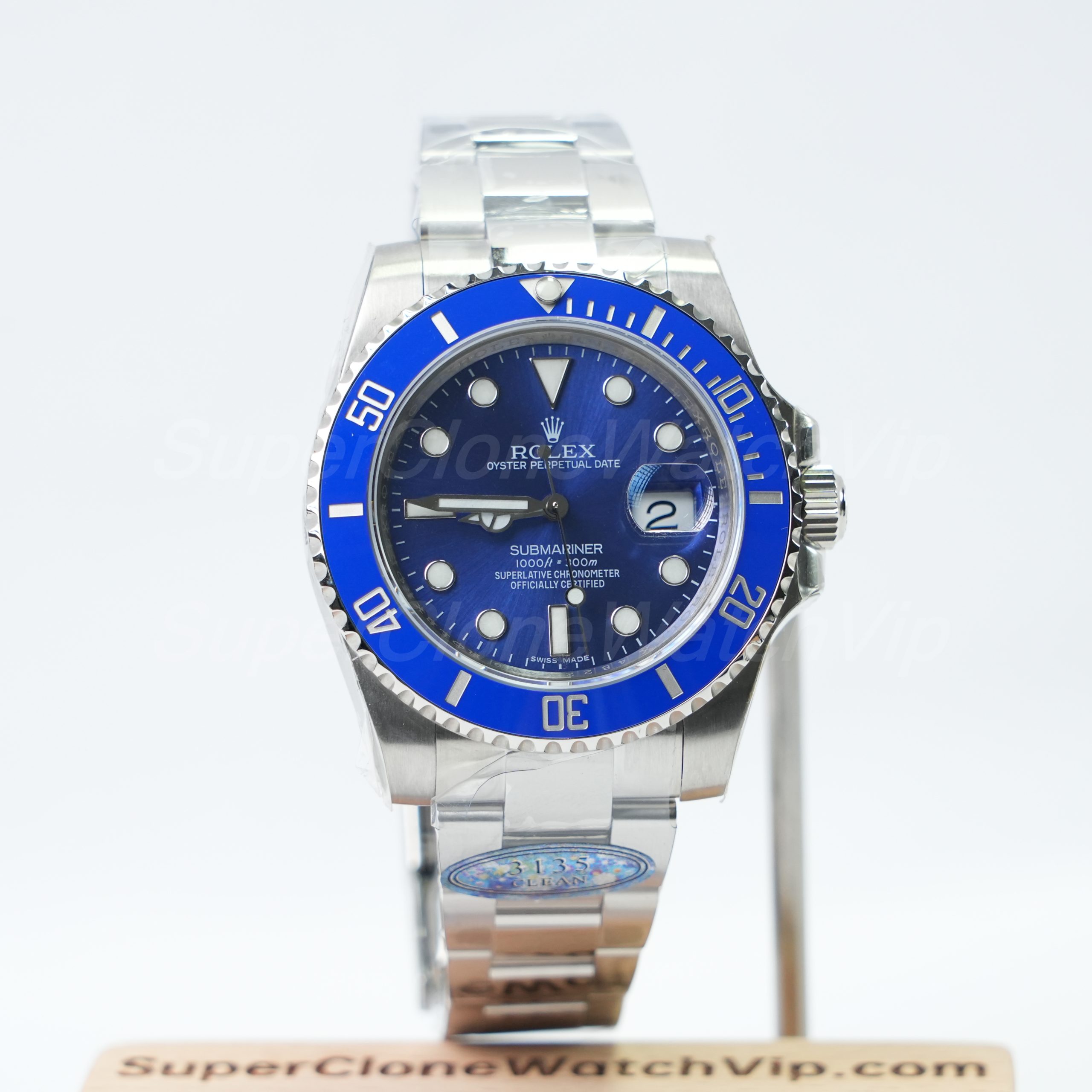
For a Submariner-style watch, this system makes sense because the design is sporty and practical. A stronger case, rotating bezel, Oyster-style bracelet, and secure clasp should feel connected. Therefore, the clasp should not look thin, loose, crooked, or visually separate from the bracelet.
Still, the feature should not be judged by product wording alone. A listing may mention clasp adjustment or bracelet comfort, but the actual unit still needs clear QC photos. For that reason, open-clasp photos and side photos are important before shipping approval.
Why It Matters for Submariner Clasp QC
A Submariner clasp matters because it affects comfort, appearance, and handling. Furthermore, it is one of the largest metal surfaces on the bracelet. A clean dial can still feel incomplete if the clasp looks flat, rough, or poorly aligned.
Clasp thickness is the first reason. The Submariner case has a strong sports-watch shape, so the bracelet should not end with a weak-looking clasp. Instead, the clasp should appear solid enough to match the case profile and bracelet width.
Next, clasp alignment affects the watch when viewed from the wrist. If the safety lock sits high or one clasp edge rises, the bracelet can look uneven. In addition, a twisted clasp cover may create discomfort during daily wear.
The adjustment track also matters because it is a functional section. A clean track should look straight and controlled. Meanwhile, the sliding part should not appear jagged, crooked, or heavily scratched in QC photos.
Brushed finishing is another major point. A Submariner-style bracelet normally depends on clean brushing, crisp edges, and balanced polish transitions. Therefore, the clasp cover should not look patchy, cloudy, or randomly polished.
The clasp also helps confirm whether the bracelet belongs naturally with the case. Poor link fit near the clasp can make the bracelet look assembled without care. Additionally, wide gaps near the hinge area can make the clasp feel less secure.
For a clearer comparison path, the main replica watches page can be used as a starting point. However, Submariner-specific review should continue through the Rolex and Submariner pages instead of stopping at the homepage.
Key Details to Check Before Approval
The first key detail is clasp thickness. From the side, the clasp should not look like a thin metal shell. At the same time, it should not look oversized or swollen. A good impression comes from balanced height, straight edges, and natural connection with the bracelet.
The second detail is the Glidelock-style track. When the clasp is open, the inner track should look straight. Moreover, the adjustment positions should appear evenly spaced. A track that looks crooked may also feel rough during micro adjustment.
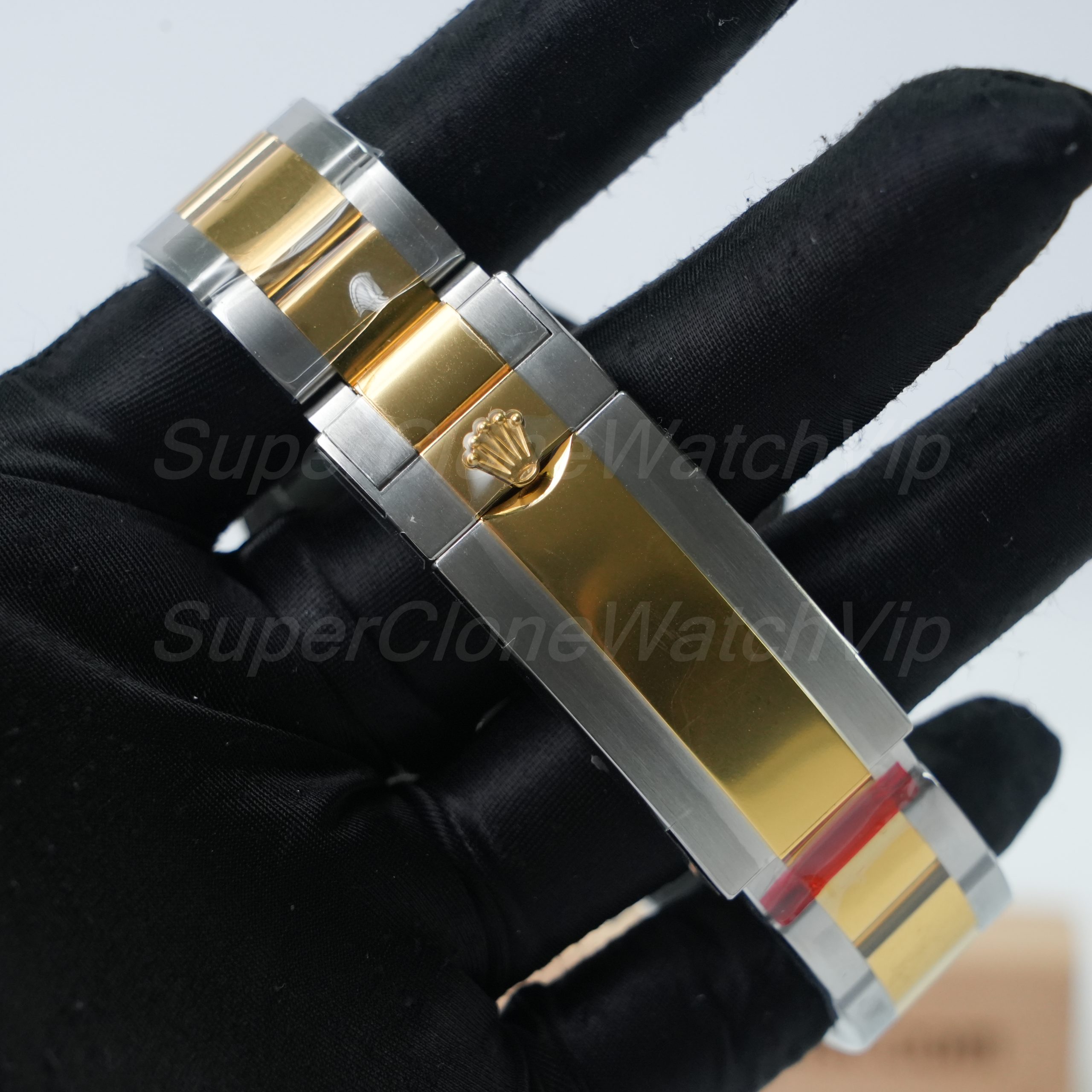
The third detail is clasp cover alignment. When closed, the cover should sit centered over the bracelet. Also, the safety lock should close flat. If one side is visibly higher, the issue should be reviewed before approval.
The fourth detail is the brushed surface. Brushing should run in a consistent direction across the clasp and links. For example, a clasp cover with cloudy brushing may stand out beside cleaner bracelet links. This can reduce the overall visual quality.
The fifth detail is link fit near the clasp. Bracelet links should not twist, squeeze, or sit at an awkward angle. In addition, the end link area near the case should be checked so the bracelet flow looks natural from case to clasp.
The sixth detail is safety lock shape. A safety lock should not look bent, raised, or off-center. Furthermore, the edge should close with a clean line. This area is easy to notice in wrist photos, so it deserves attention.
The seventh detail is clasp function. Still photos can show structure, but a short video can show movement. Therefore, video proof is useful when the adjustment track, hinge feel, or lock action is uncertain.
Finally, the clasp should be checked together with dial alignment, case proportions, crystal clarity, bezel position, crown shape, and bracelet finishing. A single strong detail cannot correct a weak full-watch review. A balanced QC set is always more useful.
Details on Super Clone Watches
For super clone watches, the clasp should be reviewed as part of the full exterior package. The case, dial, bezel, bracelet, clasp, and crystal should follow one consistent quality direction. Otherwise, one weak area can make the whole watch feel less refined.
Factory version matters because different versions may focus on different details. One version may improve dial printing. Another may improve bezel color, bracelet finishing, or clasp construction. Therefore, factory version notes should support the review, not replace it.
For example, a Submariner-style version may look strong from the front but show a rough clasp track when opened. Conversely, another version may have a cleaner clasp but need extra attention on date alignment or crystal clarity. A complete QC set helps separate these trade-offs.
Movement option should also be confirmed separately. A movement direction can affect winding feel, date setting, hand adjustment, or maintenance expectations. However, it does not prove clasp quality. As a result, movement and bracelet finishing should remain separate checkpoints.
The Super Clone Watch Factory Guide can help frame version questions before an order is confirmed. It is most useful when the target model, dial color, bracelet style, and clasp expectation have already been narrowed down.
Meanwhile, the Rolex replica watches category page helps compare Rolex-style model families. It is useful because Submariner, Daytona, GMT-Master II, Datejust, and Sea-Dweller models do not share the same QC priorities.
For this clasp topic, the Submariner replica watches page is the most relevant model page. It keeps the comparison focused on sports-watch case shape, Oyster-style bracelet finishing, bezel alignment, crown guards, and clasp behavior.
Still, no factory name should lead to blind approval. Actual QC photos remain the practical proof. Therefore, front photos, side photos, bracelet photos, clasp photos, and open-clasp photos should all be checked before shipping.
QC Photo Checklist Before Shipping
QC photos should make the watch easy to review from several angles. Therefore, unclear lighting, heavy reflections, and cropped clasp photos should not be accepted too quickly. A proper set should show the front, sides, bracelet, clasp, and close-up areas.
For a more structured process, the Super Clone Watch QC Process page can be reviewed before approval. In addition, video proof can help confirm clasp movement, bracelet flexibility, and real-light appearance before shipping.
Front and Dial Checks
- First, check dial alignment from a straight front photo.
- Next, review hour markers, hands, and date position for visible tilt.
- Also, inspect crystal clarity for haze, dust, chips, or strong distortion.
- Furthermore, check the rehaut area if it is visible in the photo set.
Case, Bezel, and Crown Checks
- Confirm case proportions from front and side angles.
- Then, compare lug shape, case thickness, and bracelet transition.
- Check bezel alignment at the 12 o’clock marker.
- In addition, review bezel insert seating, marker spacing, and ceramic gloss.
- Finally, inspect crown shape, crown guard balance, and side profile.
Bracelet and Clasp Checks
- Review bracelet link fit near the case and near the clasp.
- Check brushed finishing across the bracelet and clasp cover.
- Compare clasp brushing with bracelet brushing under the same lighting.
- Inspect clasp thickness from a side photo.
- Confirm the clasp cover sits centered when closed.
- Check that the safety lock sits flat and does not look raised.
- Review the inner adjustment track for straightness and rough edges.
- Ask for an open-clasp photo if the track is hidden.
- Ask for a short clasp video when the sliding function is uncertain.
Version and Order Confirmation
- Confirm the selected factory version before approval.
- Confirm the movement option separately from bracelet quality.
- Save QC photos before payment or final confirmation.
- Avoid approval when photos are incomplete, cropped, or too blurry.
FAQ
Is the Glidelock-style clasp only about comfort?
No. The micro adjustment feature mainly improves wrist fit, but the clasp also affects visual balance, bracelet quality, and daily handling. Therefore, QC photos should show the clasp closed, open, and from the side. A good review checks thickness, alignment, brushed finishing, safety lock fit, and link flow.
Can QC photos show whether the micro adjustment works?
Photos can show the track shape, spacing, and finishing condition. However, photos cannot fully show sliding feel or lock stability. Therefore, a short video is useful when the clasp function is a key concern. The video should show the clasp opening, the bracelet end sliding, and the lock holding position.
What clasp issue should be treated as serious?
A raised safety lock, twisted clasp cover, rough inner track, uneven side gap, or loose bracelet end deserves careful review. In addition, heavy scratches or patchy brushing before shipping should be questioned. Minor reflections can appear in photos, but clear structural misalignment needs support confirmation before approval.
Does a better factory version always mean a better clasp?
Not always. A factory version may improve dial printing, bezel shape, case finishing, or bracelet construction at different times. As a result, the actual QC set matters more than a name alone. The clasp still needs separate photos for thickness, track appearance, brushing quality, link fit, and closure alignment.
Should movement option be part of a clasp review?
Movement option should be confirmed, but it is a separate checkpoint. A movement choice does not prove clasp quality. Therefore, the order review should confirm movement direction, factory version, and exterior details individually. The clasp still needs open photos, side photos, and a function video when possible.
Is water performance confirmed by a Submariner-style clasp?
No. A Submariner-style appearance should not be treated as water-performance proof. The clasp, crown, and case may follow a sports-watch design, but water exposure requires separate testing and clear support guidance. Therefore, daily care should remain cautious unless the exact watch has been tested and confirmed.
Final Notes Before Payment
The clasp is a practical part of the Submariner-style experience. It affects wrist fit, micro adjustment, daily comfort, bracelet flow, and the overall impression of finishing. Therefore, rolex glidelock system explained should be treated as a QC topic, not only a glossary phrase.
A strong review checks the full watch first, then zooms into the clasp. Dial alignment, case proportions, crystal clarity, bezel position, crown shape, bracelet finishing, and clasp operation should all support the same model standard.
- First, compare the relevant Rolex and Submariner collections before choosing a model.
- Next, review factory version notes and movement option details before payment.
- Finally, request clear QC photos, open-clasp photos, and video proof when clasp function matters.