For serious Rolex-style watch research, rolex twinlock vs triplock crown is a small detail with real order value. The crown affects side-profile balance, model identity, crown guard spacing, case tube fit, and QC photo review before shipping.
However, this guide is not written as a water-use promise. A crown can look correct in photos while hidden sealing parts still depend on assembly, gasket condition, case fit, and proper pressure testing. Therefore, the focus here is visible detail, factory-version confirmation, and safer purchase decisions.
How the Crown Changes the Look of a Rolex-Style Watch
A crown may look like a small part, but it changes the whole case side. It sits beside the mid-case, crown tube, bezel edge, bracelet end link, and sometimes crown guards or chronograph pushers. Therefore, poor crown execution can make a strong dial or bracelet feel less convincing.
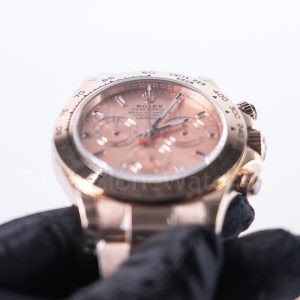
A Datejust-style watch normally needs a slimmer and more restrained crown. A Submariner-style watch needs a stronger crown framed by guards. A Daytona-style watch needs clean alignment between the crown, pusher caps, tachymeter bezel, and case flank.
Still, crown type alone should not decide an order. The practical review should include crown size, tube fit, logo shape, case-side alignment, bracelet and clasp finishing, crystal clarity, bezel detail, factory version, movement option, and QC photos before shipping.
What Is a Rolex Twinlock Crown?
First, the Twinlock crown is a screw-down crown system used across many classic Rolex-style designs. In simple terms, the crown screws into a case tube and creates a tighter crown position than a push-pull crown. In replica watch QC, the most useful point is the visible profile, not a technical claim.
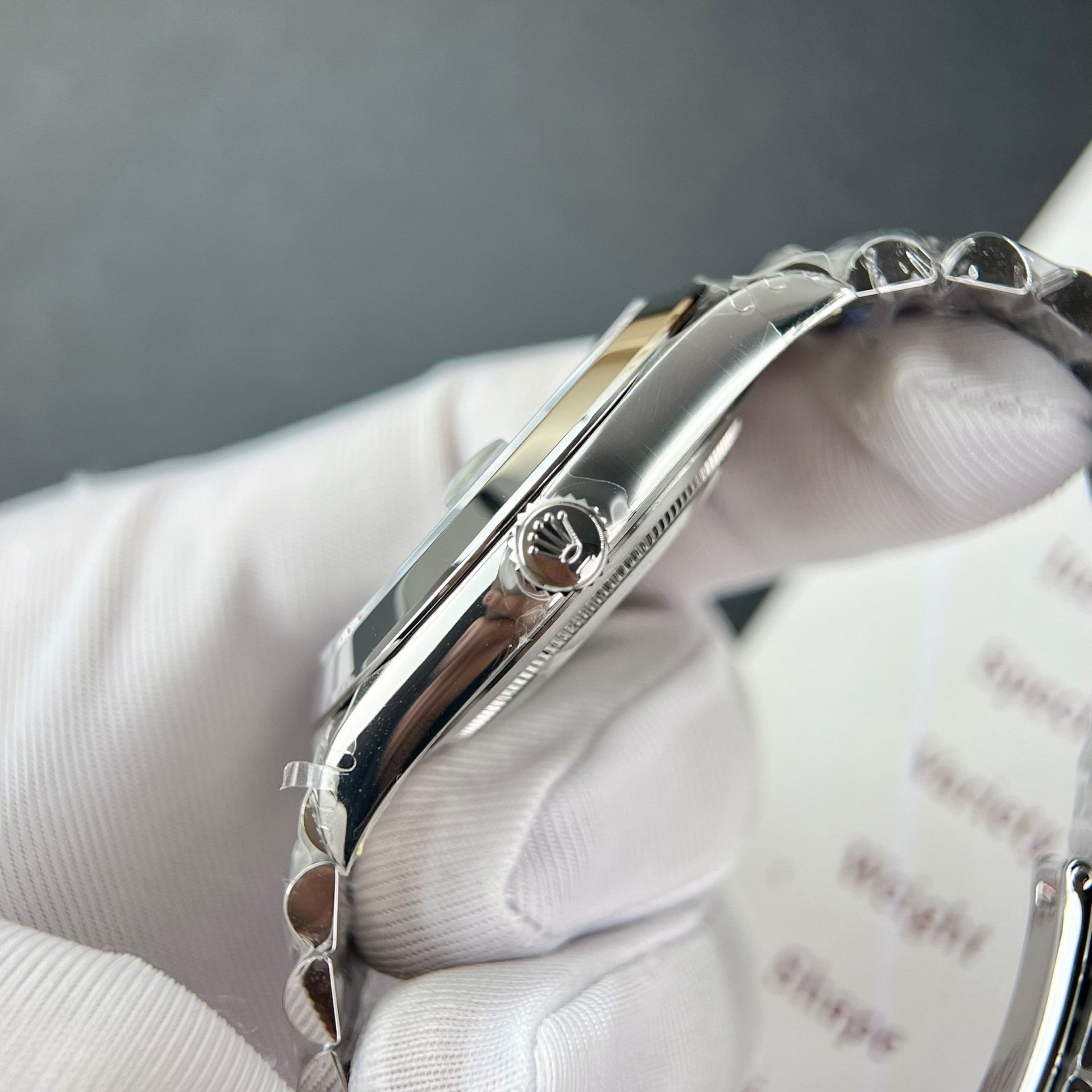
For Datejust-style watches, the Twinlock crown usually appears slimmer and more restrained. This fits the cleaner dress-watch profile. As a result, a Datejust crown should not look heavy, swollen, or too far away from the case side.
Meanwhile, the tube area needs close attention. The crown should sit evenly against the case, with a controlled shadow around the tube. If the crown looks tilted or the gap looks uneven, the side profile may need another photo before approval.
The crown logo also deserves a practical check. The coronet should look clean at normal viewing distance. However, tiny macro-level marks should not outweigh more important issues such as a crooked dial, weak bracelet finishing, or poor clasp closure.
For wider context, Rolex explains the development of Twinlock and Triplock crowns in its official waterproofness history. That background is useful for understanding original design logic, while replica watch review should still focus on visible QC details and avoid water-use promises: Rolex waterproofness history.
Datejust Selection Path
Slim crown size, clean case side, and daily-wear balance
Additionally, Datejust-style review should compare the crown with the smooth bezel, Cyclops lens, Oyster bracelet, and case thickness. A slim crown side helps this model feel more balanced for business, daily wear, and dress-casual use.
This product direction fits a cleaner Rolex-style look where elegance matters more than a heavy sports case. Before approval, crown size, tube fit, dial alignment, and clasp finishing should all be checked in QC photos.
What Is a Triplock Crown on Sports Models?
Next, the Triplock crown is a more robust screw-down crown style linked with many Rolex professional-model designs. It is strongly associated with Submariner-style cases and also appears on many Daytona-style layouts. Therefore, it usually creates a stronger visual impression than a Twinlock crown.
On a Submariner-style watch, the crown must work with crown guards. The guards frame the crown from above and below, so the side profile should look protective but not bulky. If the crown appears squeezed or the guards look uneven, the case may look less refined.
On a Daytona-style watch, the crown sits between screw-down pushers. This creates a more complex right-side view. For that reason, the crown should line up with pusher caps, crown guards, case thickness, and tachymeter bezel height.
However, the word Triplock should not be read as a water-resistance promise in this context. A replica watch may have a Triplock-style crown shape, but visual QC cannot confirm pressure resistance. Therefore, the safest review treats Triplock as a model-accuracy and case-proportion detail.
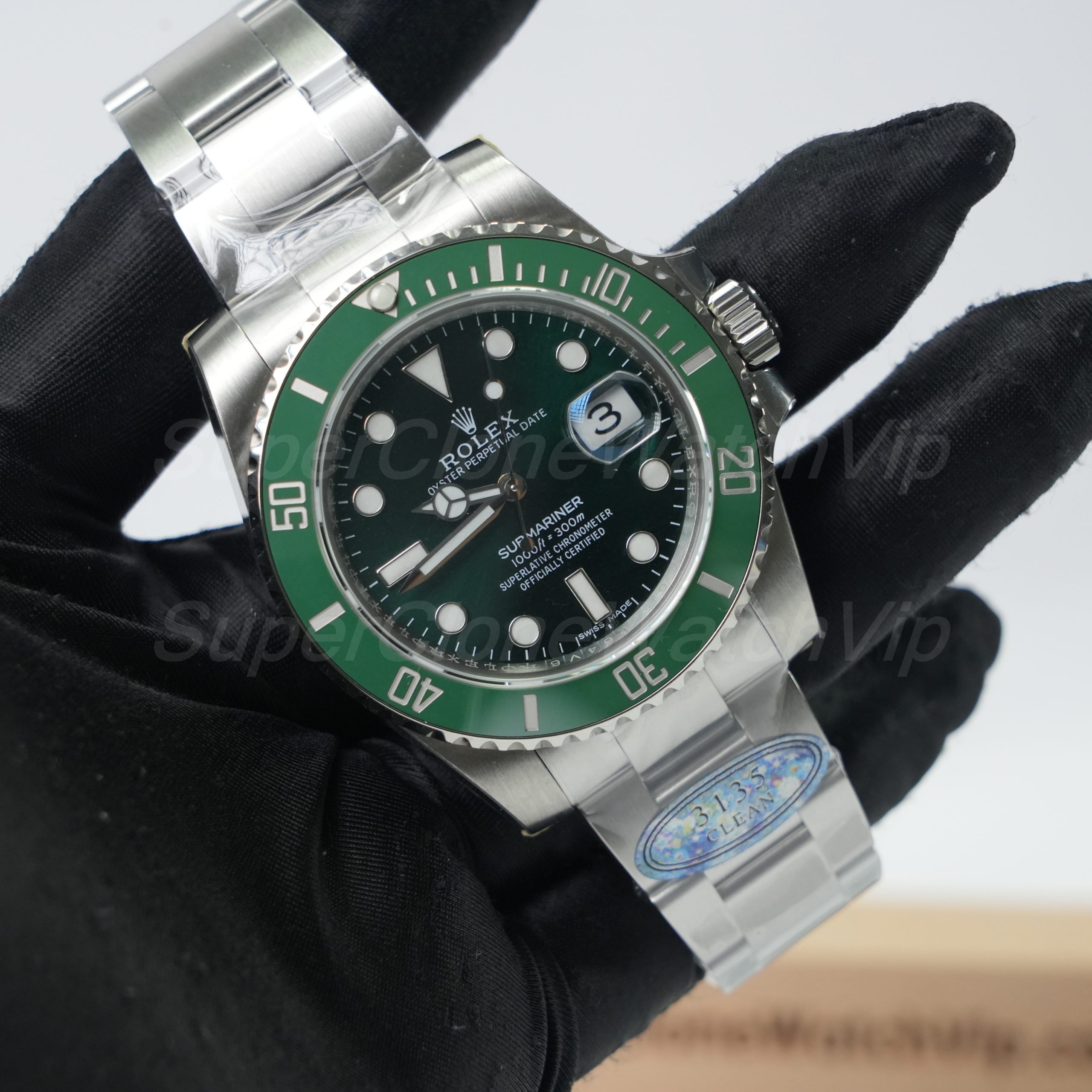
Submariner: Crown Guards and Sports Case Balance
Moreover, Submariner-style QC should study crown guard spacing, bezel edge, crown tube gap, and case thickness in one side view. This direction fits a stronger sports-watch look.
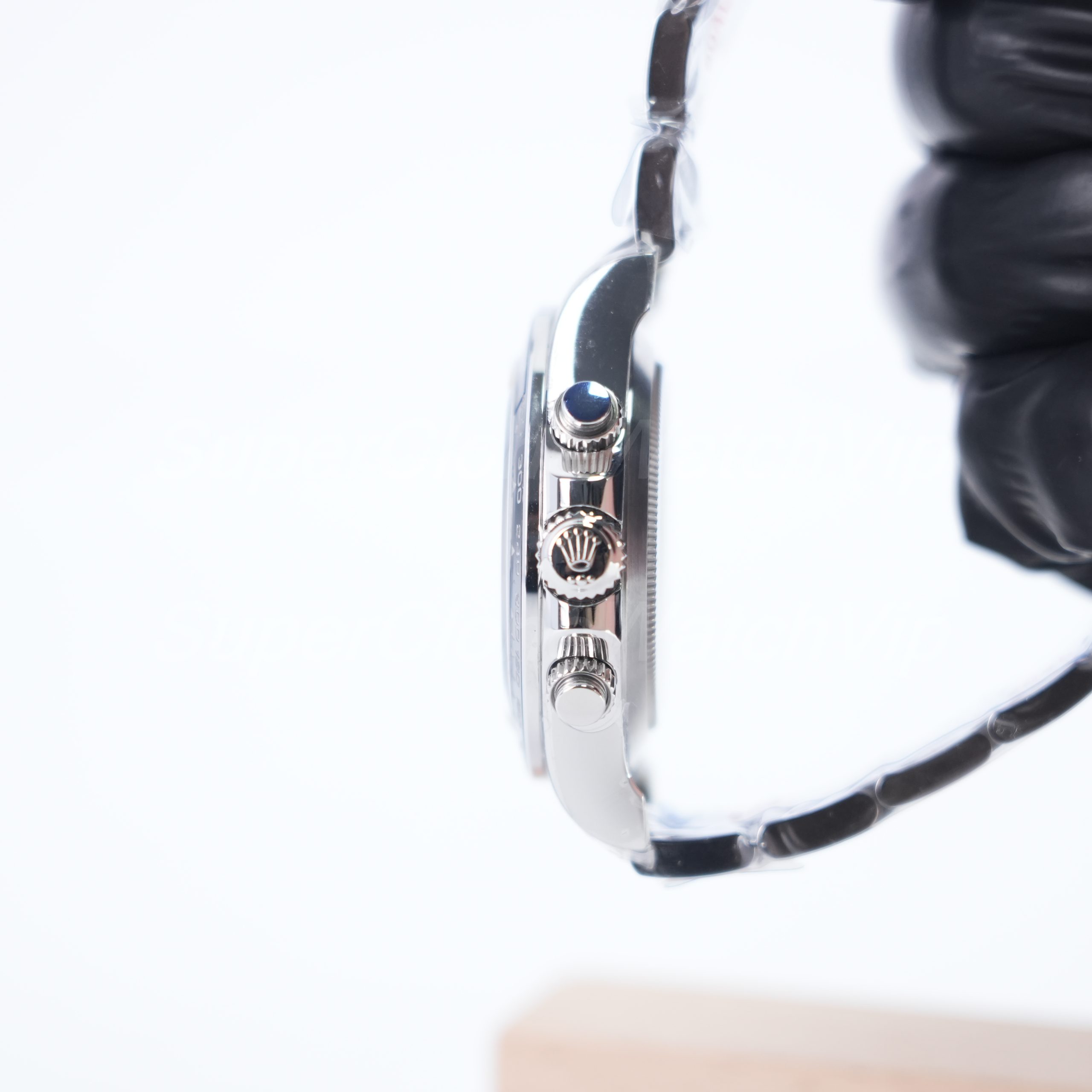
Daytona: Crown, Pushers, and Chronograph Side
Similarly, Daytona-style QC should compare the crown, pusher caps, tachymeter bezel, and case-side rhythm before approval. This direction fits a sport-luxury chronograph style.
Why Crown Shape Matters Before Choosing a Rolex-Style Watch
Although the crown is small, it controls the visual weight of the entire case side. It sits near the case flank, crown tube, bezel edge, bracelet end link, and sometimes crown guards or pushers. Therefore, a weak crown detail can make an otherwise attractive watch feel less balanced.
For Datejust-style models, the crown affects elegance. A clean Datejust should look slim and polished from the side. If the crown looks too large, the watch can lose its refined daily-wear identity. If it looks too small, the case may feel underbuilt.
For Submariner-style models, the crown affects strength. The crown guards should look even, and the crown should not protrude too far. Meanwhile, the bezel teeth, ceramic insert, and case thickness should support the same sports-watch design language.
For Daytona-style models, the crown affects side rhythm. The pusher caps, crown, crown guards, and case flank all sit in a tight area. As a result, one misaligned part can make the entire chronograph side look messy.
Furthermore, crown review helps reduce blind ordering. Product photos may look attractive, but pre-shipping QC photos show the actual watch prepared for dispatch. This is why crown-side photos should be part of the review, especially for Submariner and Daytona models.
Crown Details That Should Be Checked in QC Photos
Before approval, crown review should stay practical. The goal is not to chase unrealistic macro perfection. Instead, the goal is to catch visible problems that affect case proportion, model accuracy, and order confidence.
Crown Size
First, crown size should match the model family. A Datejust crown should look slimmer. A Submariner or Daytona crown should look stronger, but not swollen or oversized.
Logo and Markers
Next, the crown logo should look clean at normal viewing distance. Dot or bar markings should suit the model direction. However, compressed photos can soften tiny details.
Tube Fit
Also, the crown tube should look centered and clean. A rough tube edge, uneven shadow, or tilted seating can make the side profile look weak.
Case Alignment
In addition, the crown should sit on a natural horizontal line. It should not look too high, too low, or angled against the mid-case.
Guard Spacing
For sports models, crown guards should frame the crown evenly. If one guard looks much thicker, the side profile may lose balance.
Water Use Caution
Finally, crown type should not be treated as a water-use promise. Visual QC cannot confirm pressure resistance, gasket condition, or long-term sealing.
Datejust, Submariner and Daytona: Different Crown Expectations
The crown should be checked through the correct model lens. A Datejust, Submariner, and Daytona should not share the same crown expectation. Therefore, model selection should happen before detailed QC review.
Datejust for Clean Daily Wear
A Datejust-style watch works best when the goal is a slimmer daily Rolex-style profile. The focus should be dial balance, date window position, Cyclops clarity, bezel style, bracelet comfort, and clean crown seating. In this model family, an oversized crown can make the whole case look too heavy.
Submariner for Strong Sports-Watch Presence
A Submariner-style watch works best when the goal is a stronger sports case, rotating bezel look, Oyster bracelet feel, and clear crown guard structure. The crown should sit naturally between the guards. Meanwhile, the bezel pearl, insert alignment, case thickness, and clasp finishing should all support the same direction.
Daytona for Crown and Pusher Alignment
A Daytona-style watch works best when the goal is a chronograph look with stronger visual detail. The crown, pushers, tachymeter bezel, sub-dial layout, bracelet or Oysterflex strap, and clasp should be reviewed together. In this model family, side hardware balance matters as much as dial color.
QC Photos for the Actual Watch
Most importantly, product pages help narrow the direction, while QC photos confirm the actual piece before dispatch. For this reason, crown review should sit beside dial alignment, case proportions, bracelet finishing, crystal clarity, bezel details, factory version, and movement option confirmation.
Factory Version, Movement Option and Crown-Side Review
In super clone watches, crown execution can vary by factory version, batch, case set, and movement option. A watch may show strong dial printing and bracelet finishing while still needing a closer crown-side check. Therefore, side photos should be part of the full review.
Factory version matters because the case and crown parts may change across batches. A newer version may improve bezel color, dial print, bracelet edges, clasp feel, crystal clarity, or crown tube finishing. However, improvement in one area does not always mean every detail improved.
For Datejust-style super clone watches, the crown is exposed because the case side is cleaner. As a result, crown size and tube fit are easier to judge. A strong Datejust build should not rely only on dial color or bezel shine. The case side needs the same level of attention.
For Submariner-style replica watches, crown guards become a key part of the review. The crown should not look squeezed between guards. At the same time, it should not stick out so far that the right side looks heavy. Balance is the sign of better case shaping.
For Daytona-style models, the crown sits near chronograph pushers. This creates a tighter visual system. Therefore, crown height, pusher spacing, pusher cap shape, and tachymeter bezel height should be checked together before approval.
Movement option also matters, but it should be discussed carefully. A movement can affect winding feel, time setting, date setting, or chronograph reset behavior. However, photos cannot prove every movement claim. Written confirmation and function checks are still useful before payment.
Additionally, a short function video can support the photo review. Winding, setting, date change, and chronograph start-stop-reset checks can make the order process clearer. Still, function checks do not replace side-profile inspection.
QC Photo Checklist Before Shipping
Before shipping, the QC review should cover the whole watch. The crown is important, but it should be judged with dial, case, bracelet, bezel, crystal, clasp, and movement-function details. For a full process reference, review the Super Clone Watch QC Process.
- Check dial alignment, including hour markers, logo placement, date window position, sub-dial placement, and printed text.
- Review case proportions from the front and side, especially case thickness, mid-case shape, and bezel height.
- Compare crown size against the model family, because Datejust, Submariner, and Daytona need different visual weight.
- Check crown logo and marker shape at normal viewing distance, without overjudging compressed macro details.
- Inspect tube fit and case-side seating, especially uneven gaps, rough edges, or tilted crown placement.
- Review crown guard spacing on Submariner and Daytona models, including upper and lower guard symmetry.
- Check bezel and crown details together, because bezel height can change the crown-side impression.
- Inspect crystal clarity, Cyclops position, edge reflection, and visible haze under normal QC lighting.
- Review bracelet and clasp finishing, including brushing, polished edges, end links, screws, and clasp closure.
- Confirm the stated movement option before payment, especially for Datejust date function or Daytona chronograph layout.
- Request a crown-side photo if only front images are provided, because crown tube fit cannot be judged from the dial view.
- Avoid water-use assumptions, since crown appearance cannot confirm pressure resistance, gasket quality, or safe water exposure.
How Crown Knowledge Supports a Better Purchase Decision
Crown knowledge becomes useful only when it leads to a clearer next step. A search about crown systems usually means the watch has already entered detailed comparison. Therefore, the next step should not be another broad model list. It should be a short decision path.
First, match the crown style to the model. A slimmer Twinlock-style crown fits the Datejust direction. A stronger Triplock-style crown fits the Submariner direction. A Daytona-style crown should be reviewed with the pushers and bezel, not in isolation.
Second, compare the product page with QC photos. Product images show the intended listing. QC photos show the actual watch prepared for dispatch. If the crown side in QC photos looks different from the product page, another side photo may be useful before approval.
Third, confirm the factory version and movement option. Factory names are useful only when tied to an exact model and current batch. A factory version that works well for one Submariner-style model may not be the strongest direction for a Daytona-style model.
Finally, keep water exposure out of the decision. Crown type may describe a visual system, but it does not make a safe-use promise. The safer habit is to avoid swimming, showering, steam, and pressure exposure unless a qualified watchmaker inspects the watch properly.
This approach keeps the article useful for selection. It explains the detail, connects the detail to real models, and moves the reader toward the correct product page, QC process, and support conversation.
FAQ
Before Payment: What to Confirm
Crown review is a small step with real value. It affects model identity, case-side balance, and pre-shipping confidence. A Datejust crown should look refined, while a Submariner or Daytona crown should look stronger and properly framed.
At the same time, crown type should never become a water-use promise. A correct-looking crown can still depend on many hidden parts. Therefore, rolex twinlock vs triplock crown should remain a visual QC and model-accuracy topic first.
- First, compare the correct model collection: Datejust for clean daily wear, Submariner for sports crown guards, and Daytona for crown-pusher alignment.
- Second, review QC photos before approval, including dial alignment, case proportions, bracelet finishing, crystal clarity, bezel details, and crown-side fit.
- Finally, contact SuperCloneWatchVIP support before payment for factory-version confirmation, movement option details, stock status, and crown-side photo review.
Order Review Path
Review the Rolex Collection, Check QC Photos, Then Contact Support
Use the relevant Rolex collection, the QC process page, and support confirmation before payment. Crown-side photos, movement option details, and factory-version notes can reduce avoidable mistakes before shipping.