Choosing the best ap super clone watch starts with one practical question: should the final look be a cleaner Royal Oak, or a bolder Offshore? Both directions share the octagonal AP design language, yet they feel very different on the wrist.
In this guide, the focus stays on real selection details: dial texture, bezel screws, case thickness, bracelet flow, clasp fit, chronograph layout, factory version notes, QC photos, and video proof. For wider model comparison across luxury-inspired styles, the first step can also begin from the main super clone watch collection path.
Article navigation: Overview | Royal Oak vs Offshore | Royal Oak checks | Offshore checks | Model options | QC checklist | FAQ
 |  |
AP Selection Overview: Start With Shape, Then Confirm Details
First, AP-style watches are very sensitive to proportion. The octagonal bezel, exposed screws, angular case, integrated bracelet, and textured dial all sit in open view. Because of that, the model should be judged as a complete shape rather than a single attractive dial photo.
At the same time, Royal Oak and Offshore serve different wearing goals. Royal Oak feels flatter, cleaner, and more architectural. Offshore feels thicker, sportier, and more technical. Therefore, the right direction depends on wrist presence, outfit style, and comfort expectations.
For reference, Audemars Piguet describes the official Royal Oak Offshore collection with oversized proportions and a bold sport identity, which explains why Offshore-inspired pieces need special attention to case thickness and pusher layout. The official background can be reviewed through the Royal Oak Offshore collection background.
However, this article does not turn the topic into a general definition guide. The main purpose is narrower and more useful: how to compare a super clone AP watch by Royal Oak and Offshore design details, then move toward stock confirmation, QC photos, and video proof.
Royal Oak vs Offshore: Which Direction Fits the Use Case?
In general, Royal Oak is the more versatile AP direction. It works well for daily wear because the case and bracelet form one clean line. The design looks sharp, but it does not need a thick case or loud dial to make an impression.
By contrast, Offshore is the stronger sport direction. The larger case, chronograph pushers, strap options, and deeper dial create a more assertive look. As a result, Offshore-style selection should include more side-angle and function checks.
| Selection point | Royal Oak direction | Offshore direction |
| Visual identity | Cleaner, thinner, integrated-bracelet luxury sport look | Bolder, thicker, chronograph-driven sport presence |
| Best fit | Daily wear, smart casual outfits, cleaner wrist profile | Sport styling, larger wrist presence, stronger case shape |
| Main QC focus | Dial texture, bezel screws, bracelet taper, clasp closure | Case side, pusher shape, subdial layout, strap connection |
| Common mistake | Ignoring bracelet edge finishing and date window balance | Choosing only by dial color while ignoring thickness |
Therefore, the AP Royal Oak super clone path suits a refined bracelet watch profile. Meanwhile, the AP Offshore super clone path suits a stronger sports chronograph profile. A good selection should not mix these two goals too early.
Royal Oak Checks: Dial Texture, Bezel Screws, Bracelet Flow
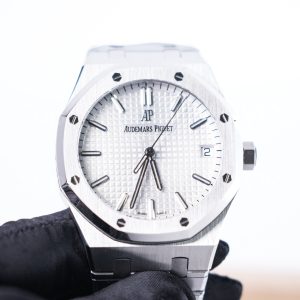
The Royal Oak design is clean, so small defects become more visible. A straight dial shot should show balanced markers, clean logo placement, even hand length, and a properly centered date window. In addition, the textured dial should not look flat or overly rough.
Next, the bezel deserves careful attention. The octagonal outline should look sharp, and the screws should sit evenly. Also, the brushed top surface and polished bevels should create a controlled contrast instead of a messy shine.
The bracelet is just as important as the case. On a Royal Oak-style watch, the bracelet is part of the architecture. Therefore, link taper, brushing direction, polished edges, clasp fit, and end-link transition should all appear in the QC photo set.
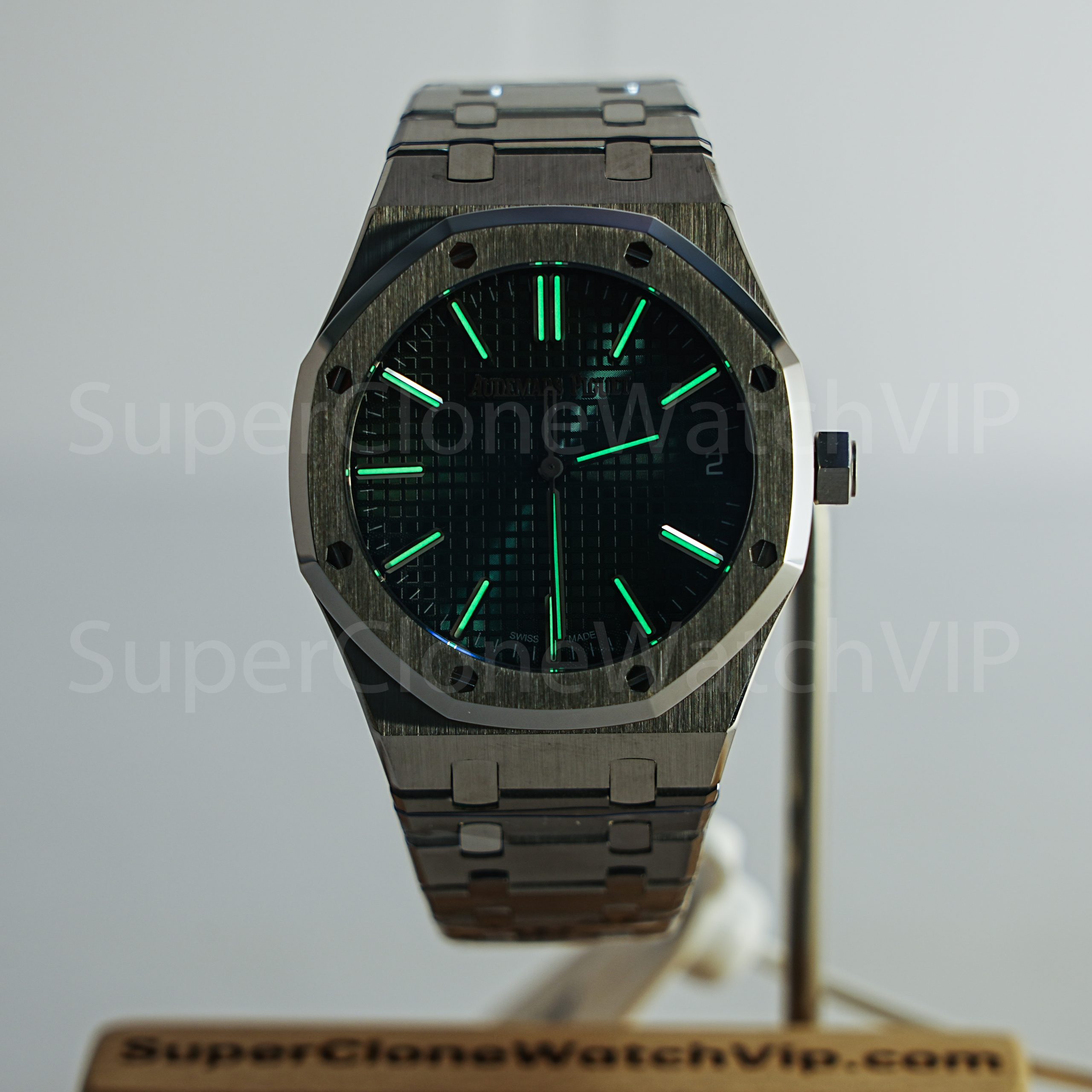
| | Royal Oak 15510ST Green Dial: Best for Clean Daily WearThis Royal Oak-style option is useful for a clean daily AP look. The green dial gives enough character, while the stainless-steel bracelet keeps the profile practical and balanced. For this style, the key review points are dial texture, bezel screw seating, bracelet taper, clasp closure, and date window alignment. The product image is fully clickable for direct product detail review. |
Offshore Checks: Case Thickness, Pushers, Strap Fit, Function Proof
Offshore-style watches need a different review. The case is usually thicker, the side wall is more visible, and the pushers become part of the design. For that reason, a front-facing product photo is not enough.
A useful QC set should include a case-side view, crown-side view, strap connection, buckle or clasp detail, and a chronograph function video when the model has pushers. Otherwise, the model may look strong in one photo but feel bulky or uneven from another angle.
Additionally, Offshore straps should be checked where they meet the case. Large gaps, sharp downward angles, and uneven curvature can affect the final wrist look. Therefore, strap fit matters as much as dial color.
| | Offshore 26420OR-Style Chronograph: Best for Bold Sport PresenceThis Offshore-style chronograph fits a stronger AP direction. The larger case, black dial layout, contrasting subdials, and strap profile create a more assertive wrist presence. For this style, the main checks are side thickness, pusher shape, subdial spacing, strap fit, date position, and chronograph reset behavior in video proof. |
Natural Model Recommendations: Match the Watch to the Wearing Goal
A better AP selection path is simple. First, choose the design family. Next, compare the product page details. Then, request current stock, factory version notes, QC photos, and video proof. This path keeps the decision clear.
For direct browsing, the AP model collection is the main category path. It keeps Royal Oak, Offshore, Concept, openworked, bracelet, and strap-based options together, which makes comparison easier.
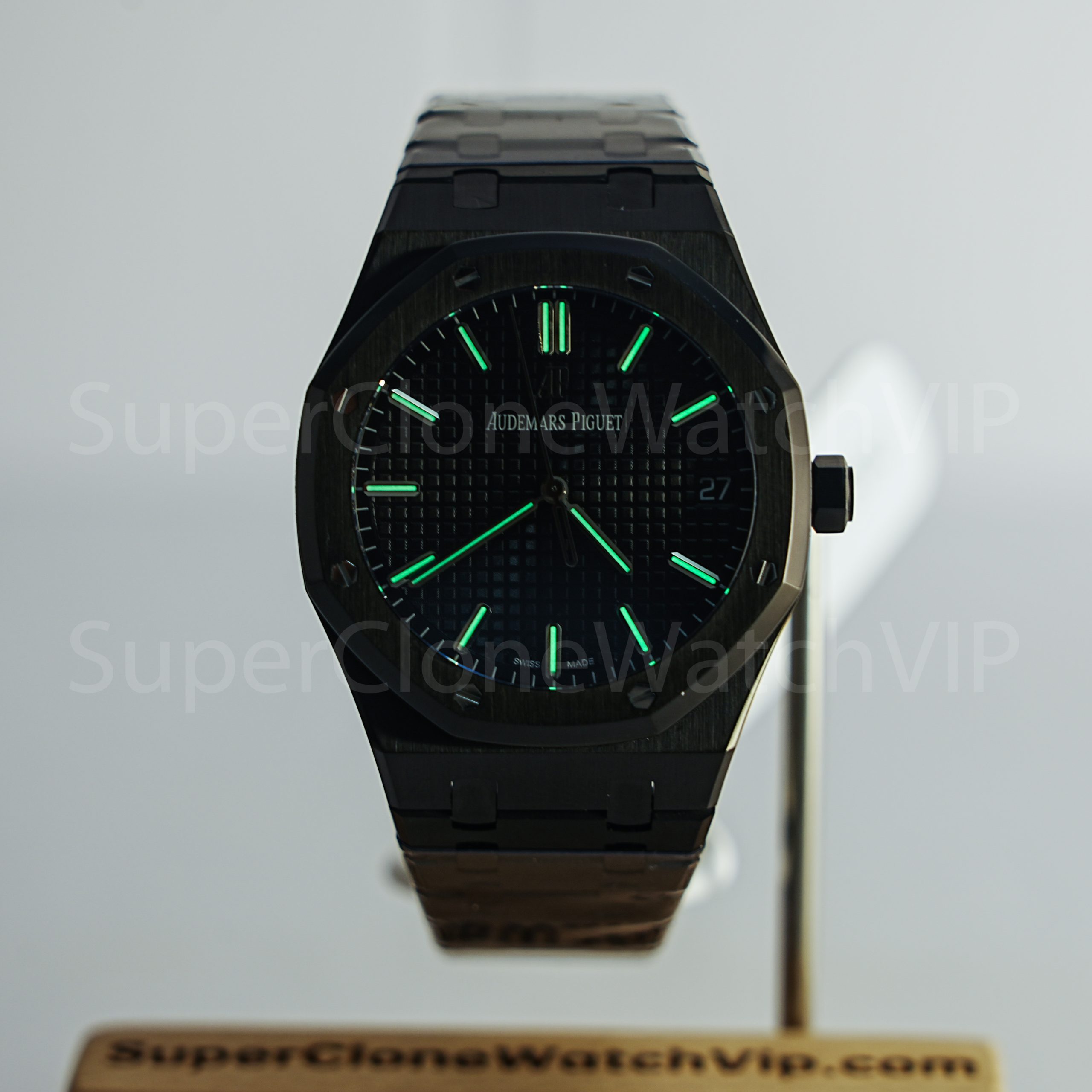
Royal Oak Black CeramicBest fit: stealth-style Royal Oak look with stronger visual contrast and a sportier strap direction. | Royal Oak Green DialBest fit: clean daily wear, bracelet-first AP shape, and easier outfit matching. | Offshore 26420ORBest fit: bold sport presence, chronograph depth, and larger AP wrist profile. | Offshore Steel ChronographBest fit: steel bracelet Offshore feel with stronger case and chronograph identity. |

Factory version should come after the model direction is clear. A name alone cannot confirm case shape, bracelet quality, dial alignment, or movement behavior. For that reason, the factory version guide is useful as a reference, but actual pre-shipping proof matters more.
For order preparation, the watch buying guide explains how to organize model, version, QC, and shipping details. This AP article then applies the same logic to Royal Oak and Offshore design differences.
QC Photo Checklist Before Approval
Before approval, the QC set should show the exact watch prepared for shipment. A polished product page is helpful for initial selection, but QC photos confirm the real dial, bezel, case, bracelet, clasp, and date window condition.
The QC photos before shipping page explains the review process in more detail. In AP selection, this step is especially important because the design has many visible edges and alignment points.
| QC area | What to check |
| Dial | Logo placement, marker alignment, dial texture, hand length, subdial spacing, and dust control. |
| Bezel | Octagonal shape, screw seating, brushing direction, polished bevels, and edge consistency. |
| Case | Side thickness, crown position, pusher shape, caseback fit, and strap or bracelet transition. |
| Bracelet and clasp | Link brushing, polished chamfers, link movement, clasp engraving, closure alignment, and visible gaps. |
| Date window | Date centering, font weight, window cut, and whether the date sits too high or too low. |
| Movement and function | Winding feel, time setting, date change, chronograph start, stop, and reset when applicable. |
| Video proof | Real handling, crown operation, clasp action, bracelet movement, pusher use, and light reflection. |
For chronograph and openworked models, video proof before shipping is especially useful. Photos show alignment, while video shows handling, function movement, and how the watch reflects under real light.
Related Reading for Internal Research
A strong blog page should lead to the next useful article instead of ending the research path. The following internal guides connect this AP selection article with model-specific, factory-specific, and use-case research.
Best AP Royal Oak Super Clone Buyer GuideA deeper Royal Oak article focused on case shape, dial texture, bracelet finishing, screw alignment, and model-specific QC checks. | Super Clone AP Watch GuideA broader AP article that compares Royal Oak, Offshore, and openworked choices through model direction and QC priorities. | Top Factory Version NotesA factory-focused guide for comparing current versions by model, QC media, finishing detail, and proof before shipping. |
For more brand and model articles, the related buyer guide hub can support wider comparison without forcing every topic into one page.
Purchase Advice: What to Send Before Requesting QC
For a clear AP selection, the request should include the target model, preferred dial color, bracelet or strap choice, budget range, factory version preference, and receiving country. Then stock status, product detail, QC photos, and video proof can be confirmed more efficiently.
If the direction is not final, two product links can be sent together. For example, one Royal Oak bracelet model and one Offshore chronograph model create a useful comparison. The reply can then focus on case thickness, bracelet fit, movement function, and available version notes.
FAQ: AP Royal Oak and Offshore Selection
Is Royal Oak or Offshore better for daily wear?
Royal Oak is usually easier for daily wear because the bracelet and case form a cleaner profile. Offshore is better when a larger and sportier wrist presence is preferred.
What should be checked first on a Royal Oak-style model?
The first checks should cover dial texture, bezel screw alignment, bracelet taper, clasp closure, case edge finishing, and date window balance.
What matters most on an Offshore-style chronograph?
Case thickness, pusher shape, subdial spacing, strap connection, buckle or clasp fit, and chronograph reset proof matter most on Offshore-style chronographs.
Should factory version decide the final choice?
Factory version can help narrow the comparison, but it should not replace actual QC photos. The final review should focus on the real watch prepared for shipment.
Are photos enough before shipping?
Photos are necessary, but video proof adds more context. Video can show crown operation, bracelet movement, clasp action, chronograph reset, and real light reflection.
What information should be included in the contact message?
The message should include target model, dial color, bracelet or strap preference, budget range, factory version preference, and receiving country. Stock, QC photos, and video proof can then be confirmed clearly.
Overall, the best AP super clone watch choice should follow a simple path. First, choose Royal Oak or Offshore by wearing goal. Next, compare the product page and available factory version. Finally, review QC photos and video proof before approval.
- Choose Royal Oak for clean daily wear, integrated bracelet flow, and a lower visual profile.
- Choose Offshore for sport presence, larger case depth, chronograph layout, and stronger wrist impact.
- Confirm stock, factory version, QC photos, video proof, budget range, and receiving country before the final step.