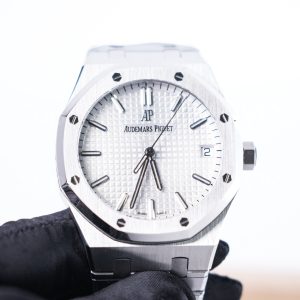
For a Royal Oak-style order, ap royal oak case finishing is one of the most important visual areas to review before payment and shipping approval. The case is not only a shell around the dial. Instead, it controls the whole impression through sharp edges, brushing, polishing, bezel screws, case thickness, crystal framing, and bracelet integration.
However, this subject should not be treated as a simple style note. The Royal Oak design exposes the case from almost every angle. Therefore, weak finishing can show quickly in QC photos, especially around the octagonal bezel, screw seats, polished bevels, case flanks, and first bracelet links.
In addition, a strong review should connect product choice with factory version, movement option, and actual pre-shipping photos. A clean catalog image is not enough. Instead, the prepared watch should be checked through front, side, close-up, bracelet, clasp, crown, and caseback views before final approval.
What Is Royal Oak Case Finishing?
First, Royal Oak case finishing refers to how the case surfaces are shaped and treated. It includes the flat brushed planes, polished bevels, sharp edges, screw seating, crown area, caseback edge, and bracelet connection. In simple terms, it is the visible metalwork that gives the watch its architectural feel.
Unlike many round sports watches, the Royal Oak uses strong geometry. The octagonal bezel is flat and exposed. The case side is broad enough to show thickness. Meanwhile, the integrated bracelet begins directly from the case, so poor transition can affect the entire look.
Moreover, the finishing is built on contrast. Brushed surfaces should look straight and even. Polished bevels should look bright but controlled. The screws should sit cleanly inside the bezel. As a result, the whole case should feel structured rather than soft or over-polished.
For background, Audemars Piguet also presents finishing as an important part of its design language, especially the contrast between satin-brushed and polished surfaces. This official finishing overview is useful as a neutral reference for understanding why surface contrast matters: Audemars Piguet decoration and finishing techniques.
For SuperCloneWatchVIP order planning, the main AP route is the Audemars Piguet replica watches collection. That category keeps the selection focused on Royal Oak, Royal Oak Chronograph, Offshore, Concept, and openworked directions.
Core finishing areas
- Sharp case lines around the bezel, lugs, side case, and bracelet transition.
- Straight brushing on the bezel, case flank, bracelet links, and clasp.
- Controlled polished bevels with balanced width and clean transitions.
- Flush bezel screws without rough seating or visible tool marks.
- Side profile and case thickness that fit the selected factory version.
- Crystal clarity, dial alignment, and front-view balance inside the case frame.
Why It Matters Before Payment and Shipping
To begin with, the case defines the Royal Oak-style look more than many small dial details. The dial matters, of course. However, the case architecture creates the first impression, especially with the flat bezel, visible screws, and integrated bracelet.
Because of that, poor case finishing can make an otherwise attractive watch feel less refined. Uneven brushing can look careless. Rounded bevels can soften the profile. Thick side proportions can make the watch feel bulkier than expected.
Meanwhile, the Royal Oak-style case does not hide mistakes easily. A round case can soften reflections. In contrast, flat metal planes reveal grain direction, polishing control, and edge definition. Therefore, the QC photo set should show more than one flattering angle.
In addition, case finishing is connected to long-term appearance. Brushed metal naturally develops hairline marks during wear. If the original brushing is already uneven, later marks may look more obvious. Therefore, a clean starting point is worth checking carefully.
For a clearer pre-shipping routine, the Super Clone Watch QC Process explains how real watch photos, close-up details, and approval before dispatch can support a more confident order review.
Front view
Shows bezel symmetry, screw seating, dial alignment, marker position, date placement, and crystal clarity.
Side view
Shows case thickness, bezel height, caseback profile, crown seating, and bracelet drop.
Close-up view
Shows brushing grain, polished bevels, screw slots, clasp finish, and small surface marks.
Key Details to Check in Royal Oak Case Finishing
A strong review works best in layers. First, the overall case shape should be checked. Then, the review can move to brushing, polishing, screws, crown, bracelet, clasp, dial alignment, and crystal clarity. This method keeps the inspection organized.
Also, one strong detail should not distract from another weak area. A clean blue dial can hide a thick side profile in a front photo. Likewise, bright polished bevels can distract from crooked brushing or uneven screw seating.
Sharp edges and case geometry
First, the case should look defined. Sharp does not mean rough. Instead, it means the lines between brushed planes and polished bevels should appear clean, steady, and intentional.
For example, the polished bevel around the bezel should create a clear border. If that border looks cloudy, wavy, or too rounded, the case may appear over-polished. Therefore, a three-quarter photo can reveal more than a straight front image.
Brushing direction and satin grain
Next, brushing should look straight and consistent. The Royal Oak-style case relies heavily on satin metal texture. Therefore, the bezel top, case flank, bracelet links, and clasp should not look like different finishing batches.
However, lighting can distort brushing. A harsh reflection may make clean brushing look rough. As a result, soft-light photos and angle shots give a more reliable view of the surface grain.
Polished bevels and transition lines
Meanwhile, polished bevels should add contrast without becoming too wide. If polishing looks heavy, the case can lose its crisp shape. If the bevel is broken or uneven, the watch can feel unfinished.
For that reason, symmetry matters. The polished line should not suddenly become thicker on one side. Also, the case bevel should connect naturally with bracelet bevels near the first links.
Bezel screws and seating
Additionally, bezel screws deserve close review. They sit at the center of the Royal Oak-style identity. A screw that looks tilted, sunken, rough, or poorly seated can affect the whole front view.
Still, macro photos can exaggerate small shadows. Therefore, screw review should combine a direct front image with an angled bezel close-up. This makes it easier to separate lighting effects from real finishing concerns.
Case thickness and side profile
Case thickness changes the wearing impression. A watch may look balanced from the front but bulky from the side. Therefore, a clear side photo should be part of the QC set.
At the same time, thickness should be judged with context. Factory version and movement option can influence caseback layout, crown position, and side profile. As a result, thickness should not be reviewed from one photo alone.
Dial alignment and crystal clarity
Although this guide focuses on the case, the dial still belongs in the same review. The case frames the dial. Therefore, tilted markers, an uneven date window, or a cloudy crystal can make the whole watch feel less balanced.
In addition, crystal clarity should be checked from direct and angled views. Reflections can hide dust or exaggerate distortion. Therefore, more than one angle helps confirm whether the crystal view is clean.
Practical rule
A Royal Oak-style order should not be approved from one front image. Instead, the review should include front, side, bezel, bracelet, clasp, crown, caseback, and close-up photos before dispatch.
Details on Super Clone Watches, Factory Version, and Movement Option
For super clone watches, case finishing should be reviewed together with factory version. A factory name can be useful context. However, the actual prepared watch still needs individual QC review.
In addition, factory strengths can vary by model. A version that looks strong on a simple three-hand Royal Oak direction may not deliver the same impression on a chronograph case. Therefore, model-specific photos matter more than a general reputation.
Movement option also affects case review. Some configurations can influence case thickness, caseback layout, crown position, rotor appearance, or hand behavior. As a result, movement discussion should stay connected to visible details rather than broad promises.
However, movement identity, water resistance, and perfect matching should not be overclaimed. A sensible review can ask how the movement option affects thickness, function layout, and service expectations. It should not rely on unsupported claims.
For deeper context, the Super Clone Watch Factory Guide explains why factory comparison should be model-based. Meanwhile, the Super Clone Watch Buying Guide helps connect model choice, QC evidence, support communication, and payment timing.
Which Royal Oak Direction Fits Each Use Case?
Before choosing a product page, the use case should be clear. Some Royal Oak-style watches are cleaner and easier for daily wear. Others feel sportier because of chronograph pushers, sub-dials, and a thicker visual profile.
Therefore, the product section below is not a random recommendation block. Each model connects to a different case-finishing concern: clean three-hand proportions, steel chronograph architecture, or black-dial sport balance.

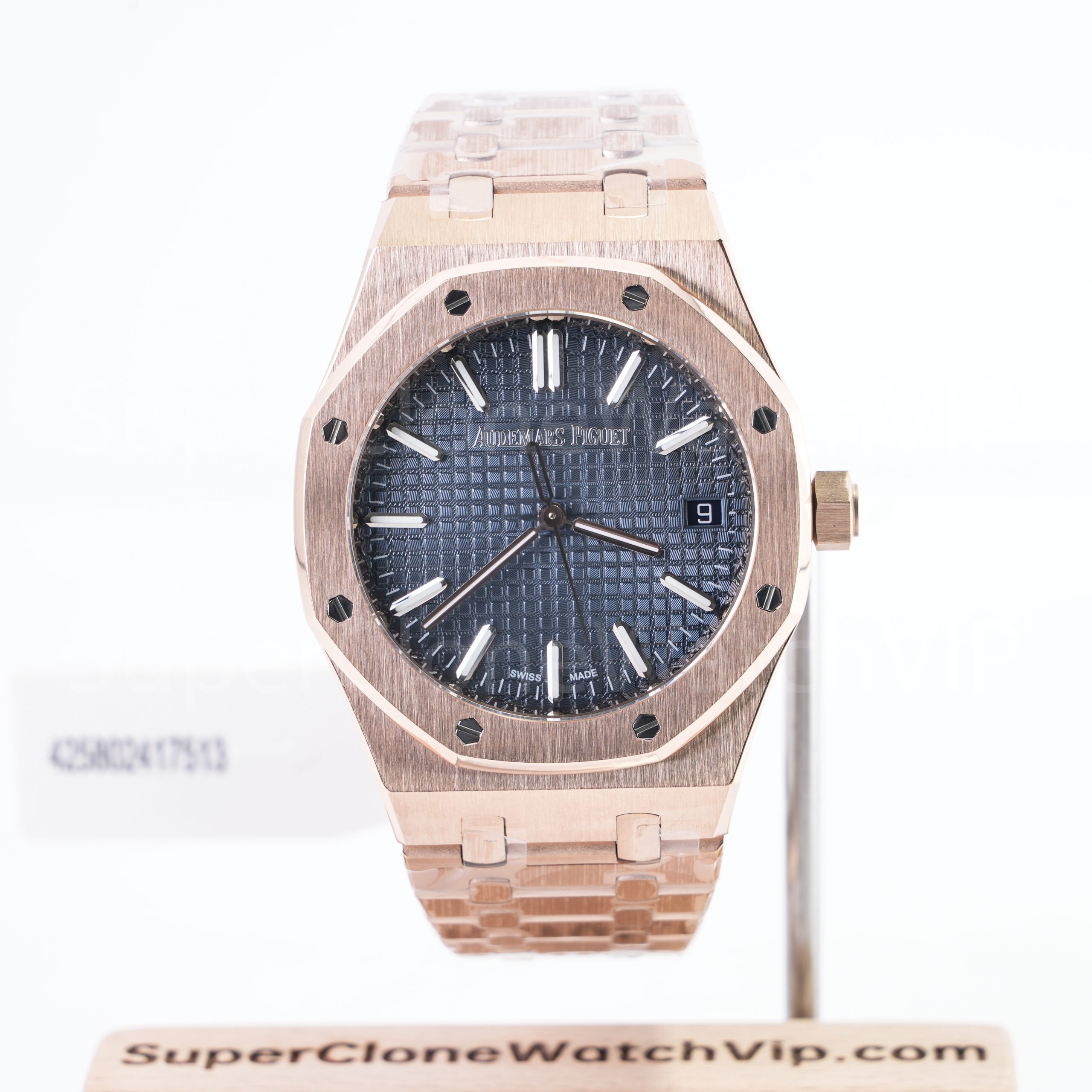

QC Photo Checklist Before Shipping
Before shipping approval, the QC photo set should cover the complete watch. A front image is helpful, but it cannot show case thickness, bracelet articulation, clasp quality, or side-case proportions. Therefore, wide photos and close-up photos should be reviewed together.
In addition, the checklist should stay practical. The goal is not to search for impossible perfection under extreme magnification. Instead, the goal is to confirm that visible details look clean, coherent, and suitable for the selected factory version.
Pre-shipping QC checklist
- Front view: check dial alignment, marker position, logo balance, date placement, bezel symmetry, and crystal clarity.
- Bezel screws: check whether screws sit evenly and avoid obvious rough seating, tilt, or tool marks.
- Brushing: review bezel top, case flank, bracelet links, and clasp for consistent satin grain.
- Polishing: check polished bevel width, clean transitions, and balanced left-to-right highlights.
- Case thickness: request a clear side photo that shows bezel height, mid-case, caseback, and crown position.
- Crown details: inspect crown seating, crown shape, and case-side finishing near the crown area.
- Bracelet transition: check first-link fit, bracelet drop, link brushing, and case-to-bracelet flow.
- Clasp finishing: review engraving, brushing, polished edges, closing area, and visible rough marks.
- Crystal clarity: check direct and angled photos for haze, dust, distortion, or distracting reflections.
- Caseback view: review visible screws, finishing, engraving area, and general cleanliness where available.
- Factory version: confirm the stated version before judging case thickness or movement-related layout.
- Movement option: ask whether the option affects thickness, caseback appearance, or service expectations.
Moreover, video can help when available. A short clip can show how light moves across brushed and polished surfaces. It can also reveal bracelet movement and clasp action better than still images.
However, video should support still photos, not replace them. Still images allow closer inspection of screws, dial alignment, case edges, and surface grain. For that reason, both formats work best together.
Finally, visual QC should not be treated as proof of waterproof performance. Photos can show crown seating and case condition. They cannot confirm pressure performance. Therefore, any water-related use should be handled separately and cautiously.
Related Models and Practical Order Notes
Royal Oak-style models do not all create the same review path. A three-hand design places more attention on bezel, dial texture, case thickness, and bracelet finishing. Meanwhile, a chronograph-style model adds pushers, sub-dials, and a more complex side profile.
For a classic steel Royal Oak direction, brushing and bracelet integration usually matter most. The dial may attract attention first, but the metal finishing defines the wearing impression. Therefore, flat satin grain and controlled bevels deserve close inspection.
For a chronograph-style Royal Oak, the case side becomes more important. Pushers, crown, bezel height, and sub-dial spacing all add complexity. As a result, front photos and side photos should be reviewed together.
For openworked or concept-style models, the dial and visible movement architecture can distract from the case. Nevertheless, case finishing still matters. Bezel screws, strap connection, crown area, and polished edges should remain part of the review.
In addition, strap versions and bracelet versions should not be judged the same way. Bracelet versions require link finishing, clasp quality, and first-link fit. Strap versions shift more attention toward case edges, screw seating, strap fit, and buckle finishing.
| Model direction | Main visual focus | QC priority |
| Three-hand Royal Oak style | Clean dial, bezel shape, bracelet, balanced profile | Brushing, bevels, screws, date window, bracelet flow |
| Royal Oak Chronograph style | Sportier case, pushers, sub-dial balance | Side case, pusher finish, screw seating, thickness |
| Openworked or Concept style | Skeleton depth, case architecture, strap connection | Bezel screws, crown area, crystal clarity, case edge quality |
Before sending an inquiry
A clearer inquiry helps support confirm the right model faster. Therefore, include the model link, preferred dial color, bracelet or strap preference, destination country, and any case-finishing concerns that need extra QC attention.
- Send the target AP product link or reference photo.
- Ask for current stock status and available factory version.
- Request front, side, bezel, bracelet, clasp, crown, and caseback QC photos.
- Confirm whether the movement option affects thickness or caseback appearance.
- Review QC photos before payment completion or final dispatch approval.
Related Guides and Internal Links
A useful internal path should move from collection browsing to QC review and then to factory context. Therefore, the AP category should remain the main collection page, while QC and factory guides support the final review.
Extended reading for stronger topic flow
FAQ
Final Review and Next Step
In summary, ap royal oak case finishing should be reviewed as a complete system. The bezel, screws, brushing, polished bevels, case thickness, bracelet transition, clasp, crown, dial alignment, and crystal clarity all affect the final impression.
Therefore, the safest order path is simple. Start with the AP collection, compare the relevant Royal Oak direction, review the QC Process, and contact SuperCloneWatchVIP support before payment when factory version, movement option, or side-profile details need confirmation.
- First, compare Royal Oak-style models inside the Audemars Piguet collection.
- Next, review the QC Process and request front, side, bezel, bracelet, clasp, crown, and caseback photos.
- Finally, contact SuperCloneWatchVIP support before payment to confirm factory version, movement option, stock status, and shipping details.