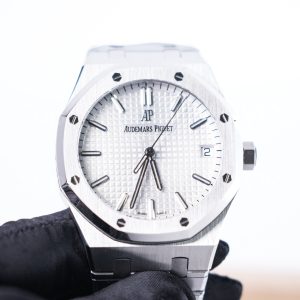
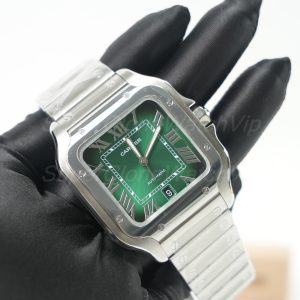
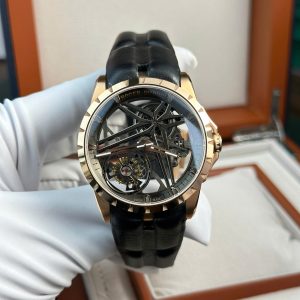
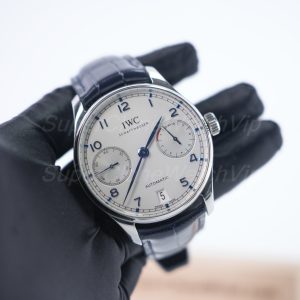
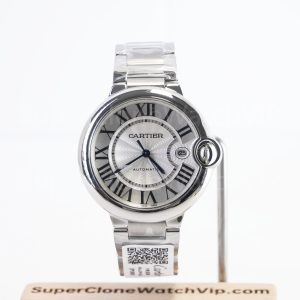
“Super clone” is not a uniform industry standard; it is a market term, so the name should be tested against specific evidence rather than accepted as a quality certificate. That distinction is the clearest answer to what is a super clone watch: the phrase usually signals an attempt at closer visual and mechanical resemblance, but it does not establish one fixed grade, specification, factory source, or inspection result.
This page explains how to read the label, what “1:1,” “factory version,” “clone movement,” and “QC” commonly mean, and which claims still need proof. It is a terminology and evidence guide—not a ranking, seller comparison, or model recommendation.
What Is a Super Clone Watch? A Market Term, Not a Formal Standard
There is no independent body that assigns a universal “super clone” grade to watches sold under that description. Sellers, factories, forums, and buyers may use the same words for different quality levels. One listing may use the label to describe closer case proportions; another may be referring mainly to dial finishing, bracelet construction, movement layout, or the availability of pre-shipping photos.
The safest way to read the phrase is as a claim about intended resemblance, not as a certificate. The label can tell you what the seller wants the product to represent, but it cannot tell you whether the exact watch matches that description.
Read the label as a claim
“Super clone,” “1:1,” and “factory version” describe how an item is being presented. They do not independently verify materials, dimensions, movement specification, or condition.
Match each claim to proof
A dimensional claim needs measurements. A movement claim needs movement-specific evidence. A condition claim needs current photos of the actual unit.
What Sellers Usually Mean by “Super Clone”
In common listing language, the term is usually intended to place a watch at the more detail-focused end of the broader replica watches category. It may suggest closer attention to case shape, dial layout, bezel appearance, bracelet or strap construction, clasp design, and movement presentation.
The words clone watches are also used broadly. In some listings, “clone” simply means a watch that follows the appearance of a known model. In others, it points to a movement or component layout designed to resemble a particular caliber or construction. Context matters because the same word can describe the whole watch, the movement, or only the seller’s product tier.
A neutral interpretation is: the seller is claiming a closer match than an unspecified basic copy, but the degree and area of that match remain unverified until supporting details are shown.
Useful reading rule
Do not ask whether the label sounds premium. Ask which visible, measurable, or functional characteristics the label is supposed to describe on that exact model.
“1:1,” Factory Version and Clone Movement Explained
What “1:1” usually signals
“1:1” is commonly used to suggest close visual or dimensional resemblance to a reference design. It is marketing shorthand, not a mathematical statement.
Without measured dimensions, weight, component details, and clear comparison images, it does not prove that every proportion, tolerance, material, engraving, or function is identical.
What a factory version identifies
A factory version is a market label used to identify a production source, version line, or batch associated with a particular model.
It can help distinguish listings, but it does not prove that every unit is identical or that one source performs equally across all models. For model-specific context, use the factory version guide.
What “clone movement” describes
The phrase usually refers to a movement designed to resemble the architecture, layout, appearance, or functions of another caliber.
The name alone cannot verify internal parts, regulation, power reserve, serviceability, or long-term reliability. Movement-specific claims need movement-specific evidence. The movement guide covers that separate technical topic.
What the Label Cannot Guarantee
A market label may set an expectation, but it cannot substitute for evidence about the exact unit. The following points remain unproven unless the listing or seller provides suitable support.
Evidence That Is More Useful Than Terminology
The strongest evidence depends on the claim being made. A photo can support a claim about visible alignment or condition, but it cannot prove an internal material or long-term performance. A measurement can support a dimension, but it cannot establish movement reliability. Use the following sequence to keep the review specific.
- 1 Exact model identification Confirm the reference or model family, dial color, bezel, bracelet or strap, size description, and any listed configuration. A factory name without an exact model is too broad.
- 2 Current photos of the actual unit Product-page images explain the model direction. QC images are more useful for checking the individual watch prepared for dispatch, especially when they include an order reference or another way to connect the images to the unit.
- 3 Angles that match the claim Front views help with dial and bezel alignment. Side views help with profile, crown, pushers, and thickness. Bracelet, clasp, caseback, and movement views answer different questions.
- 4 Measurements for dimensional claims If a listing emphasizes identical size or thickness, request the relevant measurement rather than relying on “1:1” wording. The evidence should correspond to the exact dimension being discussed.
- 5 Functional evidence for functional claims A short operation video, clear movement view, or test result may help with claims about date change, chronograph operation, GMT behavior, winding, or rate. Each item proves only what it actually shows.
- 6 A clear distinction between shown and unshown details A reliable explanation should state what the photos or tests demonstrate and what remains unknown. The QC process page shows the separate role of pre-shipping photos.
Common Misunderstandings New Buyers Have
“1:1 means every dimension is identical.”
Correction: it is usually shorthand for close resemblance. Ask for the specific measurements that matter instead of treating the phrase as literal proof.
“A known factory name guarantees every model.”
Correction: a source label may be useful for identification, but evidence must still be tied to the exact model, version, and current unit.
“Clone movement proves performance.”
Correction: the phrase describes intended resemblance or architecture. It does not verify regulation, reserve, durability, or service history.
“QC is a universal certification.”
Correction: QC usually means a seller or supplier review. Its value depends on what was checked, how it was documented, and whether the images show the actual unit.
“Product photos and QC photos are interchangeable.”
Correction: product photos describe a model. QC photos are meant to document the individual watch prepared for the order.
“One strong photo verifies the whole watch.”
Correction: every angle has limits. Front, side, caseback, clasp, movement, measurement, and functional evidence answer different questions.
A Neutral Glossary for Reading Product Listings
Use this terminology table as a claim-checking tool. It separates the common market meaning from what still needs independent support.
| Term | Common meaning | What it cannot prove | Evidence still needed |
|---|---|---|---|
| Super clone | A market label suggesting closer visual, construction, or movement resemblance than an unspecified basic copy. | A universal grade, exact specification, source, condition, or inspection result. | Exact model details, current-unit photos, measurements, movement evidence, and claim-specific tests. |
| Replica watch | A broad term for a watch made to resemble a branded model or design. | Its quality level, accuracy, materials, movement, or seller support. | Listing specifications and evidence for the exact item. |
| 1:1 | Shorthand for an intended close match in appearance or proportion. | Literal identity in every dimension, material, engraving, tolerance, and function. | Measurements and clear comparisons for each claimed matching point. |
| Factory version | A market identifier for a production source, version line, or batch. | Uniform quality across models or consistency across every unit. | Current version confirmation tied to the exact model and actual watch. |
| Clone movement | A movement intended to resemble another caliber’s architecture, layout, appearance, or functions. | Parts quality, regulation, reserve, serviceability, or long-term reliability. | Movement view, operation evidence, test result, and exact movement identification when available. |
| QC photos | Images used to review the individual watch before dispatch. | Hidden materials, unseen movement condition, water resistance, or future performance. | Multiple relevant angles, a link to the actual unit, and separate tests for non-visible claims. |
| Stock photos | General images representing a model, version, or product direction. | The condition, alignment, or details of the unit that will be supplied. | Current-unit QC images and confirmation that the configuration matches the listing. |
FAQ
Is “super clone” an official quality grade?
No. It is a market term used inconsistently across listings and sellers. Treat it as a claim that requires model-specific evidence, not as a grade awarded by an independent standards body.
Does 1:1 mean every dimension is identical?
Not by itself. “1:1” usually suggests close resemblance, but exact diameter, thickness, weight, spacing, and tolerances need measurements. The wording alone cannot establish literal identity.
What is a factory version?
It is a market identifier for a production source, version line, or batch associated with a model. It can help distinguish options, but it does not guarantee equal performance across models or identical condition across units.
Can a clone movement claim verify quality?
No. The claim may describe architecture, appearance, or intended functions. Quality, regulation, reserve, parts, assembly, and serviceability require separate evidence tied to the actual movement.
Why are QC photos more useful than labels?
They can show the visible condition and alignment of the individual unit rather than a generic product category. Their value depends on angle, clarity, and whether the images can be connected to the actual watch. They still cannot prove hidden or long-term attributes.
Questions to Ask Before Trusting a Claim
Copy these six questions whenever a listing relies heavily on “super clone,” “1:1,” “factory version,” or movement language:
- What exact model, reference, size, dial, bezel, and bracelet or strap configuration does this claim describe?
- For this item, what is “super clone” supposed to mean: closer dimensions, finishing, movement architecture, functions, or only a product tier?
- What is the current factory or version label, and is it confirmed for this exact model and unit?
- What evidence supports the “1:1” or movement claim: measurements, current photos, operation video, or a named test result?
- Will the QC set show the actual unit from the front, sides, caseback, bracelet or strap, and clasp, with close-ups relevant to this model?
- Which parts of the listing remain unverified by the available photos, measurements, or tests?
If an answer stays vague, treat the claim as unverified. The purpose of these questions is not to collect more impressive labels; it is to connect each label to evidence that can actually support it.
Related guide: To compare buyer fit, evidence requirements, and practical selection differences, read our super clone watches vs replicas comparison.