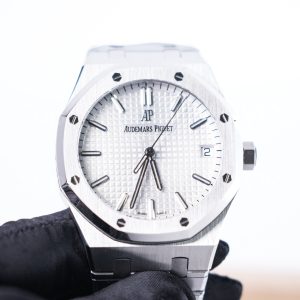
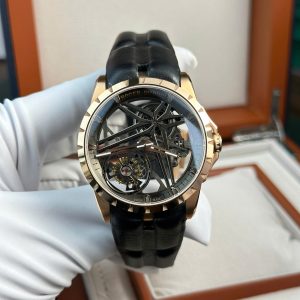
Royal Oak spreads its visual weight through a relatively controlled case and an integrated bracelet, while Royal Oak Offshore concentrates it in a deeper sport case, chronograph pushers and a more forceful wrist profile. That split should be settled before references or factory names enter the conversation. The best AP super clone watch for a tailored daily rotation is rarely the same shortlist as the best option for a bold weekend chronograph.
This page is the AP family map: choose the family, decide how much size and dial activity you can wear, select bracelet or strap, then ask the version and QC questions that match that route. Reference-level Royal Oak inspection stays in the dedicated guide rather than being repeated here.
Choose the AP Family Before the Reference
Begin with the role the watch must play. A Royal Oak three-hand direction works when the bracelet and geometric case should provide the character without a busy dial. A Royal Oak chronograph keeps the integrated-bracelet identity but adds more visual activity. Offshore is a separate route for buyers who deliberately want greater case depth, stronger pushers and a more athletic presentation. Openworked or Concept-style pieces belong on the list only when technical visual complexity is the main goal.
This family decision prevents a common mismatch: selecting an eye-catching dial and only later discovering that the case, first bracelet links or strap shape do not suit the intended wardrobe. Browse the Audemars Piguet collection with one use case in mind, then save no more than one candidate from each family.
Buyers still comparing AP against other replica watches should finish that brand-level comparison before asking which AP factory is available. This article starts after AP has already earned a place on the shortlist.
| AP family | Size feel | Dial complexity | Bracelet or strap | Best use | Depth guide |
| Royal Oak three-hand | Controlled to assertive depending on reference; integrated first links add visual width | Low | Integrated steel bracelet | Office, dinner, travel and regular rotation | Royal Oak reference & QC guide |
| Royal Oak chronograph | More active and substantial than a three-hand Royal Oak | Medium to high | Integrated steel bracelet | Dress-sport wear without full Offshore bulk | 38mm chronograph product page |
| Royal Oak Offshore | Large, deep and intentionally dominant | High | Rubber strap or steel bracelet depending on model | Weekend, casual and statement sport-luxury use | 42mm Offshore product page |
| Openworked or Concept-style | Varies; visual complexity can make the watch feel larger | Very high | Bracelet or strap depending on configuration | Collection variety and technical visual impact | Return to the AP collection |
Royal Oak: Integrated-Bracelet Proportions
Royal Oak is the family to start with when the intended effect is architectural rather than oversized. The bezel, case and bracelet read as one continuous object, so the watch can look wider than a conventional round case even when the stated diameter sounds familiar. The first bracelet links matter because they control how quickly the watch begins to curve around the wrist.
For a practical daily shortlist, separate a three-hand direction from a chronograph direction. The three-hand route gives dial texture, date and bracelet geometry more space to breathe. The chronograph route introduces sub-dials and pushers, making the watch more energetic but also more demanding to inspect. Do not choose between them by dial color alone; decide whether the dial should remain calm at normal reading distance.
The official Royal Oak collection page is useful for understanding the family’s octagonal bezel, visible fittings, textured dial and integrated-bracelet design language. Use it for family context, not as a substitute for checking the actual product configuration.
Where this page stops and C38 begins
This guide decides whether Royal Oak belongs in the final two. Once the answer is yes, use the dedicated Royal Oak QC guide for reference direction, 37mm/39mm/41mm fit logic, Tapisserie inspection, bezel fittings, bracelet articulation and the approval sequence. Keeping that detail on C38 prevents this brand-family page from competing with the single-series guide.
Royal Oak Offshore: Larger Case and Sportier Details
Offshore should be selected because its volume is part of the appeal, not because it is simply a louder Royal Oak. A deeper case, chronograph controls, stronger bezel treatment and either a substantial bracelet or shaped strap create a watch that occupies more visual and physical space. It usually fits casual clothing and sport-luxury styling more naturally than a narrow cuff.
A smaller wrist does not automatically rule it out, but the wearer must accept deliberate overstatement. Ask for a side-profile image and a wrist-angle image rather than relying on a front-facing catalog shot. The useful question is whether the case and attachment points remain inside the flat top of the wrist, not whether the diameter number seems acceptable in isolation.
The official Royal Oak Offshore collection page shows why this family is treated as the bolder sport route. In the purchase shortlist, that means giving side shape, pusher area and strap or bracelet fit equal weight with the dial.
Offshore earns a place only when all three statements are true
- The larger side profile is intentional rather than tolerated.
- Chronograph controls and a busier dial support the intended style.
- The strap or bracelet can be shown curving naturally on a wrist-style angle.
Dial Patterns, Chronographs and Complication Level
Dial complexity changes both the wearing mood and the amount of proof needed before approval. A three-hand Royal Oak keeps attention on the geometric case, textured dial and bracelet. It is the easiest route when the watch must work across meetings, dinners and travel without becoming the dominant element of every outfit.
A Royal Oak chronograph adds sub-dials and pushers while retaining the bracelet-first silhouette. It suits buyers who want more sport detail but still prefer a cleaner case family than Offshore. The QC set must show the sub-dials straight-on, the date position if present, the pusher area from the side and a short function video when chronograph operation is part of the supplied proof.
Offshore chronographs make the function layout part of the overall mass. Here, dial readability and case depth should be judged together. A balanced front photo can still hide an awkward side profile, while an impressive case can still carry crowded sub-dials. Approve only when both views support the same decision.
Openworked and Concept-style directions add another layer of visual information. Keep them outside the first two-model shortlist unless exposed architecture is the reason for choosing AP. Extra complexity should create a distinct collection role, not simply add more items to inspect.
Case Size, Thickness and Wrist Requirements
AP fit needs more than wrist circumference. Record the circumference, the flat width across the top of the wrist and the size of a watch that already feels comfortable. The flat width is especially useful because Royal Oak first links and Offshore attachment points can extend the effective footprint beyond the case body.
Use diameter to narrow, not approve
A diameter number helps remove obvious mismatches, but it cannot show first-link spread, case depth or strap curvature. Keep it as an initial filter only.
Ask for two fit views
Request one side-profile image and one wrist-style angle. The pair should show thickness, attachment drop and whether the watch occupies more width than expected.
Compare with your own watch
Share the diameter and thickness of a watch you already wear comfortably. That reference is more useful than saying only “small wrist” or “large wrist.”
Choose the family before the color: Royal Oak for controlled integrated-bracelet presence, Royal Oak chronograph for more dial activity, and Offshore only when additional depth is part of the brief. This order avoids falling in love with a dial that belongs to the wrong physical format.
Bracelet, Strap and Clasp Differences
On Royal Oak, the bracelet is not an accessory added after the case; it is part of the design structure. Look for a smooth transition from case to first links, consistent brushing direction, controlled polished accents and links that articulate rather than remain rigid. The clasp should close evenly and sit in line with the bracelet instead of creating a visible step.
A steel-bracelet Offshore keeps the AP architecture but adds more mass. A strap-based Offshore can reduce visual metal while making strap curvature and the case connection more important. Ask for both sides of the connection, the buckle or clasp and an angle showing how quickly the strap turns downward.
Treat comfort as a configuration question. A visually strong bracelet may feel too dominant, while a rubber strap may suit the same case better for casual wear. Confirm the supplied configuration before discussing the factory version so the comparison stays tied to the watch you actually want.
Three Product Paths That Represent the Family Map
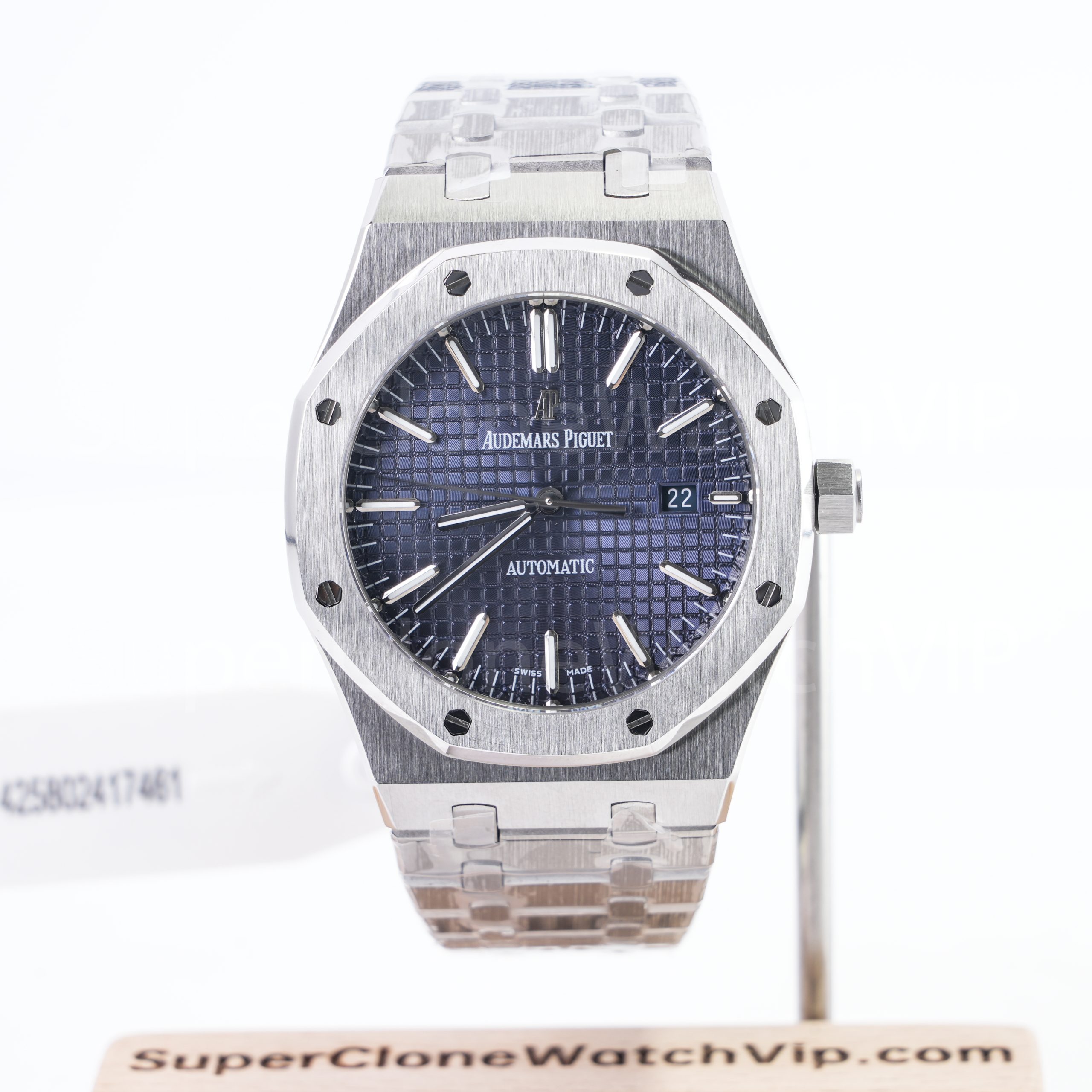
These existing product modules remain useful because they represent three different decisions: calm three-hand Royal Oak, compact Royal Oak chronograph and larger Offshore chronograph. Use them to compare format, not as a universal ranking.


Factory, Version and QC Questions
Factory discussion belongs after the family, size feel, dial complexity and bracelet or strap have been fixed. A factory name without an exact model can pull the decision toward a version that does not match the intended wrist profile. Ask which current factory and version are available for the exact product link, dial and configuration.
This page does not rank factories. The factory guide explains model-based version research across different clone watches. Here, the job is narrower: turn an AP family shortlist into six questions that support a real approval decision.
Send these six questions with the chosen link
- Which current factory and version are available for this exact model, dial and bracelet or strap?
- Are the product title, stated size and supplied configuration the ones being prepared?
- Will the QC set show the actual watch straight-on, from the side and at the attachment points?
- Can the bracelet articulation or strap curvature and clasp closure be shown clearly?
- For a chronograph, can start, stop and reset be shown in a short video when available?
- Can unclear or hidden details be photographed again before approval?
Use the general QC process for the actual-watch photo workflow. For Royal Oak, move from that general process to C38 when reference-specific bezel, dial and bracelet questions need a fixed inspection order. Offshore stays on this page at family level: side depth, pushers, dial balance and attachment fit.
Related Reading
Royal Oak Reference & QC Guide
Use after Royal Oak survives the family shortlist and reference-level approval becomes the next task.
Factory Version Research
Use only after the exact AP model, dial and configuration have been defined.
Actual-Watch QC Workflow
Review how pre-shipping photos are requested, clarified and approved before dispatch.
AP Family Selection FAQ
Should a smaller wrist avoid Royal Oak Offshore?
Not automatically, but Offshore should remain only when its larger case is an intentional style choice. Request a side-profile and wrist-angle image showing whether the case and attachment points stay within the flat top of the wrist. A classic Royal Oak or compact Royal Oak chronograph is the safer route when the wearer wants less depth and overhang.
Which AP family is easier for daily wear?
A three-hand Royal Oak is normally the most flexible because the integrated bracelet supplies the AP identity without a heavy chronograph layout. It can move between office, dinner and casual use more easily. Offshore works better when a larger sport watch is already compatible with the wearer’s wardrobe and comfort expectations.
How does chronograph complexity change QC?
It adds sub-dial spacing, hand positions, pushers, date placement on some models and functional reset behavior to the review. The QC folder should include a straight front view, a clear crown-and-pusher side view and a short start-stop-reset video when that proof is available.
What bracelet and bezel details matter on Royal Oak?
At family-selection level, check that the bezel geometry looks even, the visible fittings do not interrupt the pattern, the first links transition cleanly from the case, brushing is consistent and the clasp closes in line. Use C38 for the part-by-part inspection sequence and reference-specific approval standards.
When should the dedicated Royal Oak QC guide be used?
Use it after Royal Oak has been chosen over Offshore and the next decision is the exact Royal Oak direction. It is the correct page for 37mm, 39mm and 41mm fit logic, reference-level dial and bezel review, integrated-bracelet articulation and the final approval order.
Build an AP Two-Model Shortlist
End the search with one candidate from each genuine use case, not several near-duplicates. The final pair below creates a clear test: controlled integrated-bracelet daily wear versus deliberate Offshore sport presence. Save both links, compare them against the decision table, and remove the one that fails the wrist and wardrobe requirement.
Final candidate 1
Royal Oak 15400-Style Blue Dial, 41mm
Keep this candidate when the watch must handle office, dinner and regular rotation with the bracelet and case geometry doing most of the visual work.
Final candidate 2
Royal Oak Offshore Steel Chronograph, 42mm
Keep this candidate when a deeper case, chronograph controls and stronger sport-luxury presence are requirements rather than compromises.
For the best AP super clone watch decision, send only these two links with wrist circumference, flat wrist width and three QC priorities. Ask which exact versions are available, then request the side and attachment views needed to eliminate one candidate.