Will you actually use the chronograph pushers, or do you care more about reading the time instantly and having a simple timing bezel? That is the real Daytona vs Submariner decision. Choose Daytona when operating the chronograph and seeing its three-register layout are part of the experience you want. Choose Submariner when clarity, a rotating bezel and fewer controls matter more than complication.
Both models belong to the wider replica watches catalog, but they should not be approved with the same evidence. Start with the Daytona replica watches series for chronograph-led designs, or the Submariner replica watches series for cleaner dive-watch layouts.
Chronograph Identity or Dive-Watch Clarity?
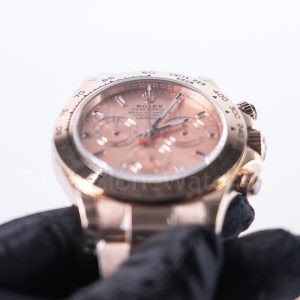
Daytona places the complication at the center of the design. The sub-dials, fixed tachymeter-style bezel and side pushers make the watch look technical before any button is pressed. That visual density is the attraction for a buyer who wants the dial to do more than display hours and minutes.
Submariner uses a different hierarchy. Large hour markers, broad hands and a rotating dive-style bezel put quick time reading ahead of dial detail. A date model adds another checkpoint, while a no-date model keeps the face even cleaner. The correct choice begins with the function you expect to notice during normal wear, not the model name with the stronger reputation.
| Decision dimension | Daytona | Submariner | Use this to decide |
|---|---|---|---|
| Size and visual footprint | Reference-dependent; the dial can look compact but visually dense because information is pulled toward the center. | Reference-dependent; the bezel and large markers create a broader, more direct tool-watch frame. | Judge wrist photos and side views, not the written diameter alone. |
| Thickness feel | The crown-and-pusher side looks more mechanically layered, which can make the profile feel busier. | The case can feel more tool-like, but the single crown side is visually simpler. | Request a side photo under a cuff-height angle before judging comfort. |
| Function requirement | Chronograph start, stop and reset are central to the model identity. | Time reading and elapsed-time use through the rotating bezel are the practical focus. | If the chronograph will never be used, its extra controls become mostly visual. |
| At-a-glance clarity | More printed tracks, hands and sub-dials compete for attention. | Large markers and a simpler center make normal time reading faster. | Choose Submariner when one-glance reading is a daily priority. |
| Bezel purpose | Fixed tachymeter-style scale that supports the chronograph identity and frames the dial. | Rotating 60-minute dive-style bezel with a prominent zero marker. | Pick the control you understand and expect to use. |
| Bracelet or strap direction | Commonly seen on an Oyster-style bracelet; some listed references use a different strap direction. | Usually presented as a bracelet-led sports watch with a firm tool-watch character. | Compare the exact product listing rather than assuming every reference wears the same. |
| Daily wear and formality | More polished and detail-led; works when the watch is intended to remain visible in the outfit. | More direct and easy to read; works when the watch must cover routine office and casual use. | Choose by weekly use, not a single staged product photo. |
| Maintenance complexity | More operating components and display elements must be confirmed on the exact version. | Fewer external controls, though bezel, crown and date components still need careful review. | Do not assume complexity equals failure; it means more evidence is required. |
| QC video requirement | Strongly recommended: show start, stop, reset and the hand position after reset. | Useful for bezel rotation, crown operation and date change on date-equipped versions. | Daytona needs more functional proof before approval. |
| Best fit | Buyer who values chronograph interaction, technical dial balance and detailed QC review. | Buyer who values immediate legibility, a simpler control layout and broad routine use. | Let the function you will use break the tie. |
Dial Information and Real-World Legibility
A Daytona dial has two reading jobs. It must show ordinary time while also presenting chronograph information through additional hands, registers and printed scales. Even when the layout is symmetrical, the eye has more elements to separate. On a smaller wrist, that information density can make the dial feel busier than the case measurement suggests.
Submariner prioritizes the hour and minute hands against large markers. That does not make every version identical: a date window and magnifier add visual weight, while a no-date layout keeps the three, six and nine o’clock areas more even. The underlying reading task remains simpler because there are fewer central indicators competing for attention.
Use the five-second legibility test
Open a straight-on product photo at normal phone size rather than zooming in. Look away, look back and read the time within five seconds. If the Daytona sub-dials repeatedly pull your attention away from the main hands, the Submariner layout is more suitable for your real use. If the layered dial remains clear and is the feature you keep noticing, Daytona is doing the job you want.
Bezel Purpose and Visual Balance
Daytona uses a fixed tachymeter-style bezel. In this comparison, its most immediate effect is visual: the printed scale forms a tight technical frame around a dial that is already information-rich. A clean front photo should show even printing, a centered dial and a balanced relationship between the bezel scale, hour markers and sub-dials.
Submariner uses a rotating 60-minute dive-style bezel. The outer ring carries more of the watch’s visual weight, while the dial center stays open. QC should confirm that the zero marker and the dial’s 12 o’clock index align in a straight-on view. A short video is more useful than a still image when you also want to check rotation and stopping positions.
For design context, Rolex presents the Cosmograph Daytona as a chronograph and the Submariner as its dive-watch family. The distinction matters here because each bezel should be judged as a working part of a different display system, not as decoration alone.
Pushers, Crown and Case-Profile Differences
The Daytona case side contains more information than the front view reveals. The crown, crown guards, chronograph pushers and any pusher collars should sit evenly and follow a consistent line. Ask for a direct crown-side photo and a slightly angled photo. Those views help expose uneven pusher height, rough edges, weak spacing or a profile that looks heavier than expected.
Submariner has no chronograph pushers, so its control side is easier to understand. The crown should appear centered between the guards, and the case-to-bracelet transition should look even. Simpler does not mean unimportant: crown operation, threading feel and guard shape still affect the daily experience.
This is also where written dimensions become less useful. Two watches can be close in stated diameter yet feel different because of bezel width, case-side controls, bracelet integration and dial density. A side-on wrist photo answers more than another list of measurements.
Bracelet Comfort and Everyday Use
Many steel Daytona and Submariner listings use an Oyster-style bracelet, but comfort should be checked on the exact watch rather than assumed from the family name. End-link fit, link articulation, edge finishing, clasp closure and the amount of available adjustment all influence whether the watch remains comfortable through a full day.
Daytona’s detailed dial and polished sports-chronograph character make the bracelet part of a more composed overall presentation. Submariner’s bracelet supports a more direct tool-watch impression. Neither description decides comfort by itself; the deciding evidence is how the first links drop from the case and whether the clasp sits centrally on the underside of the wrist.
- Check from aboveLook for even end-link gaps and a centered case.
- Check from the sideConfirm the first links do not flare away from the wrist.
- Check the claspAsk for open, closed and underside views before approval.
Why Daytona QC Requires More Functional Evidence
A clear dial photo can confirm cleanliness, printing, marker alignment and sub-dial balance, but it cannot prove how the chronograph operates. Because the complication defines the Daytona, approval should include a continuous functional video rather than separate clips that hide the sequence.
Ask the QC video to show this sequence
- Show the full dial running before the chronograph is activated.
- Show the pusher area from the side; where the supplied version uses screw-down collars, show them opened before operation.
- Start the chronograph and keep the dial in frame long enough to see the central chronograph hand move.
- Stop the chronograph without cutting the video.
- Reset it and hold the camera steady so the return position can be checked.
- Confirm which sub-dial indicators are functional on the exact listed version instead of assuming every version behaves the same way.
The reset position should be reviewed closely, especially at 12 o’clock. The evidence should also include front, crown-side, opposite-side, bracelet and clasp photos. A good-looking Panda dial is not enough if the pusher action or reset cannot be demonstrated.
Use the corrected super clone watch QC process page to understand the site’s pre-shipping review path, then request the extra chronograph video because this model needs more than a standard photo set.
Submariner Simplicity and Its Own QC Risks
Submariner QC is simpler only in the sense that there are fewer functions and external controls to prove. The visible alignment points are still unforgiving. A straight-on photo should show the bezel’s zero marker, the 12 o’clock dial marker and the center of the case on the same vertical line.
A no-date model removes the date and magnifier checks, but it does not remove the need to inspect bezel alignment, dial spacing, crown operation and bracelet finishing. The Submariner earns its practical advantage through a simpler information system, not through permission to accept weaker QC.
A Function-First Final Decision
Use the sequence below instead of deciding from popularity, dial color or a close-up image alone. For buyers comparing clone watches, this order keeps the decision tied to the feature that will still matter after the first week.
The final filter is not “which design do I like in a product photo?” It is “which function will I use, and which evidence am I prepared to review?” Choose Daytona only when the chronograph experience justifies the extra inspection. Choose Submariner when clear time reading and a simpler control layout will be useful more often.
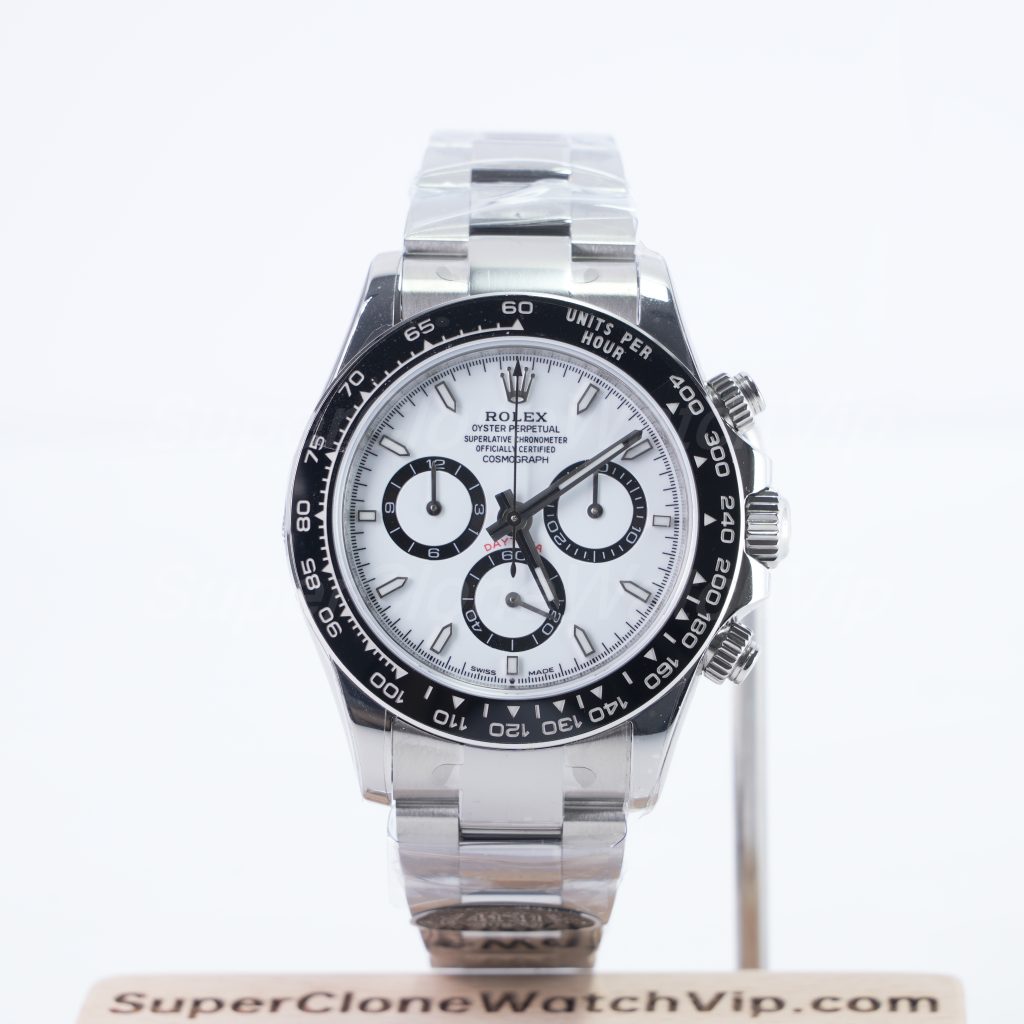
Rolex Daytona White Panda Dial 126500LN 40mm Replica Watch
Open this model when the chronograph layout, contrasting sub-dials and functional pusher evidence are central to the decision.

Rolex Submariner 116610LN 40mm Black Dial Replica Watch
Open this model when immediate legibility, a rotating bezel and a simpler operating layout are the stronger priorities.
Send one model link with one evidence request
For Daytona, request continuous chronograph operation and reset video. For Submariner, request bezel, crown and date-operation video where applicable. Keep the request tied to the exact product instead of asking for a generic QC set.
FAQs About Daytona vs Submariner Function and QC
Should chronograph pushers be tested before shipping?
Yes. Request one continuous video showing start, stop and reset, with the dial kept in frame. The final reset position and the side profile of the pushers should be visible before approval.
Which model is easier to read at a glance?
Submariner is usually easier because the dial gives more space to the main hands and hour markers. Daytona adds chronograph hands, registers and printed scales that require more visual separation.
Does a Daytona usually feel busier on a small wrist?
It can. The issue is not only case diameter; the three-register layout, bezel scale and pushers increase visual density. A normal-distance wrist photo is more useful than a zoomed product image for judging this effect.
Is Submariner QC simpler than Daytona QC?
The functional review is simpler because there is no chronograph sequence to prove. Submariner still needs close checks for bezel alignment and rotation, crown operation, markers, bracelet finishing and the date display when present.
Which model suits a buyer who will not use the complication?
Submariner is the more rational choice when the chronograph will remain unused and fast reading matters. Choose Daytona anyway only when the sub-dial layout itself is the main reason for owning the watch and you accept the extra QC work.
Use the Function You Will Actually Use
Choose the model, then request the matching proof
Open one exact product page. Daytona buyers should ask for chronograph start-stop-reset evidence; Submariner buyers should ask for bezel, crown and date checks where applicable. Approve the watch only after the function that drove the decision has been shown.