A Datejust is not one watch. It is a configuration system: case size changes the proportions, the dial and markers control legibility, the bezel sets the level of shine, and the bracelet changes the entire wearing character. This Rolex Datejust replica buying guide puts those decisions in the order that prevents an attractive detail from pulling the rest of the watch out of balance.
Start with the wrist and intended use, build one complete specification, and only then compare the available version and the actual watch prepared for QC. That sequence is more reliable than choosing from a close-up dial photo or selecting a factory name before the reference is fixed. Buyers still exploring broader replica watches should first decide whether the Datejust format itself matches the role they need.
Build the Datejust Configuration in the Right Order
The safest sequence is use case → size → dial and markers → bezel → bracelet → material → exact reference → available version → QC approval. Each choice narrows the next one. Reversing the order often creates a watch that looks impressive in a product image but feels too bright, too large, too decorative, or too casual in normal wear.
Budget belongs in this sequence, but it should not be used to invent a specification. Set a maximum range after the desired configuration is written down, ask which current options fit it, and compare only those exact options. A lower or higher quote does not by itself prove the factory, version, material, movement, or finishing level.
31, 36 or 41 mm: Size Before Color
Case diameter changes more than wrist coverage. It changes how large the dial appears, how dominant the bezel feels, how much the bracelet contributes to the look, and how easily the watch passes under a cuff. That is why size should be settled before a blue, green, champagne, or diamond-marker dial is allowed to influence the decision.
| Size | Visual effect | Best starting point | Confirm before ordering |
|---|---|---|---|
| 31 mm | Compact, jewelry-led, and visually lighter. | Smaller wrists, a deliberately delicate profile, or dress and gift configurations. | Actual wrist measurement, bracelet length, dial legibility, and whether decorative markers make the dial feel crowded. |
| 36 mm | Classic Datejust balance with moderate dial and bezel presence. | Formal shirts, mixed daily wear, restrained styling, and gifts when the wearer prefers traditional proportions. | How the lugs sit across the wrist, cuff clearance, and whether a fluted bezel adds more shine than intended. |
| 41 mm | Broader dial, more visible bezel, and stronger bracelet presence. | Larger wrists, open-collar office wear, jackets, and buyers who intentionally want a modern wrist statement. | Straight wrist photos, side profile, lug position, and comfort during wrist flex rather than only a front product image. |
Do not choose by wrist circumference alone. Wrist width, hand size, sleeve style, and preferred presence all matter. Place a ruler across the top of the wrist or compare a watch already owned, then ask for a straight wrist photo at normal camera distance. Wide-angle phone shots taken very close to the watch can exaggerate the case.
For dedicated smaller-size options, the 31 mm Datejust collection is the correct product route. The main Datejust category remains the better route for comparing complete 36 and 41 mm combinations.
Dial Color, Markers and the Date Window
The dial should be selected as a three-part unit: color, surface behavior, and marker style. A color name alone is not enough. Sunray finishes can shift dramatically under changing light; matte or darker finishes remain calmer; patterned or decorative dials add visual movement even when the base color is neutral.
Neutral daily dials
Silver, black, white, and subdued dark blue usually integrate with more clothing. Their advantage is not that they are universally “best,” but that they place less pressure on the bezel, bracelet, and outfit.
Color-led dials
Brighter blue, green, champagne, and motif dials should be reviewed in front, angled, and lower-light photos. Confirm whether the color remains wearable outside the lighting used on the product page.
Marker-led dials
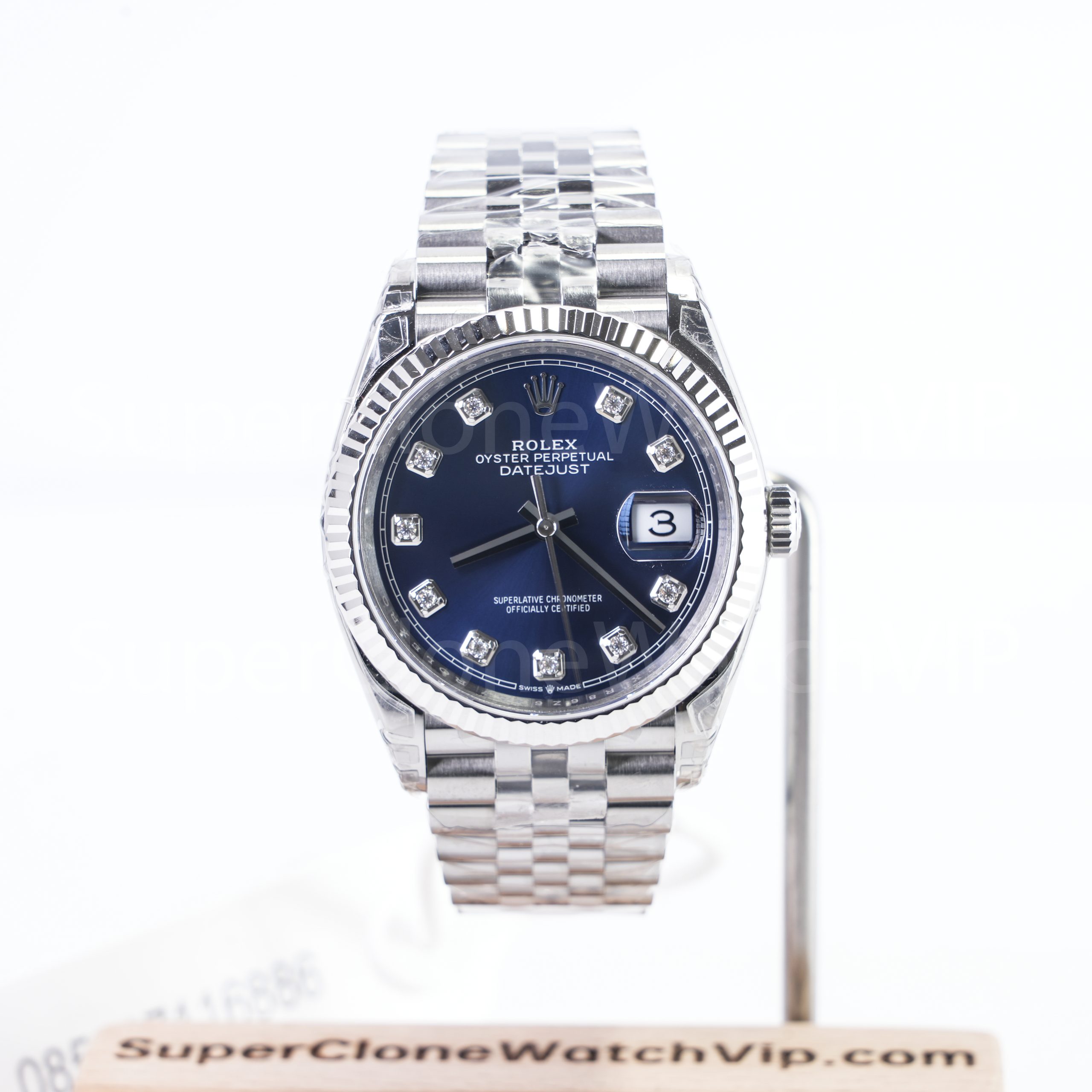
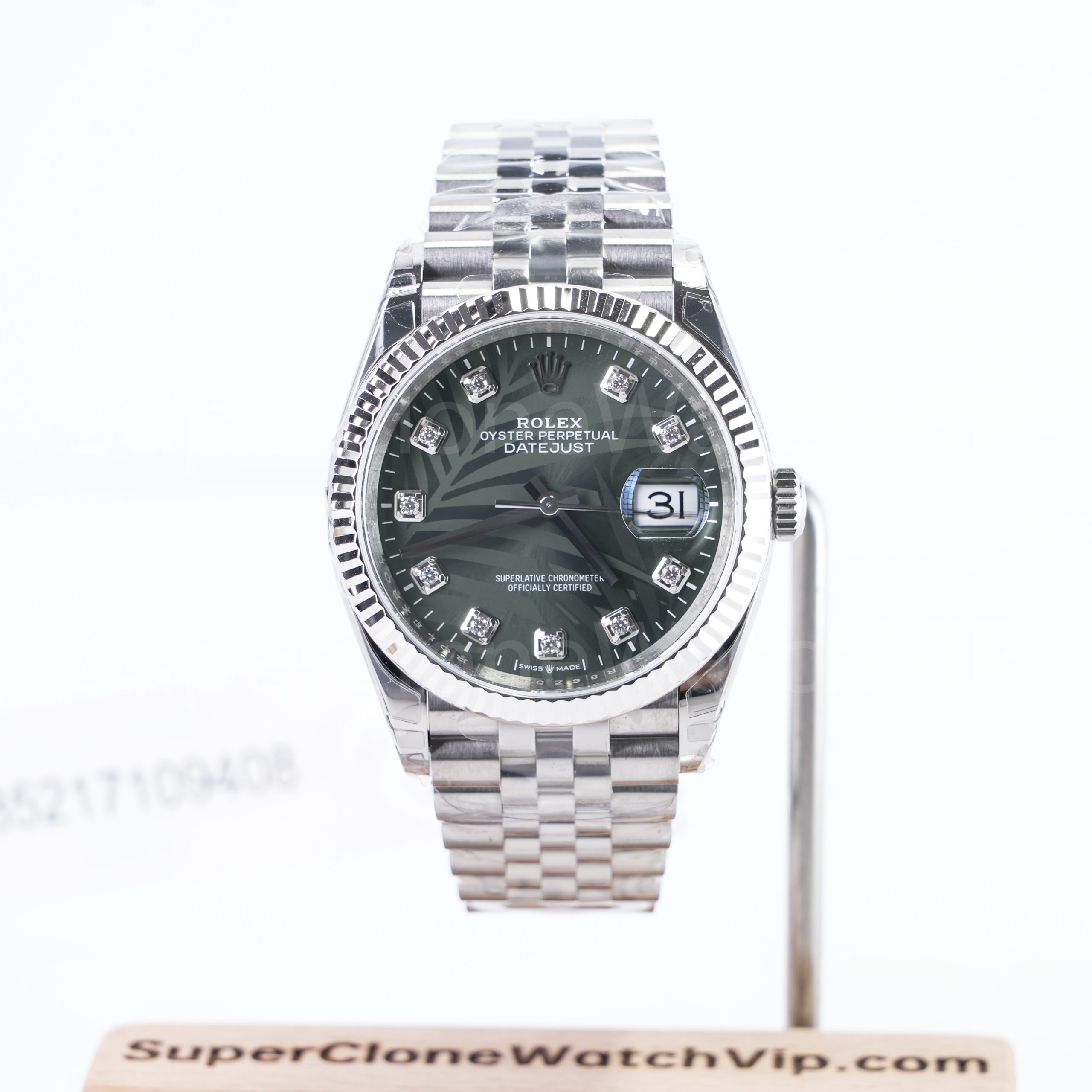
Stick markers keep the layout cleaner. Roman or decorative markers make the dial more formal. Diamond-style markers add sparkle and make spacing, setting, and alignment more visible during QC.
Marker inspection should be done from a straight-on photograph. Check that the markers follow the minute track evenly, the hands do not obscure an alignment concern in every image, and the printing looks consistent around the dial. On decorative dials, ask for a second angle because reflections can hide uneven placement or make a correctly placed marker appear tilted.
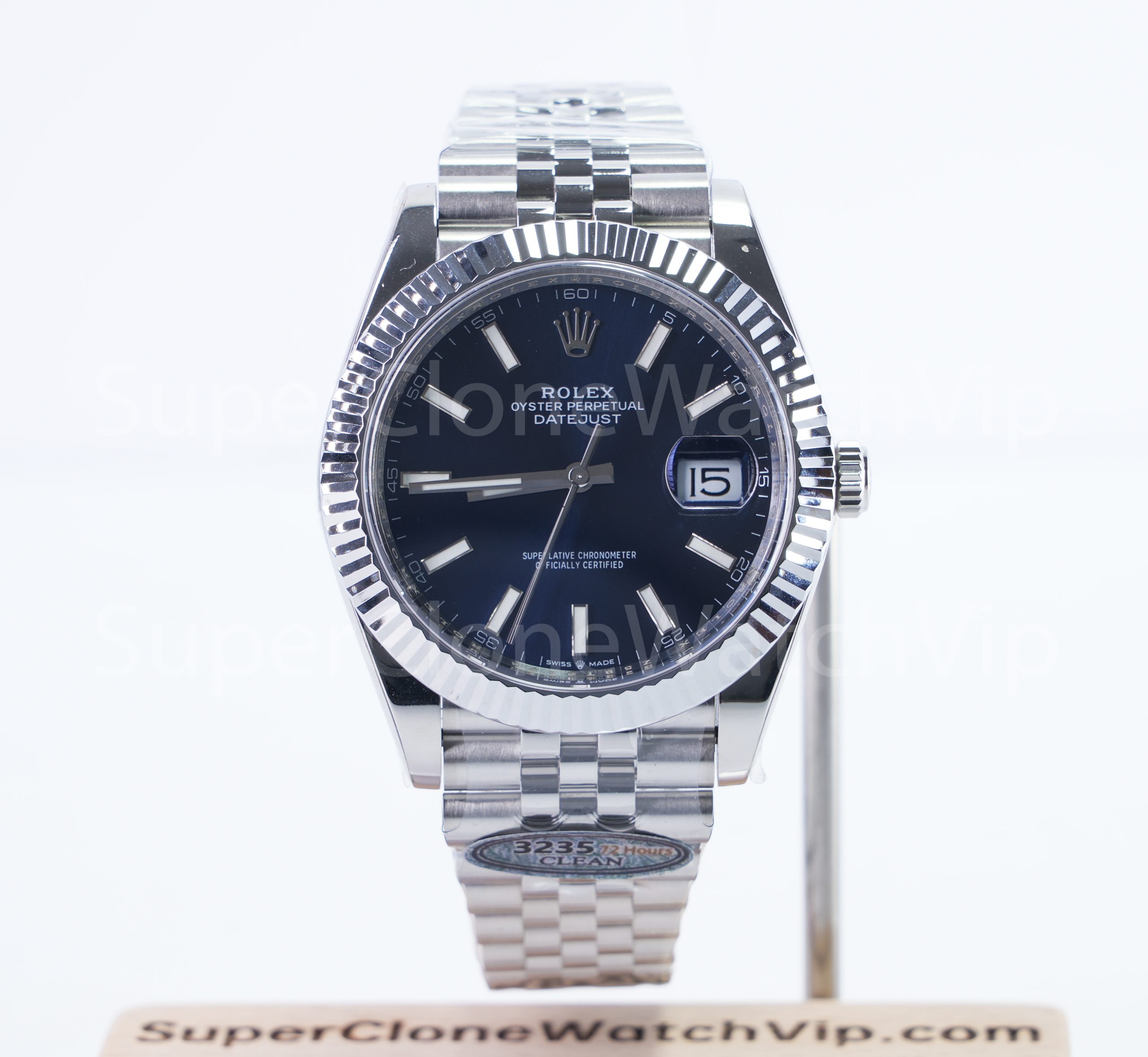
The date window and Cyclops are part of the dial composition, not separate afterthoughts. The date should sit visually centered in the aperture, remain readable through the lens, and not appear displaced when viewed straight on. Lens appearance changes with camera distance and angle, so judge it from a centered front image plus an angled image rather than one close-up.
Use the official Datejust design reference only to understand the genuine model family’s visible layout language. It does not verify a seller’s material, factory, version, movement, or the quality of the individual watch offered.
Smooth or Fluted Bezel
The bezel controls how much light frames the dial. A smooth bezel reduces visual texture and lets dial color carry more of the design. A fluted bezel creates repeated reflections around the entire face, making the same dial look dressier and more recognizable.
Choose smooth when restraint matters
A smooth bezel works well when the dial already has a strong color or pattern, when the watch needs to move between casual and office clothing, or when the wearer dislikes bright reflections.
QC focus: even polishing, a clean transition to the case, visible scratches or dents, and a centered crystal/date presentation.
Choose fluted when structure matters
A fluted bezel supports formal clothing, conservative dial colors, and the traditional Jubilee combination. It can also make a 41 mm configuration appear more visually assertive than the diameter alone suggests.
QC focus: consistent flute shape, even spacing, crisp transitions, and similar reflection behavior around the full bezel in several angled photos.
Do not judge a fluted bezel from a single bright front shot. Rotate the watch under light or request a short video. Repeated reflections should travel around the bezel without one section looking visibly softer, darker, damaged, or differently cut. This is also why a fluted bezel raises the importance of QC: its geometry exposes inconsistencies more readily than a plain polished ring.
Oyster or Jubilee Bracelet
The bracelet is not a finishing detail added after the head of the watch is chosen. It occupies a large part of the wrist view and determines whether the configuration reads clean, formal, textured, or sporty.
| Decision point | Jubilee | Oyster |
|---|---|---|
| Visual character | More texture and reflected light from smaller links. | Broader, cleaner link pattern with a firmer visual line. |
| Formal effect | Usually the more formal-looking option, especially with a fluted bezel. | More restrained and easier to move into casual clothing. |
| Dial pairing | Works naturally with silver, champagne, blue, Roman, motif, and decorative-marker dials when a polished result is intended. | Supports black, dark blue, silver, or stronger dials when the bracelet should stay visually quiet. |
| QC priority | Link articulation, consistent polished/brushed transitions, end-link fit, visible looseness, and clasp action. | Straight brushing, edge finishing, end-link gaps, center alignment, and clasp closure. |
For long daily wear, request a short video showing the bracelet hanging naturally, bending around the wrist, and closing at the clasp. A still photo can confirm alignment and surface condition, but it cannot show articulation or whether the clasp engages cleanly.
The most formal-looking configuration is usually not created by the bracelet alone. Jubilee plus a fluted bezel, restrained dial, and balanced case size produces a stronger formal signal than Jubilee paired with a bright motif dial and oversized presentation. Judge the whole system.
Steel, Two-Tone and Visual Balance
Material and color treatment determine how strongly the bezel, bracelet, dial, and markers compete for attention. Confirm the seller’s exact listed material and finish rather than inferring composition from a silver, yellow, or rose-colored appearance.
- Steel-tone configurations keep the visual palette narrow. They are easier to combine with blue, black, silver, green, motif, or decorative-marker dials without creating several competing colors.
- Two-tone configurations add warmth and stronger contrast. They work best when the dial, bezel, center links, and markers repeat a controlled color relationship rather than introducing a different highlight at every component.
- Decorative dials and markers already carry visual weight. Pairing them with a fluted bezel, Jubilee bracelet, and two-tone finish can be intentional, but it should be chosen as a high-shine configuration rather than treated as a neutral daily option.
A useful balance test is to identify the one component meant to attract attention first. If the dial is the focal point, reduce competition through a smooth bezel or Oyster bracelet. If the traditional Datejust outline is the focal point, use a fluted bezel and Jubilee bracelet with a calmer dial. If two-tone contrast is the focal point, avoid adding an unrelated dial color unless the wearer specifically wants a more decorative result.
See complete configurations
Compare combinations, not isolated parts
Factory and Version Verification
Factory discussion becomes useful only after the exact Datejust configuration is fixed. A factory name without the reference, size, dial, bezel, bracelet, material description, movement description, and current version is incomplete information.
Record these fields before comparing versions
- Exact product link or reference-style identifier, not only “blue Datejust.”
- Case size, dial color and finish, marker style, bezel, bracelet, and listed material/finish.
- Factory name and current version wording exactly as offered, including whether stock is current or requires sourcing.
- Movement description exactly as stated by the seller; do not replace it with an assumption based on factory reputation.
- What the quoted price includes, such as the watch only or any separately described packaging or service.
- QC evidence and approval stage: actual photos, requested function video, and the point at which the buyer must approve the prepared watch.
Ask for a written answer when any field is unclear. Screenshots of the final specification are useful because dial names, marker descriptions, bracelet choices, and two-tone wording can look similar in casual chat. The order record should match the product link and the watch shown in QC.
Do not turn this section into a fixed Clean-versus-VSF ranking. If those two factories are both offered for the same completed configuration, move to the separate Clean vs VSF Datejust comparison after stock and version are confirmed. That article has a different job: comparing factory-specific evidence for one model, not helping the buyer construct the Datejust itself.
Treat water resistance in the same evidence-led way. A model name or factory label is not a test result. Only rely on a separately documented test when one is actually provided, and do not convert an unverified claim into a usage promise.
Datejust Configuration QC Sheet
Complete the first seven rows before payment or sourcing. Use the last row to state which visible or functional details matter most to you. The purpose is to keep the seller’s confirmation, the selected product page, and the later QC set aligned.
| Configuration field | ☐ Selection to record | Decision rule | QC evidence to request |
|---|---|---|---|
| Size | ☐ 31 mm ☐ 36 mm ☐ 41 mm | Choose by wrist width, sleeve clearance, and intended presence before color. | Straight wrist view, side profile, and bracelet sizing confirmation. |
| Dial | ☐ Color: ______ ☐ Finish/motif: ______ | Confirm how the dial behaves in normal, angled, and lower light. | Centered front photo plus two angled-light photos. |
| Markers | ☐ Baton ☐ Roman ☐ Decorative ☐ Other: ______ | Balance legibility, formality, and dial activity. | Straight macro view showing marker spacing, setting, hands, and minute track. |
| Bezel | ☐ Smooth ☐ Fluted | Smooth reduces texture; fluted adds light and formal structure. | Full-circle angled photos; rotation-under-light video for fluted versions. |
| Bracelet | ☐ Oyster ☐ Jubilee | Oyster is visually cleaner; Jubilee is more textured and formal. | End links, side edges, surface transitions, articulation, clasp open/close video. |
| Material / finish | ☐ Steel-tone ☐ Two-tone ☐ Seller-listed material: ______ | Confirm the written listing; do not infer composition from color. | Consistent tone across case, bezel, bracelet, crown, and clasp under neutral light. |
| Use case | ☐ Daily office ☐ Formal ☐ Mixed wear ☐ Gift | Use the real wardrobe and frequency of wear to control size and shine. | Normal-distance wrist photo, not only macro product photography. |
| QC priority | ☐ Cyclops/date ☐ Dial/markers ☐ Bezel ☐ Bracelet/clasp ☐ Other: ______ | State the details that would stop approval before the QC set is prepared. | Targeted close-ups plus the function videos listed below. |
Minimum Datejust QC set
- Straight dial photo: marker alignment, printing, hand condition, date centering, and Cyclops position.
- Two angled dial photos: dial color/finish, lens clarity, crystal reflections, and fluted-bezel consistency where applicable.
- Case-side and crown-side photos: profile, crystal seating, crown area, visible marks, and transition into the bracelet.
- Bracelet and clasp photos: end-link fit, link surfaces, side edges, clasp exterior/interior, and requested bracelet length.
- Date-operation video: show crown operation, movement through several date values, and one clean advance through the midnight sequence without stalling or a double change.
- Handling video: show bracelet articulation, clasp engagement, dial under moving light, and the exact watch remaining in frame.
Review the set as evidence of the actual prepared watch. A close-up can reveal alignment, but it can also exaggerate dust, reflections, and perspective. Separate a camera-angle effect from a repeatable issue by requesting a second view before rejecting or approving.
Copy this after completing the QC sheet
Send One Complete Datejust Configuration
This sentence keeps the configuration and the evidence request in one record. Replace every bracket before sending it; do not leave the seller to choose a size, dial, bezel, bracelet, material description, or factory interpretation on your behalf.
Send Configuration for Confirmation
The wider site uses the term clone watches across several model families. For this page, keep the discussion limited to the Datejust configuration written above.
Datejust Configuration FAQ
Is 36 mm still the most versatile Datejust size?
For buyers who prefer traditional proportions, cuff compatibility, and moderate wrist presence, 36 mm remains a highly flexible starting point. It is not automatically correct for every wrist. A deliberately delicate 31 mm or a stronger 41 mm can be more appropriate when the intended scale is clear. Compare wrist width, an existing watch, and normal-distance wrist photos before deciding.
Which bracelet looks more formal?
Jubilee usually looks more formal because its smaller links create more texture and reflected light. The effect becomes stronger with a fluted bezel and a restrained dial. Oyster is visually cleaner and often moves more easily between office and casual clothing.
How does a fluted bezel affect QC?
Its repeated geometry makes uneven cuts, soft sections, damage, or inconsistent reflections easier to notice. Request several angled photos and a rotation-under-light video. One bright front image cannot show whether the full bezel is finished consistently.
What Cyclops and date-change checks are required?
Check lens position and clarity from a centered front view, then use an angled view to separate camera distortion from a real issue. The date should appear centered and readable. Request a video showing crown operation, movement through several dates, and one clean advance through the midnight sequence without stalling or changing twice.
When should the Clean vs VSF Datejust article be used?
Use it after the exact Datejust reference, size, dial, markers, bezel, bracelet, material description, and budget range are fixed—and only when both factories are offered for that same target configuration. This guide builds the specification; the separate article compares factory-specific evidence without replacing that first decision.