A no-date black dial, a black Date, a green bezel and a blue or two-tone Submariner may share the same basic silhouette, but they create different visual priorities and different QC workloads. The best Rolex Submariner super clone is therefore chosen by locking the reference direction first, then checking the parts that matter for that exact configuration.
This page stays inside the Submariner family. Broader replica watches research, complete Rolex-family navigation and full factory rankings belong on their own pages.
Choose the Submariner Reference First
Do not begin with a factory name. Begin with the watch face and configuration you actually want to wear. A no-date reference removes the Cyclops and date wheel from the approval process. A black Date keeps the classic appearance but adds date alignment checks. Green and blue routes introduce stronger color judgments, while two-tone surfaces need closer inspection for finishing consistency.
Use the table below to decide which direction deserves a place on the shortlist. The final product link, reference wording and bracelet type should then be copied into the order message exactly as shown on the selected page.
Reference rule: choose the dial/date/color route before discussing factory. If two versions are still tied, compare how often you need the date, how visible you want the color to be and which component you are least willing to compromise on.
Three live product paths from the current Submariner range
These three existing product modules represent the clean no-date, green-bezel Date and blue two-tone directions. Open the full Rolex Submariner replica watches category when a black Date or another reference is required.
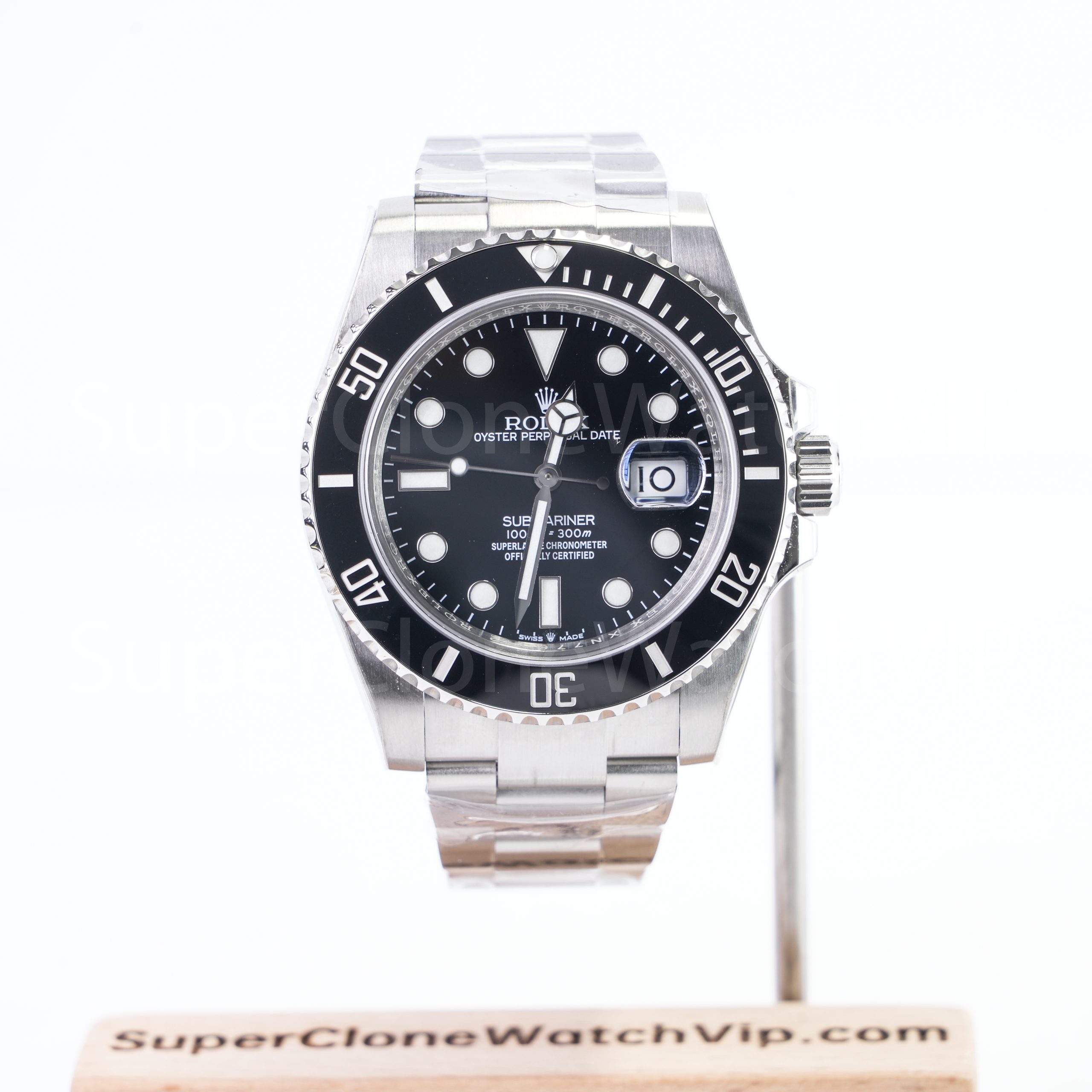
Black No-Date Direction
Choose this route for dial symmetry and a simpler approval path. The missing date removes Cyclops and date-wheel checks, but the bezel, case, rehaut, bracelet and clasp still need clear evidence.
View 124060LN Product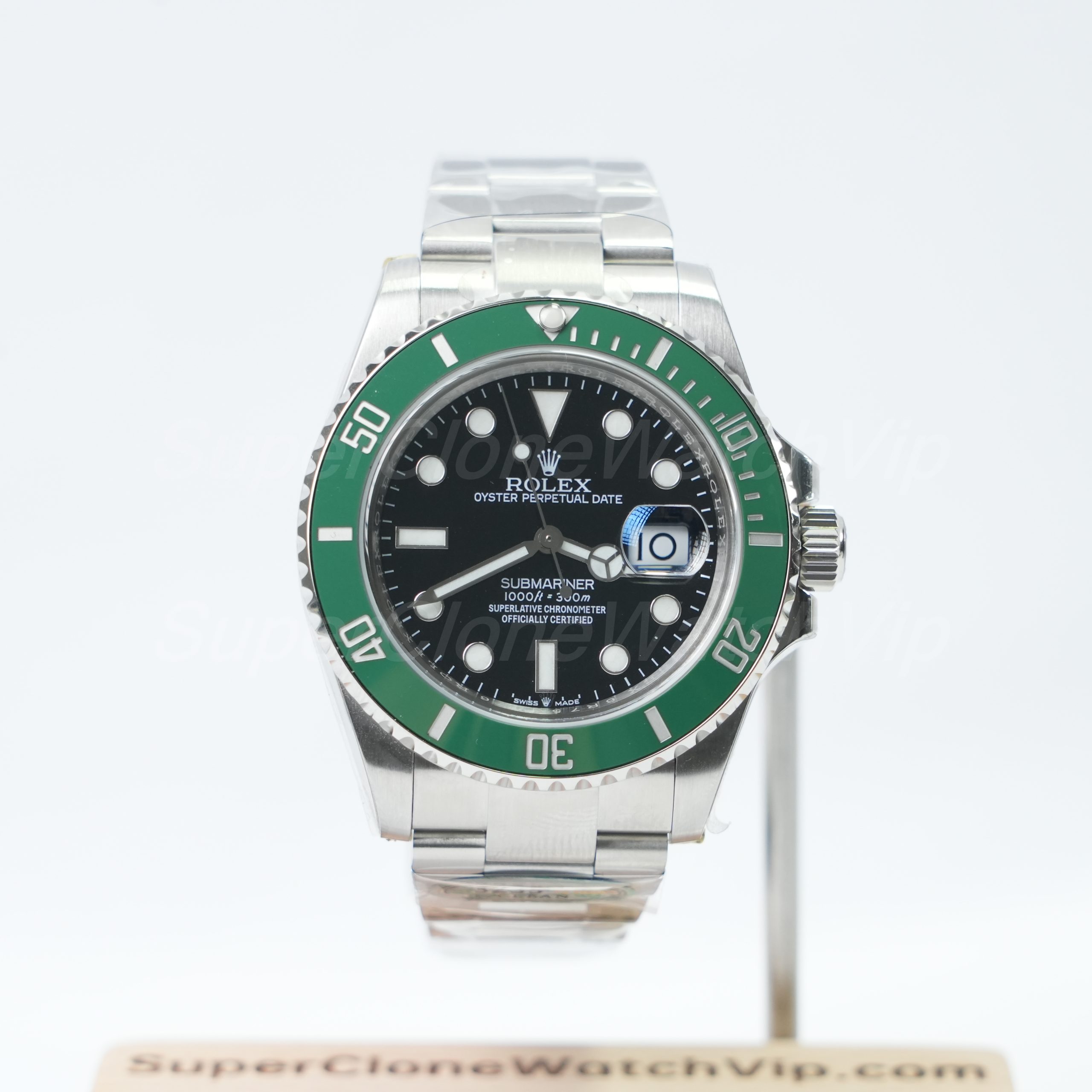
Green-Bezel Date Direction
Choose this route when the green bezel is the main visual feature. Ask for neutral-light views so the bezel, black dial, date display and luminous markers can be judged together.
View 126610LV Product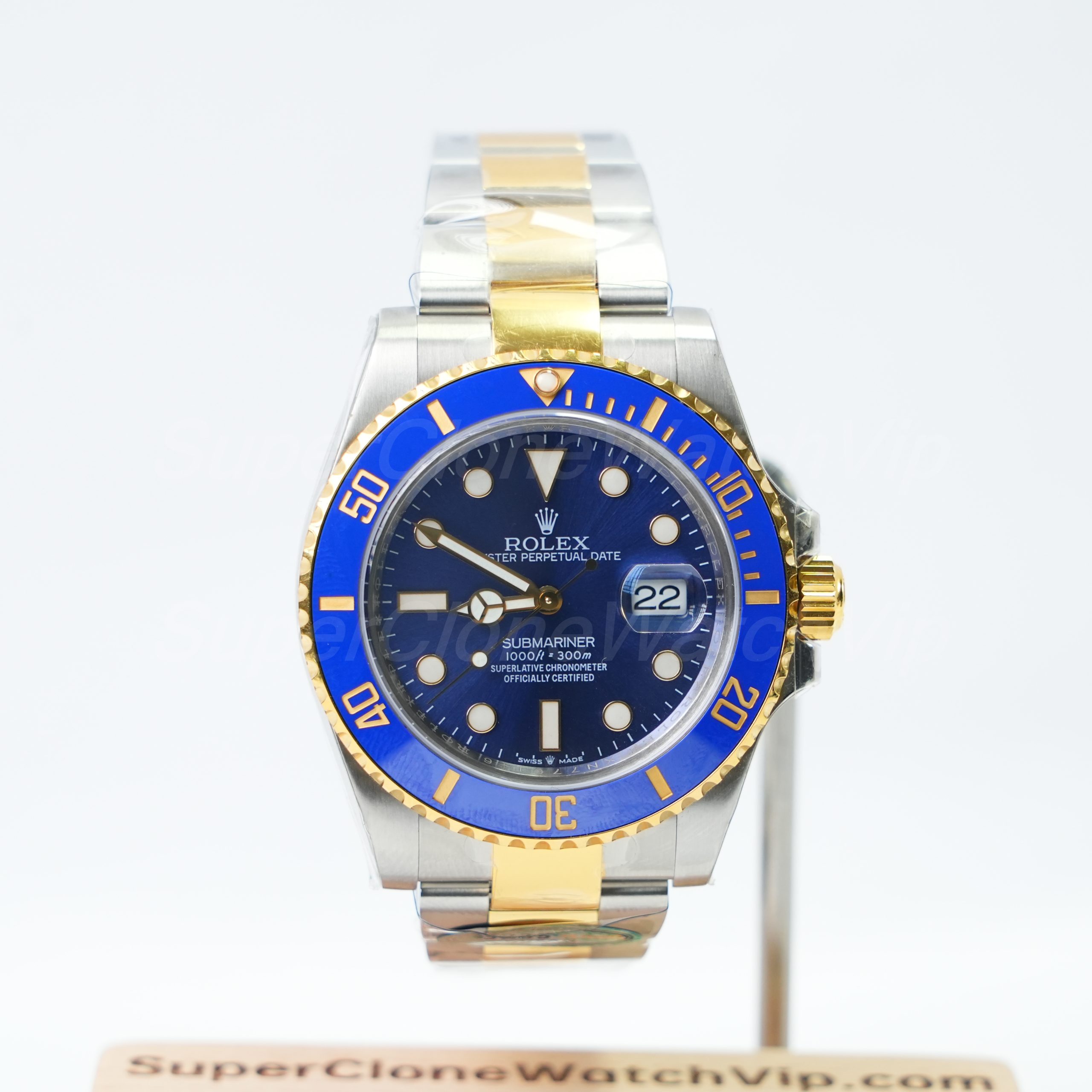
Blue Two-Tone Direction
Choose this route when stronger color and polished contrast are intentional. QC must cover the dial, bezel, center-link tone, clasp and both case sides under ordinary light.
View 126613LB ProductDate or No-Date: The Most Important Split
This decision changes both the appearance and the approval workload. The no-date dial is visually balanced and leaves fewer elements to inspect. A Date reference adds daily utility, but it also creates three linked checks: the date must sit correctly in the aperture, the Cyclops must be positioned well and the crystal view must look natural from the front and from a slight angle.
Choose no-date when
- Dial symmetry matters more than calendar convenience.
- You want the cleaner first-purchase route.
- Your main QC concerns are bezel, case shape, rehaut and bracelet.
- You prefer fewer visual elements at 3 o’clock.
Choose Date when
- You use the date often enough to justify the extra detail.
- The Cyclops is part of the Submariner look you expect.
- You are willing to review straight and angled date-window photos.
- You can request a date-change demonstration when video is available.
For a first-time buyer with no strong date preference, no-date is usually the easier decision because it removes one highly visible complication from QC. That does not make it automatically better; it simply concentrates the approval on the Submariner’s exterior proportions and bracelet system.
Before moving on, write one fixed line: “No-date black”, “black Date”, “green-bezel Date” or “blue two-tone Date.” Do not ask a factory question while that line is still undecided.
Black, Blue and Green Visual Priorities
Color is not only a styling choice. It determines which lighting conditions and surfaces deserve extra evidence. Product images can be highly controlled, so final approval should use ordinary, neutral lighting whenever color accuracy is a priority.
Black
The easiest daily-wear route. It works with casual, business-casual and travel clothing without making color the center of the outfit. QC should still check that the dial, bezel insert and marker fill look coherent rather than washed out or overly glossy.
Green
More recognizable at a glance. A green bezel with black dial is easier to integrate than a full green dial-and-bezel look. Ask for one straight view and one angled view in neutral light because ceramic color can shift with reflection.
Blue
The strongest luxury-sports direction, especially with two-tone surfaces. Review dial and bezel color together, then inspect polished and gold-tone areas for uneven appearance, marks or distracting contrast.
Daily-wear decision: black is the easiest to repeat across a weekly wardrobe; green is the middle ground when the watch should be recognizable without becoming formal; blue and two-tone suit buyers who intentionally want the watch to be noticed.
Do not approve a color from a single close-up. Request a full front view, a wrist-angle or three-quarter view and a side view so the bezel, dial, case and bracelet can be judged as one object.
Case, Crown Guards and Rehaut
The case determines whether the watch looks balanced from more than the straight-on product angle. Request a crown-side image, the opposite case side, a shallow three-quarter angle and a straight front image. These views reveal whether the lugs, crown guards, bezel edge and bracelet connection look coherent.
Four exterior checks that should not be combined into one vague “case looks good” approval
- Case profile: compare both sides for obvious distortion, uneven finishing, deep scratches or a profile that looks visually heavy for the selected reference.
- Crown guards: inspect the guard shapes around the crown and whether the crown sits naturally between them rather than appearing tilted or crowded.
- Rehaut presentation: use a straight, well-lit dial image to check that the inner ring looks even, clean and consistently finished around the dial.
- End-link transition: look where the bracelet enters the case. Large uneven gaps or a visibly raised end link deserve another photo before approval.
Wrist fit should be decided at the same stage. Send a snug wrist circumference and state whether you prefer a close or slightly loose fit. A front image cannot tell you how the case and bracelet will sit on your wrist, so bracelet sizing and Glidelock adjustment should not be left until after approval.
Do not use the rehaut as a stand-alone authenticity claim. In this buying guide it is one visible QC area among several, not proof that a replica product is genuine.
Dial, Crystal, Cyclops and Bezel QC
The front view carries the most information, but approval should follow a fixed order. Start with the dial and date area, move to the bezel, then confirm the exterior and bracelet. This prevents a strong bezel color from distracting attention from a crooked date or uneven marker.
Submariner QC table ranked by component
Cyclops and date-window checks
On a Date reference, check whether the date numeral sits comfortably inside the aperture rather than crowding an edge. The Cyclops should appear centered over the date from a straight front view, and the date should remain readable from a small natural wrist angle. Reflections can mislead, so ask for another image when the lens edge or date position is obscured.
Do not reject or approve from magnification alone in one photograph. Camera distance, angle and compression can change the apparent size. The dedicated Rolex Cyclops lens QC guide should be opened only when the selected reference has a date.
Bezel checks
Use a straight front image to compare the 12 o’clock triangle with the dial’s 12 o’clock marker. Inspect the pearl for centering and cleanliness, then review the numeral and marker fill around the insert. A colored bezel also needs a neutral-light angle so color and surface reflection can be separated.
A function video is useful when bezel action is important, but the approval question should stay simple: does the bezel rotate and settle as described by the seller, and does the final position look aligned in the supplied evidence?
Bracelet, Clasp and Glidelock
The bracelet is handled every time the watch is worn, so it should not be treated as a decorative final photo. Ask for the bracelet laid flat, the end links at the case, the clasp closed from above and the clasp opened from below. Two-tone versions also need clear views of the center links and clasp surfaces.
Check end-link gaps, link articulation and whether the bracelet falls naturally rather than holding a sharp kink.
The closed clasp should look flush and secure. Request another view if the safety section or main clasp appears raised.
Review brushing, polished edges and visible marks. On two-tone models, inspect color consistency across adjoining links.
How Glidelock should be tested
- Open the clasp fully so the adjustment track is visible.
- Move the bracelet through several adjustment positions rather than showing only the starting and ending point.
- Return it to a normal wearing position and close the clasp.
- Lightly pull the bracelet to show that the selected position stays seated.
- Confirm the final fit using the wrist circumference supplied with the order.
The test should show controlled adjustment, secure seating and a clasp that closes normally after the bracelet length changes. It should not rely on a still image of an open clasp.
For a deeper explanation of the mechanism and evidence angles, use the Rolex Glidelock Submariner QC guide.
Factory and Version Questions to Ask
Factory research becomes useful only after the reference and first QC priority are fixed. A buyer who asks “Which factory is best?” gives too little information. A buyer who asks for a current version of a black no-date reference and ranks case profile, bezel alignment and Glidelock as the top three concerns gives the seller a testable request.
Send these questions in one message
- Is this the exact product link and date/color/bracelet configuration being quoted?
- Which factory and current version are available for this exact reference?
- What movement description applies to the offered watch according to its listing?
- Will the QC photos show the actual prepared watch rather than general product images?
- Can the QC set include the ranked component checks listed in this guide?
- Can video show the stated date, crown, bezel, clasp and Glidelock functions where applicable?
- What is the confirmed total for this exact version, and does changing the version alter the quoted product?
Budget rule: set the budget after the reference and non-negotiable QC item are chosen. Do not switch from no-date to Date, black to green or steel to two-tone merely because a different configuration is being promoted under a preferred factory name.
Open the dedicated Clean vs VSF Submariner comparison only when the exact reference is fixed and the question genuinely requires a factory comparison. This page does not repeat that article’s full factory-by-component analysis.
For wider navigation across clone watches, return to the homepage after the Submariner decision is recorded, not before.
Submariner Reference and QC FAQ
Should a first-time buyer choose date or no-date?
Choose no-date when you do not regularly use a watch calendar and want a simpler dial plus fewer QC variables. Choose Date when the calendar and Cyclops are part of the look you specifically want and you are prepared to check date centering, lens position and date operation.
Which Submariner color is easiest for daily wear?
Black is the easiest repeat-wear option because it works with the widest range of casual and business-casual clothing. Green adds a controlled accent. Blue and two-tone are better when stronger wrist presence is intentional rather than incidental.
What Cyclops and date-window checks are necessary?
Use a straight front image and a slight angle. Check that the numeral is comfortably centered in the aperture, the Cyclops sits over the date and the date remains readable without obvious distortion. Ask for another image when glare or camera angle hides the lens edge.
How should Glidelock be tested?
The video should show the clasp open, the bracelet moving through several positions, the chosen position staying seated under a light pull and the clasp closing normally afterward. A still image of the open mechanism is not a complete test.
When should the Clean vs VSF comparison be opened?
Open it after the exact Submariner reference, date layout, color and top component priorities are fixed. The comparison is useful for a model-specific factory decision; it should not replace the earlier choice between no-date, black Date, green or blue routes.
Submariner Final Approval Checklist
Approval should end with one compact record, not another round of broad browsing. Complete the four identity fields first—date layout, color route, wrist circumference and first QC priority—then attach the exact product link and current version confirmation.
Reference confirmation sheet
Exact product link/reference: ____________________
Date or no-date: ____________________
Black, green or blue route: ____________________
Wrist circumference and fit: ____________________
First QC priority: ____________________
Factory and current version: ____________________
Required QC photos: ____________________
Required function video: ____________________
Review the actual prepared watch against this sheet through the Super Clone Watch QC Process. Approve only when the supplied evidence matches the selected reference and the ranked QC priority.
The next action is specific: send this completed reference record, not a general request for “the best model.” That keeps the reply focused on the chosen date layout, color, wrist fit, current version and exact evidence required before shipment.
Send the Reference Confirmation Sheet